Parth Joshi, Tamar Jacobsohn, Andrew Polis, Darshi Shah, Brian Gillette, Richard Schoor
{"title":"Creation and evaluation of a three-dimensional-printed synthetic vas deferens for microsurgical training.","authors":"Parth Joshi, Tamar Jacobsohn, Andrew Polis, Darshi Shah, Brian Gillette, Richard Schoor","doi":"10.4103/iju.iju_185_24","DOIUrl":null,"url":null,"abstract":"<p><strong>Introduction: </strong>Individuals choose to undergo vasectomy reversal for a variety of reasons, including remarriage or due to the death of a child. To be proficient in this procedure, the surgeons need to be high volume and the trainees require a safe environment to develop their microsurgical skills. To overcome this challenge, we used three-dimensional (3D) printing to create a synthetic model of the vas deferens with properties similar to the human vas deferens. We distributed this model to experienced microsurgeons for evaluation.</p><p><strong>Methods: </strong>The vas deferens model was created using thermoplastic polyurethane filament. The filament was then infused with a foaming agent to allow for temperature-dependent tuning of the material's stiffness. The model's outer diameter was 1 mm and the inner lumen was 0.5 mm. Fellowship-trained male reproductive urologists were recruited from the Society for the Study of Male Reproduction website. They used our model and judged it on several factors by completing a 13-question survey.</p><p><strong>Results: </strong>We received completed evaluations from five microsurgeons. Eighty percent of the surgeons were able to complete a full anastomosis on the model using 9-0 and 10-0 sutures. The majority of the completed anastomoses were performed using the one-layer technique. The average responses for the model's usefulness as a practice tool, a training tool, and overall assessment ranged from 72 to 79 out of 100. Comments for the improvement included the need for a more flexible and softer model.</p><p><strong>Conclusions: </strong>We created a 3D-printed synthetic vas deferens that serves as a valuable training and practice tool.</p>","PeriodicalId":47352,"journal":{"name":"Indian Journal of Urology","volume":"40 4","pages":"250-255"},"PeriodicalIF":0.9000,"publicationDate":"2024-10-01","publicationTypes":"Journal Article","fieldsOfStudy":null,"isOpenAccess":false,"openAccessPdf":"https://www.ncbi.nlm.nih.gov/pmc/articles/PMC11567589/pdf/","citationCount":"0","resultStr":null,"platform":"Semanticscholar","paperid":null,"PeriodicalName":"Indian Journal of Urology","FirstCategoryId":"1085","ListUrlMain":"https://doi.org/10.4103/iju.iju_185_24","RegionNum":0,"RegionCategory":null,"ArticlePicture":[],"TitleCN":null,"AbstractTextCN":null,"PMCID":null,"EPubDate":"","PubModel":"","JCR":"Q3","JCRName":"UROLOGY & NEPHROLOGY","Score":null,"Total":0}
引用次数: 0
Abstract
Introduction: Individuals choose to undergo vasectomy reversal for a variety of reasons, including remarriage or due to the death of a child. To be proficient in this procedure, the surgeons need to be high volume and the trainees require a safe environment to develop their microsurgical skills. To overcome this challenge, we used three-dimensional (3D) printing to create a synthetic model of the vas deferens with properties similar to the human vas deferens. We distributed this model to experienced microsurgeons for evaluation.
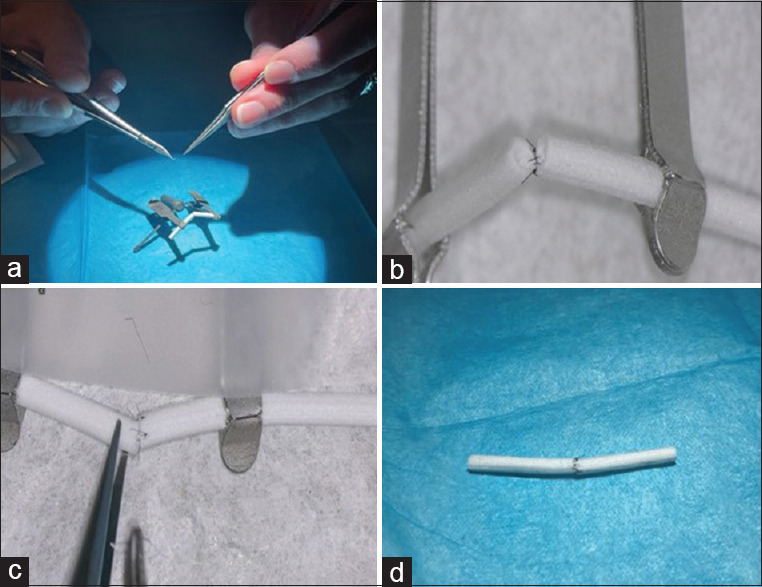
Methods: The vas deferens model was created using thermoplastic polyurethane filament. The filament was then infused with a foaming agent to allow for temperature-dependent tuning of the material's stiffness. The model's outer diameter was 1 mm and the inner lumen was 0.5 mm. Fellowship-trained male reproductive urologists were recruited from the Society for the Study of Male Reproduction website. They used our model and judged it on several factors by completing a 13-question survey.
Results: We received completed evaluations from five microsurgeons. Eighty percent of the surgeons were able to complete a full anastomosis on the model using 9-0 and 10-0 sutures. The majority of the completed anastomoses were performed using the one-layer technique. The average responses for the model's usefulness as a practice tool, a training tool, and overall assessment ranged from 72 to 79 out of 100. Comments for the improvement included the need for a more flexible and softer model.
Conclusions: We created a 3D-printed synthetic vas deferens that serves as a valuable training and practice tool.
期刊介绍:
Indian Journal of Urology-IJU (ISSN 0970-1591) is official publication of the Urological Society of India. The journal is published Quarterly. Bibliographic listings: The journal is indexed with Abstracts on Hygiene and Communicable Diseases, CAB Abstracts, Caspur, DOAJ, EBSCO Publishing’s Electronic Databases, Excerpta Medica / EMBASE, Expanded Academic ASAP, Genamics JournalSeek, Global Health, Google Scholar, Health & Wellness Research Center, Health Reference Center Academic, Hinari, Index Copernicus, IndMed, OpenJGate, PubMed, Pubmed Central, Scimago Journal Ranking, SCOLOAR, SCOPUS, SIIC databases, SNEMB, Tropical Diseases Bulletin, Ulrich’s International Periodical Directory





 京公网安备 11010802042870号
京ICP备2023020795号-1
京公网安备 11010802042870号
京ICP备2023020795号-1

 分享
分享
 求助内容:
求助内容: 应助结果提醒方式:
 扫码关注我们
