Tatiana Proboste, Damber Bista, Nicholas J Clark, Sahil Arora, Gregor Devine, Jonathan M Darbro, Deena S Malloy, Daniel Francis, Ricardo J Soares Magalhães
{"title":"Ascertainment of Community Exposure Sites to Ross River Virus During the 2020 Outbreak in Brisbane, Australia.","authors":"Tatiana Proboste, Damber Bista, Nicholas J Clark, Sahil Arora, Gregor Devine, Jonathan M Darbro, Deena S Malloy, Daniel Francis, Ricardo J Soares Magalhães","doi":"10.1093/infdis/jiae578","DOIUrl":null,"url":null,"abstract":"<p><p>This study investigated potential Ross River virus (RRV) exposure sites in Greater Brisbane during the Queensland coronavirus disease 2019 lockdown (January-July 2020). Using RRV notifications, cluster identification techniques, and mobile phone data for movement network analysis, the study examined 993 RRV cases and 9 million movement trajectories from residential RRV cluster areas (hot spots). The findings revealed that population movement was a key risk factor to RRV incidence within hot spots, whereby highly interconnected areas had more RRV cases during lockdown. While environmental conditions within RRV hot spots were less significant compared with their connectivity, areas with higher vegetation density had fewer RRV cases. The study also noted that individuals from RRV hot spots spent less time in green areas before lockdown than during and after lockdown. The results suggest that population movement significantly influenced the 2020 RRV outbreak. These insights can help adapt current vector control and surveillance protocols to target areas identified in this study.</p>","PeriodicalId":50179,"journal":{"name":"Journal of Infectious Diseases","volume":" ","pages":"e501-e510"},"PeriodicalIF":4.5000,"publicationDate":"2025-03-17","publicationTypes":"Journal Article","fieldsOfStudy":null,"isOpenAccess":false,"openAccessPdf":"https://www.ncbi.nlm.nih.gov/pmc/articles/PMC11911798/pdf/","citationCount":"0","resultStr":null,"platform":"Semanticscholar","paperid":null,"PeriodicalName":"Journal of Infectious Diseases","FirstCategoryId":"3","ListUrlMain":"https://doi.org/10.1093/infdis/jiae578","RegionNum":2,"RegionCategory":"医学","ArticlePicture":[],"TitleCN":null,"AbstractTextCN":null,"PMCID":null,"EPubDate":"","PubModel":"","JCR":"Q2","JCRName":"IMMUNOLOGY","Score":null,"Total":0}
引用次数: 0
Abstract
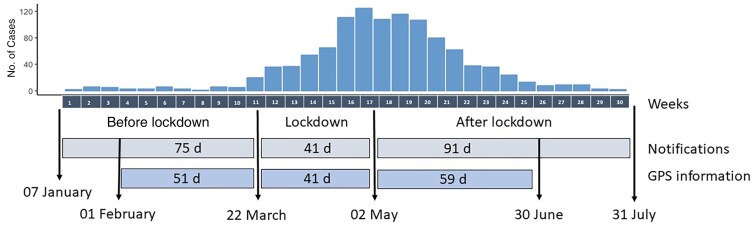
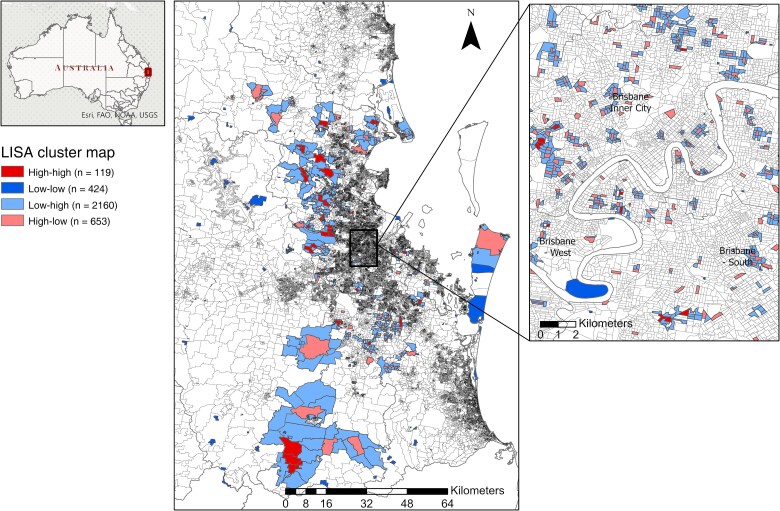
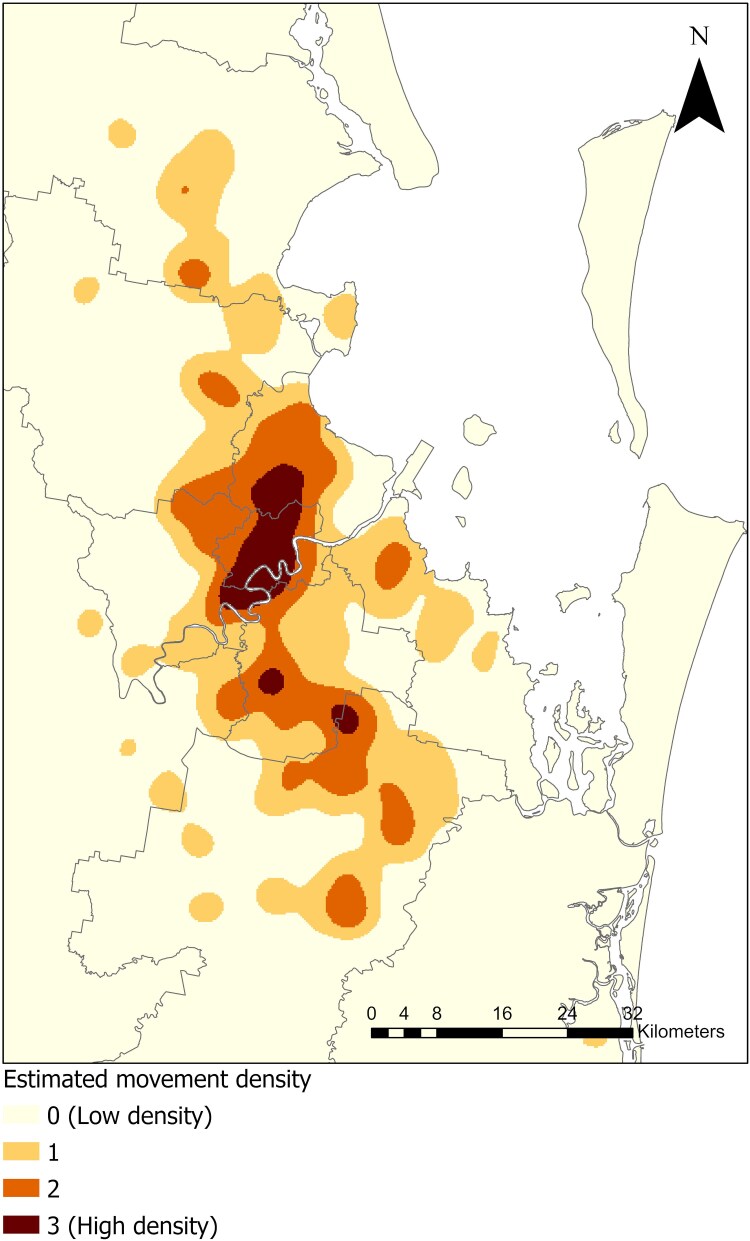
This study investigated potential Ross River virus (RRV) exposure sites in Greater Brisbane during the Queensland coronavirus disease 2019 lockdown (January-July 2020). Using RRV notifications, cluster identification techniques, and mobile phone data for movement network analysis, the study examined 993 RRV cases and 9 million movement trajectories from residential RRV cluster areas (hot spots). The findings revealed that population movement was a key risk factor to RRV incidence within hot spots, whereby highly interconnected areas had more RRV cases during lockdown. While environmental conditions within RRV hot spots were less significant compared with their connectivity, areas with higher vegetation density had fewer RRV cases. The study also noted that individuals from RRV hot spots spent less time in green areas before lockdown than during and after lockdown. The results suggest that population movement significantly influenced the 2020 RRV outbreak. These insights can help adapt current vector control and surveillance protocols to target areas identified in this study.
期刊介绍:
Published continuously since 1904, The Journal of Infectious Diseases (JID) is the premier global journal for original research on infectious diseases. The editors welcome Major Articles and Brief Reports describing research results on microbiology, immunology, epidemiology, and related disciplines, on the pathogenesis, diagnosis, and treatment of infectious diseases; on the microbes that cause them; and on disorders of host immune responses. JID is an official publication of the Infectious Diseases Society of America.



 京公网安备 11010802042870号
京ICP备2023020795号-1
京公网安备 11010802042870号
京ICP备2023020795号-1

 分享
分享
 求助内容:
求助内容: 应助结果提醒方式:
 扫码关注我们
