{"title":"Veracity of In Silico Approach for Designing Rivastigmine-Polymer Nano Complexes for Intranasal Delivery: Prediction and In Vitro Validation","authors":"Vinni Kalra, Om Silakari, Ashok Kumar Tiwary","doi":"10.1007/s12247-024-09892-0","DOIUrl":null,"url":null,"abstract":"<div><h3>Background</h3><p>Rivastigmine (RT), exhibits low oral availability (40%) and high hepatic first-pass (36%). Circumventing the blood-brain barrier-related convolutions for successful brain delivery following intranasal administration prerequisites nano-size particles with high drug loading due to restriction on the quantity administrable through this route. Also, mucoadhesion of nanoparticles (NPs) to nasal mucin is required to counter their ephemeral residence due to rapid mucociliary clearance in order to sustain drug release over a prolonged period. Therefore, the selected polymer should confer these attributes to the NPs for optimized drug delivery to the brain.</p><h3>Methods</h3><p>Molecular docking (Flare 4.0) followed by dynamic simulations (Material Studio 2022) comprising of LF dG score, Hildebrand solubility parameters (δ), mixing energy, Flory-Huggins parameters (χ), radius of gyration (Rg) and radial distribution function (RDF) were utilized to study binding affinity of various mucoadhesive polymers and RT. Spray-dried NPs were prepared using in silico screened and selected Eudragit RL 100, sodium hyaluronate, or carboxy methyl cellulose and subjected to in vitro characterization.</p><h3>Results</h3><p>Significant correlation obtained for in silico predicted values of LF dG, Rg, and RDF, respectively, with experimentally obtained drug loading and particle size of NPs. This unequivocally suggested prognostic role of molecular predictions in dosage form outcome achievement.</p><h3>Conclusion</h3><p>High LF dG score, low RDF and Rg values determined through in silico screening suggested, respectively, high yield, encapsulation efficiency, drug loading and small particle size of NPs. Highest ex vivo permeation of RT was observed from Eudragit RL 100 loaded NPs suggesting their promising role for intra nasal delivery.</p></div>","PeriodicalId":656,"journal":{"name":"Journal of Pharmaceutical Innovation","volume":"19 6","pages":""},"PeriodicalIF":2.7000,"publicationDate":"2024-12-03","publicationTypes":"Journal Article","fieldsOfStudy":null,"isOpenAccess":false,"openAccessPdf":"","citationCount":"0","resultStr":null,"platform":"Semanticscholar","paperid":null,"PeriodicalName":"Journal of Pharmaceutical Innovation","FirstCategoryId":"3","ListUrlMain":"https://link.springer.com/article/10.1007/s12247-024-09892-0","RegionNum":4,"RegionCategory":"医学","ArticlePicture":[],"TitleCN":null,"AbstractTextCN":null,"PMCID":null,"EPubDate":"","PubModel":"","JCR":"Q2","JCRName":"PHARMACOLOGY & PHARMACY","Score":null,"Total":0}
引用次数: 0
Abstract
Background
Rivastigmine (RT), exhibits low oral availability (40%) and high hepatic first-pass (36%). Circumventing the blood-brain barrier-related convolutions for successful brain delivery following intranasal administration prerequisites nano-size particles with high drug loading due to restriction on the quantity administrable through this route. Also, mucoadhesion of nanoparticles (NPs) to nasal mucin is required to counter their ephemeral residence due to rapid mucociliary clearance in order to sustain drug release over a prolonged period. Therefore, the selected polymer should confer these attributes to the NPs for optimized drug delivery to the brain.
Methods
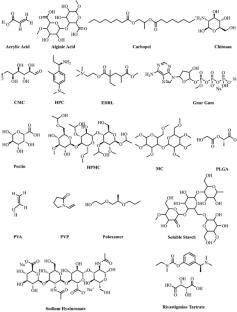
Molecular docking (Flare 4.0) followed by dynamic simulations (Material Studio 2022) comprising of LF dG score, Hildebrand solubility parameters (δ), mixing energy, Flory-Huggins parameters (χ), radius of gyration (Rg) and radial distribution function (RDF) were utilized to study binding affinity of various mucoadhesive polymers and RT. Spray-dried NPs were prepared using in silico screened and selected Eudragit RL 100, sodium hyaluronate, or carboxy methyl cellulose and subjected to in vitro characterization.
Results
Significant correlation obtained for in silico predicted values of LF dG, Rg, and RDF, respectively, with experimentally obtained drug loading and particle size of NPs. This unequivocally suggested prognostic role of molecular predictions in dosage form outcome achievement.
Conclusion
High LF dG score, low RDF and Rg values determined through in silico screening suggested, respectively, high yield, encapsulation efficiency, drug loading and small particle size of NPs. Highest ex vivo permeation of RT was observed from Eudragit RL 100 loaded NPs suggesting their promising role for intra nasal delivery.
期刊介绍:
The Journal of Pharmaceutical Innovation (JPI), is an international, multidisciplinary peer-reviewed scientific journal dedicated to publishing high quality papers emphasizing innovative research and applied technologies within the pharmaceutical and biotechnology industries. JPI''s goal is to be the premier communication vehicle for the critical body of knowledge that is needed for scientific evolution and technical innovation, from R&D to market. Topics will fall under the following categories:
Materials science,
Product design,
Process design, optimization, automation and control,
Facilities; Information management,
Regulatory policy and strategy,
Supply chain developments ,
Education and professional development,
Journal of Pharmaceutical Innovation publishes four issues a year.



 京公网安备 11010802042870号
京ICP备2023020795号-1
京公网安备 11010802042870号
京ICP备2023020795号-1

 分享
分享
 求助内容:
求助内容: 应助结果提醒方式:
 扫码关注我们
