Global Estimates of Vaccine-Associated Hepatic Autoimmune Disorders and Their Related Vaccines, 1968-2024: An International Analysis of the WHO Pharmacovigilance Database.
Jinyoung Jeong, Hyesu Jo, Jaeyu Park, Lee Smith, Masoud Rahmati, Kwanjoo Lee, Yeonjung Ha, Dong Keon Yon
{"title":"Global Estimates of Vaccine-Associated Hepatic Autoimmune Disorders and Their Related Vaccines, 1968-2024: An International Analysis of the WHO Pharmacovigilance Database.","authors":"Jinyoung Jeong, Hyesu Jo, Jaeyu Park, Lee Smith, Masoud Rahmati, Kwanjoo Lee, Yeonjung Ha, Dong Keon Yon","doi":"10.1159/000542865","DOIUrl":null,"url":null,"abstract":"<p><strong>Introduction: </strong>Previous studies have suggested an association between vaccines and autoimmune diseases, but they were limited by their narrow focus and timeframe.</p><p><strong>Methods: </strong>This study conducted the first large-scale international analysis to investigate the impact of various vaccines on autoimmune liver diseases. Utilizing WHO's VigiBase data from 1968 to 2024, and the study identified 1,083 (0.012%) cases of vaccine-associated hepatic autoimmune disorders out of 8,562,584 reported vaccine adverse events.</p><p><strong>Results: </strong>The vaccines with the highest risk of hepatic autoimmune disorders were the hepatitis B vaccine (reporting odds ratio [ROR], 3.52; 95% CI, 2.50-4.95), COVID-19 mRNA vaccines (ROR, 2.95; 95% CI, 2.73-3.18), and papillomavirus vaccines (ROR, 2.13; 95% CI, 1.45-3.13). Additionally, when vaccine-associated hepatic autoimmune disorders occurred, hepatobiliary adverse events were frequently observed to occur concurrently.</p><p><strong>Conclusions: </strong>This study suggests that vaccines may induce hepatic autoimmune disorders and highlights the need for enhanced monitoring before and after vaccination. Additionally, it proposes implementing pre-vaccination screening protocols and postvaccination monitoring to address this concern.</p>","PeriodicalId":13652,"journal":{"name":"International Archives of Allergy and Immunology","volume":" ","pages":"696-702"},"PeriodicalIF":1.8000,"publicationDate":"2025-01-01","publicationTypes":"Journal Article","fieldsOfStudy":null,"isOpenAccess":false,"openAccessPdf":"https://www.ncbi.nlm.nih.gov/pmc/articles/PMC12215160/pdf/","citationCount":"0","resultStr":null,"platform":"Semanticscholar","paperid":null,"PeriodicalName":"International Archives of Allergy and Immunology","FirstCategoryId":"3","ListUrlMain":"https://doi.org/10.1159/000542865","RegionNum":4,"RegionCategory":"医学","ArticlePicture":[],"TitleCN":null,"AbstractTextCN":null,"PMCID":null,"EPubDate":"2024/12/2 0:00:00","PubModel":"Epub","JCR":"Q3","JCRName":"ALLERGY","Score":null,"Total":0}
引用次数: 0
Abstract
Introduction: Previous studies have suggested an association between vaccines and autoimmune diseases, but they were limited by their narrow focus and timeframe.
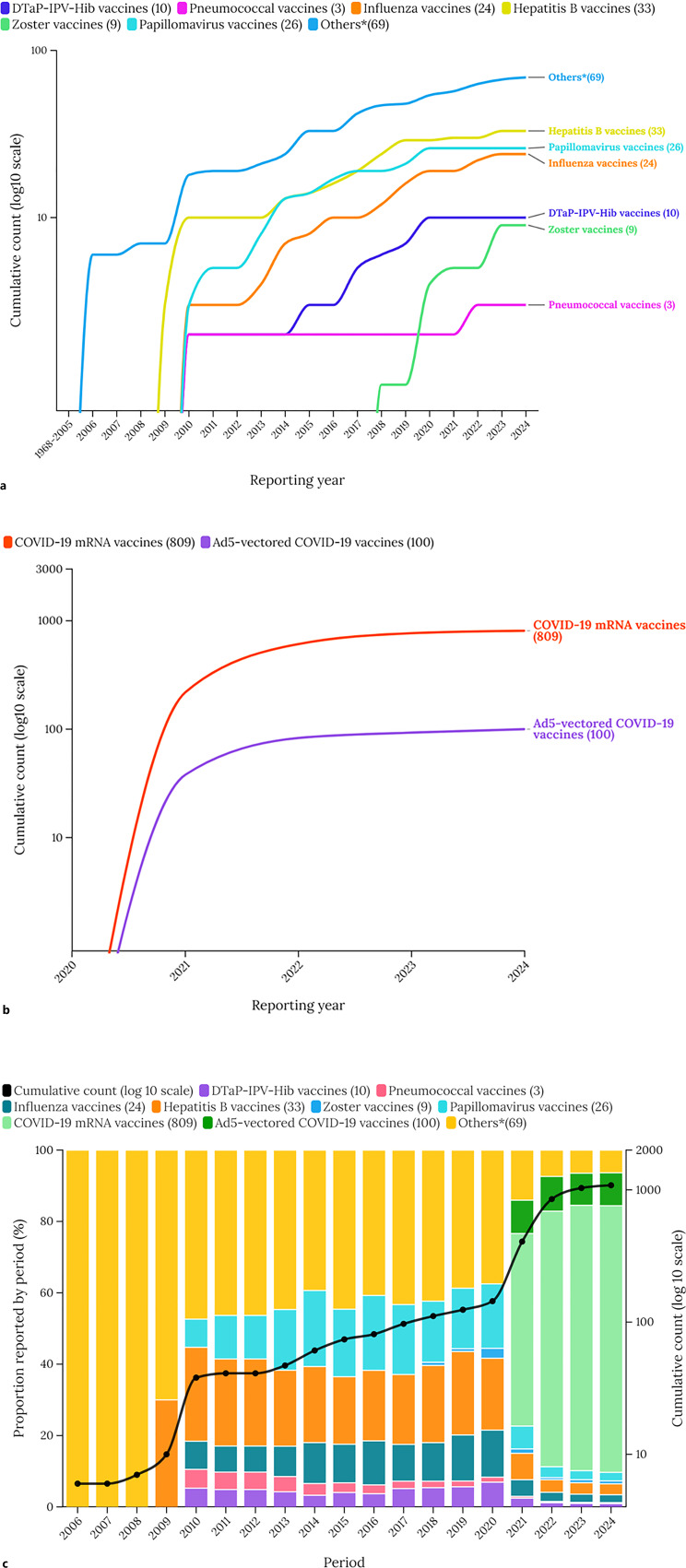
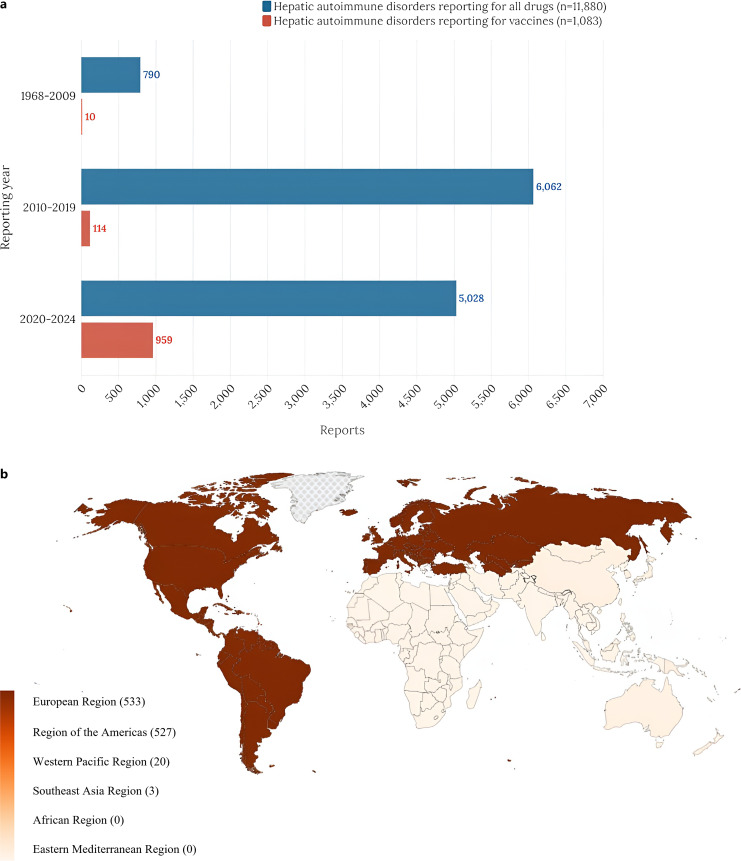
Methods: This study conducted the first large-scale international analysis to investigate the impact of various vaccines on autoimmune liver diseases. Utilizing WHO's VigiBase data from 1968 to 2024, and the study identified 1,083 (0.012%) cases of vaccine-associated hepatic autoimmune disorders out of 8,562,584 reported vaccine adverse events.
Results: The vaccines with the highest risk of hepatic autoimmune disorders were the hepatitis B vaccine (reporting odds ratio [ROR], 3.52; 95% CI, 2.50-4.95), COVID-19 mRNA vaccines (ROR, 2.95; 95% CI, 2.73-3.18), and papillomavirus vaccines (ROR, 2.13; 95% CI, 1.45-3.13). Additionally, when vaccine-associated hepatic autoimmune disorders occurred, hepatobiliary adverse events were frequently observed to occur concurrently.
Conclusions: This study suggests that vaccines may induce hepatic autoimmune disorders and highlights the need for enhanced monitoring before and after vaccination. Additionally, it proposes implementing pre-vaccination screening protocols and postvaccination monitoring to address this concern.
期刊介绍:
''International Archives of Allergy and Immunology'' provides a forum for basic and clinical research in modern molecular and cellular allergology and immunology. Appearing monthly, the journal publishes original work in the fields of allergy, immunopathology, immunogenetics, immunopharmacology, immunoendocrinology, tumor immunology, mucosal immunity, transplantation and immunology of infectious and connective tissue diseases.



 京公网安备 11010802042870号
京ICP备2023020795号-1
京公网安备 11010802042870号
京ICP备2023020795号-1

 分享
分享
 求助内容:
求助内容: 应助结果提醒方式:
 扫码关注我们
