Externally validated clinical prediction models for estimating treatment outcomes for patients with a mood, anxiety or psychotic disorder: systematic review and meta-analysis.
Desi G Burghoorn, Sanne H Booij, Robert A Schoevers, Harriëtte Riese
{"title":"Externally validated clinical prediction models for estimating treatment outcomes for patients with a mood, anxiety or psychotic disorder: systematic review and meta-analysis.","authors":"Desi G Burghoorn, Sanne H Booij, Robert A Schoevers, Harriëtte Riese","doi":"10.1192/bjo.2024.789","DOIUrl":null,"url":null,"abstract":"<p><strong>Background: </strong>Suboptimal treatment outcomes contribute to the high disease burden of mood, anxiety or psychotic disorders. Clinical prediction models could optimise treatment allocation, which may result in better outcomes. Whereas ample research on prediction models is performed, model performance in other clinical contexts (i.e. external validation) is rarely examined. This gap hampers generalisability and as such implementation in clinical practice.</p><p><strong>Aims: </strong>Systematically appraise studies on externally validated clinical prediction models for estimated treatment outcomes for mood, anxiety and psychotic disorders by (1) reviewing methodological quality and applicability of studies and (2) investigating how model properties relate to differences in model performance.</p><p><strong>Method: </strong>The review and meta-analysis protocol was prospectively registered with PROSPERO (registration number CRD42022307987). A search was conducted on 8 November 2021 in the databases PubMED, PsycINFO and EMBASE. Random-effects meta-analysis and meta-regression were conducted to examine between-study heterogeneity in discriminative performance and its relevant influencing factors.</p><p><strong>Results: </strong>Twenty-eight studies were included. The majority of studies (<i>n</i> = 16) validated models for mood disorders. Clinical predictors (e.g. symptom severity) were most frequently included (<i>n</i> = 25). Low methodological and applicability concerns were found for two studies. The overall discrimination performance of the meta-analysis was fair with wide prediction intervals (0.72 [0.46; 0.89]). The between-study heterogeneity was not explained by number or type of predictors but by disorder diagnosis.</p><p><strong>Conclusions: </strong>Few models seem ready for further implementation in clinical practice to aid treatment allocation. Besides the need for more external validation studies, we recommend close examination of the clinical setting before model implementation.</p>","PeriodicalId":9038,"journal":{"name":"BJPsych Open","volume":"10 6","pages":"e221"},"PeriodicalIF":3.5000,"publicationDate":"2024-12-05","publicationTypes":"Journal Article","fieldsOfStudy":null,"isOpenAccess":false,"openAccessPdf":"https://www.ncbi.nlm.nih.gov/pmc/articles/PMC11698186/pdf/","citationCount":"0","resultStr":null,"platform":"Semanticscholar","paperid":null,"PeriodicalName":"BJPsych Open","FirstCategoryId":"3","ListUrlMain":"https://doi.org/10.1192/bjo.2024.789","RegionNum":3,"RegionCategory":"医学","ArticlePicture":[],"TitleCN":null,"AbstractTextCN":null,"PMCID":null,"EPubDate":"","PubModel":"","JCR":"Q1","JCRName":"PSYCHIATRY","Score":null,"Total":0}
引用次数: 0
Abstract
Background: Suboptimal treatment outcomes contribute to the high disease burden of mood, anxiety or psychotic disorders. Clinical prediction models could optimise treatment allocation, which may result in better outcomes. Whereas ample research on prediction models is performed, model performance in other clinical contexts (i.e. external validation) is rarely examined. This gap hampers generalisability and as such implementation in clinical practice.
Aims: Systematically appraise studies on externally validated clinical prediction models for estimated treatment outcomes for mood, anxiety and psychotic disorders by (1) reviewing methodological quality and applicability of studies and (2) investigating how model properties relate to differences in model performance.
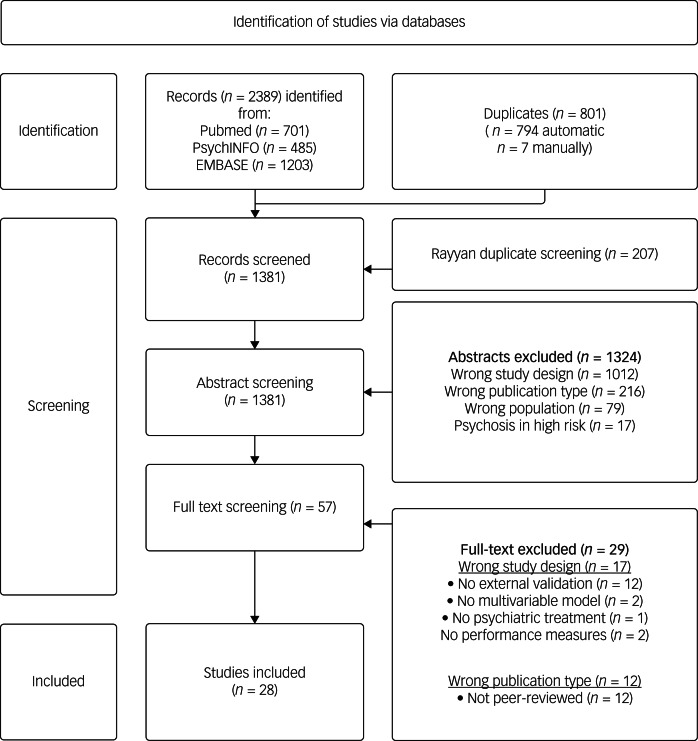
Method: The review and meta-analysis protocol was prospectively registered with PROSPERO (registration number CRD42022307987). A search was conducted on 8 November 2021 in the databases PubMED, PsycINFO and EMBASE. Random-effects meta-analysis and meta-regression were conducted to examine between-study heterogeneity in discriminative performance and its relevant influencing factors.
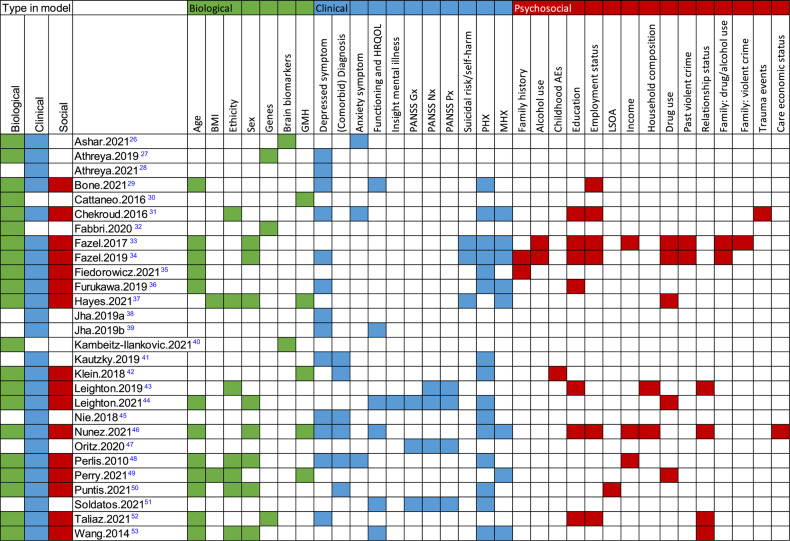
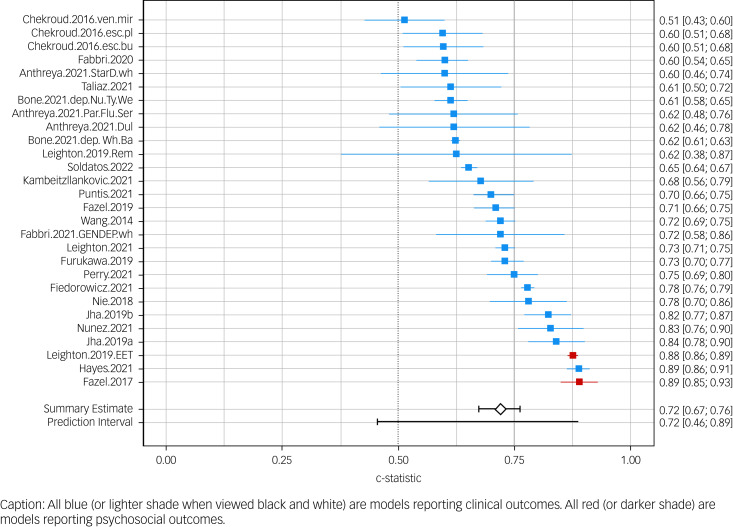
Results: Twenty-eight studies were included. The majority of studies (n = 16) validated models for mood disorders. Clinical predictors (e.g. symptom severity) were most frequently included (n = 25). Low methodological and applicability concerns were found for two studies. The overall discrimination performance of the meta-analysis was fair with wide prediction intervals (0.72 [0.46; 0.89]). The between-study heterogeneity was not explained by number or type of predictors but by disorder diagnosis.
Conclusions: Few models seem ready for further implementation in clinical practice to aid treatment allocation. Besides the need for more external validation studies, we recommend close examination of the clinical setting before model implementation.
期刊介绍:
Announcing the launch of BJPsych Open, an exciting new open access online journal for the publication of all methodologically sound research in all fields of psychiatry and disciplines related to mental health. BJPsych Open will maintain the highest scientific, peer review, and ethical standards of the BJPsych, ensure rapid publication for authors whilst sharing research with no cost to the reader in the spirit of maximising dissemination and public engagement. Cascade submission from BJPsych to BJPsych Open is a new option for authors whose first priority is rapid online publication with the prestigious BJPsych brand. Authors will also retain copyright to their works under a creative commons license.



 京公网安备 11010802042870号
京ICP备2023020795号-1
京公网安备 11010802042870号
京ICP备2023020795号-1

 分享
分享
 求助内容:
求助内容: 应助结果提醒方式:
 扫码关注我们
