Kevin Peikert MD, Adrian Spranger, Gabriel Miltenberger-Miltenyi MD, Hannes Glaß PhD, Björn Falkenburger MD, Christian Klose PhD, Donatienne Tyteca PhD, Andreas Hermann MD, PhD
VPS13A disease is an ultra-rare disorder caused by loss of function mutations in VPS13A characterized by striatal degeneration and by red blood cell (RBC) acanthocytosis. VPS13A is a bridge-like protein mediating lipid transfer at membrane contact sites.
Objectives
To assess the lipid composition of patient-derived RBCs.
Methods
RBCs collected from 5 VPS13A disease patients and 12 control subjects were analyzed by mass spectrometry (lipidomics).
Results
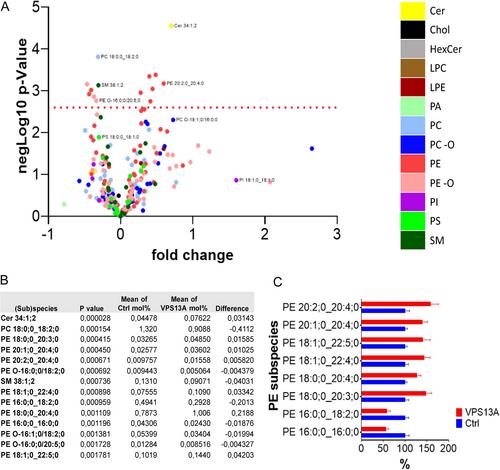
While we found no significant differences in the overall lipid class level, alterations in certain species were detected: phosphatidylethanolamine species with both longer chain length and higher unsaturation were increased in VPS13A disease samples. Specific ceramide, phosphatidylcholine, and sphingomyelin species were also altered.
期刊介绍:
Movement Disorders publishes a variety of content types including Reviews, Viewpoints, Full Length Articles, Historical Reports, Brief Reports, and Letters. The journal considers original manuscripts on topics related to the diagnosis, therapeutics, pharmacology, biochemistry, physiology, etiology, genetics, and epidemiology of movement disorders. Appropriate topics include Parkinsonism, Chorea, Tremors, Dystonia, Myoclonus, Tics, Tardive Dyskinesia, Spasticity, and Ataxia.





 京公网安备 11010802042870号
京ICP备2023020795号-1
京公网安备 11010802042870号
京ICP备2023020795号-1

 分享
分享
 求助内容:
求助内容: 应助结果提醒方式:
 扫码关注我们
