{"title":"Mitochondria-targeted nanotherapeutics: A new frontier in neurodegenerative disease treatment","authors":"Nishad Keethedeth, Rajesh Anantha Shenoi","doi":"10.1016/j.mito.2024.102000","DOIUrl":null,"url":null,"abstract":"<div><div>Mitochondria are the seat of cellular energy and play key roles in regulating several cellular processes such as oxidative phosphorylation, respiration, calcium homeostasis and apoptotic pathways. Mitochondrial dysfunction results in error in oxidative phosphorylation, redox imbalance, mitochondrial DNA mutations, and disturbances in mitochondrial dynamics, all of which can lead to several metabolic and degenerative diseases. A plethora of studies have provided evidence for the involvement of mitochondrial dysfunction in the pathogenesis of neurodegenerative diseases such as Parkinson’s disease, Alzheimer’s disease, Huntington’s disease, and amyotrophic lateral sclerosis. Hence mitochondria have been used as possible therapeutic targets in the regulation of neurodegenerative diseases. However, the double membranous structure of mitochondria poses an additional barrier to most drugs even if they are able to cross the plasma membrane. Most of the drugs acting on mitochondria also required very high doses to exhibit the desired mitochondrial accumulation and therapeutic effect which in-turn result in toxic effects. Mitochondrial targeting has been improved by direct conjugation of drugs to mitochondriotropic molecules like dequalinium (DQA) and triphenyl phosphonium (TPP) cations. But being cationic in nature, these molecules also exhibit toxicity at higher doses. In order to further improve the mitochondrial localization with minimal toxicity, TPP was conjugated with various nanomaterials like liposomes. inorganic nanoparticles, polymeric nanoparticles, micelles and dendrimers. This review provides an overview of the role of mitochondrial dysfunction in neurodegenerative diseases and various nanotherapeutic strategies for efficient targeting of mitochondria-acting drugs in these diseases.</div></div>","PeriodicalId":18606,"journal":{"name":"Mitochondrion","volume":"81 ","pages":"Article 102000"},"PeriodicalIF":4.5000,"publicationDate":"2024-12-09","publicationTypes":"Journal Article","fieldsOfStudy":null,"isOpenAccess":false,"openAccessPdf":"","citationCount":"0","resultStr":null,"platform":"Semanticscholar","paperid":null,"PeriodicalName":"Mitochondrion","FirstCategoryId":"99","ListUrlMain":"https://www.sciencedirect.com/science/article/pii/S1567724924001582","RegionNum":3,"RegionCategory":"生物学","ArticlePicture":[],"TitleCN":null,"AbstractTextCN":null,"PMCID":null,"EPubDate":"","PubModel":"","JCR":"Q2","JCRName":"CELL BIOLOGY","Score":null,"Total":0}
引用次数: 0
Abstract
Mitochondria are the seat of cellular energy and play key roles in regulating several cellular processes such as oxidative phosphorylation, respiration, calcium homeostasis and apoptotic pathways. Mitochondrial dysfunction results in error in oxidative phosphorylation, redox imbalance, mitochondrial DNA mutations, and disturbances in mitochondrial dynamics, all of which can lead to several metabolic and degenerative diseases. A plethora of studies have provided evidence for the involvement of mitochondrial dysfunction in the pathogenesis of neurodegenerative diseases such as Parkinson’s disease, Alzheimer’s disease, Huntington’s disease, and amyotrophic lateral sclerosis. Hence mitochondria have been used as possible therapeutic targets in the regulation of neurodegenerative diseases. However, the double membranous structure of mitochondria poses an additional barrier to most drugs even if they are able to cross the plasma membrane. Most of the drugs acting on mitochondria also required very high doses to exhibit the desired mitochondrial accumulation and therapeutic effect which in-turn result in toxic effects. Mitochondrial targeting has been improved by direct conjugation of drugs to mitochondriotropic molecules like dequalinium (DQA) and triphenyl phosphonium (TPP) cations. But being cationic in nature, these molecules also exhibit toxicity at higher doses. In order to further improve the mitochondrial localization with minimal toxicity, TPP was conjugated with various nanomaterials like liposomes. inorganic nanoparticles, polymeric nanoparticles, micelles and dendrimers. This review provides an overview of the role of mitochondrial dysfunction in neurodegenerative diseases and various nanotherapeutic strategies for efficient targeting of mitochondria-acting drugs in these diseases.
期刊介绍:
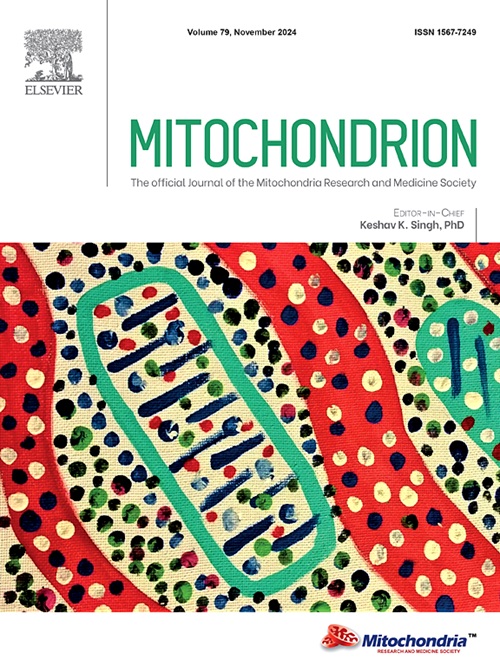
Mitochondrion is a definitive, high profile, peer-reviewed international research journal. The scope of Mitochondrion is broad, reporting on basic science of mitochondria from all organisms and from basic research to pathology and clinical aspects of mitochondrial diseases. The journal welcomes original contributions from investigators working in diverse sub-disciplines such as evolution, biophysics, biochemistry, molecular and cell biology, genetics, pharmacology, toxicology, forensic science, programmed cell death, aging, cancer and clinical features of mitochondrial diseases.



 京公网安备 11010802042870号
京ICP备2023020795号-1
京公网安备 11010802042870号
京ICP备2023020795号-1

 分享
分享
 求助内容:
求助内容: 应助结果提醒方式:
 扫码关注我们
