{"title":"Mechanical force modulates inflammation and immunomodulation in periodontal ligament cells.","authors":"Jira Chansaenroj, Ravipha Suwittayarak, Hiroshi Egusa, Lakshman P Samaranayake, Thanaphum Osathanon","doi":"10.1515/mr-2024-0034","DOIUrl":null,"url":null,"abstract":"<p><p>Mechanical forces control a multitude of biological responses in various cells and tissues. The periodontal ligament, located between the tooth's root and alveolar bone, is a major tissue compartment that is incessantly subjected to such mechanical stimulation through either normal or abnormal oral functionality. It is now known that mechanical stimulation activates periodontal ligament stem cells (PDLSCs) to modulate periodontal immunity and regulate inflammation - a basic feature of periodontal disease that affects virtually every human during their lifetime. For instance, shear stress induces the expression of immunomodulatory-related gene, indoleamine 2,3-dioxygenase (IDO). IDO cleaves l-tryptophan, resulting in increased l-kynurenine levels that, in turn, further promote regulatory T-cell differentiation and inhibit T cell proliferation. These and other related data reinforce the notion that mechanical stimulation plays a crucial role in controlling inflammation and immunomodulation of periodontal tissues. Further investigations, however, are warranted to evaluate the immunomodulatory features of PDLSCs so as to understand the pathological basis of periodontal disease and translate these into clinical interventions.</p>","PeriodicalId":74151,"journal":{"name":"Medical review (Berlin, Germany)","volume":"4 6","pages":"544-548"},"PeriodicalIF":0.0000,"publicationDate":"2024-08-13","publicationTypes":"Journal Article","fieldsOfStudy":null,"isOpenAccess":false,"openAccessPdf":"https://www.ncbi.nlm.nih.gov/pmc/articles/PMC11629306/pdf/","citationCount":"0","resultStr":null,"platform":"Semanticscholar","paperid":null,"PeriodicalName":"Medical review (Berlin, Germany)","FirstCategoryId":"1085","ListUrlMain":"https://doi.org/10.1515/mr-2024-0034","RegionNum":0,"RegionCategory":null,"ArticlePicture":[],"TitleCN":null,"AbstractTextCN":null,"PMCID":null,"EPubDate":"2024/12/1 0:00:00","PubModel":"eCollection","JCR":"","JCRName":"","Score":null,"Total":0}
引用次数: 0
Abstract
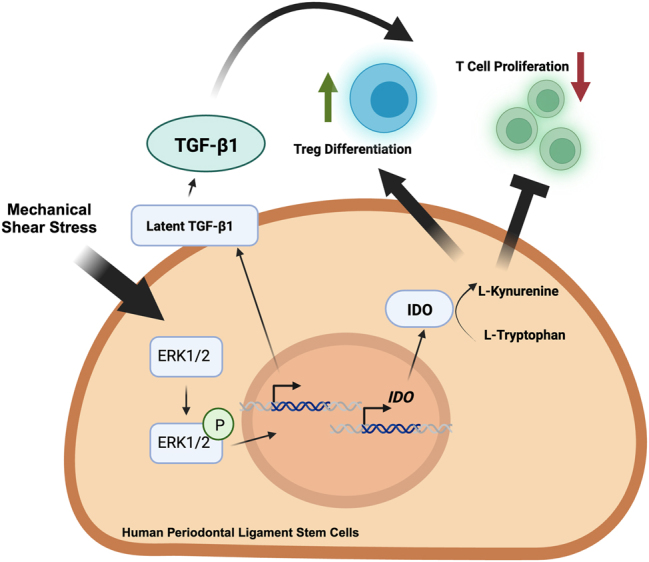
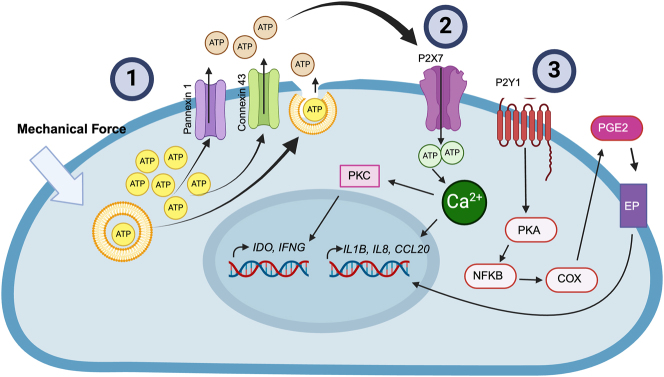
Mechanical forces control a multitude of biological responses in various cells and tissues. The periodontal ligament, located between the tooth's root and alveolar bone, is a major tissue compartment that is incessantly subjected to such mechanical stimulation through either normal or abnormal oral functionality. It is now known that mechanical stimulation activates periodontal ligament stem cells (PDLSCs) to modulate periodontal immunity and regulate inflammation - a basic feature of periodontal disease that affects virtually every human during their lifetime. For instance, shear stress induces the expression of immunomodulatory-related gene, indoleamine 2,3-dioxygenase (IDO). IDO cleaves l-tryptophan, resulting in increased l-kynurenine levels that, in turn, further promote regulatory T-cell differentiation and inhibit T cell proliferation. These and other related data reinforce the notion that mechanical stimulation plays a crucial role in controlling inflammation and immunomodulation of periodontal tissues. Further investigations, however, are warranted to evaluate the immunomodulatory features of PDLSCs so as to understand the pathological basis of periodontal disease and translate these into clinical interventions.



 京公网安备 11010802042870号
京ICP备2023020795号-1
京公网安备 11010802042870号
京ICP备2023020795号-1

 分享
分享

 求助内容:
求助内容: 应助结果提醒方式:
 扫码关注我们
