Defi Kartika Sari, Ghulam Jeelani, Hilkatul Ilmi, Lidya Tumewu, Ratna Wahyuni, Aty Widyawaruyanti, Tomoyoshi Nozaki, Achmad Fuad Hafid
{"title":"Therapeutic potential of Indonesian plant extracts in combating malaria and protozoan neglected tropical disease.","authors":"Defi Kartika Sari, Ghulam Jeelani, Hilkatul Ilmi, Lidya Tumewu, Ratna Wahyuni, Aty Widyawaruyanti, Tomoyoshi Nozaki, Achmad Fuad Hafid","doi":"10.1186/s12906-024-04717-6","DOIUrl":null,"url":null,"abstract":"<p><strong>Background: </strong>Neglected tropical diseases (NTDs) afflict nearly 2 billion people worldwide and are caused by various pathogens, such as bacteria, protozoa, and trypanosoma, prevalent in tropical and subtropical regions. Among the 17 NTDs recognized by the World Health Organization (WHO), protozoal infections caused by Plasmodium, Entamoeba, Leishmania, and Trypanosoma are particularly prominent and pose significant public health. Indonesia, endowed with a rich biodiversity owing to its tropical climate, harbors numerous plant species with potent biological activities that hold promise for therapeutic interventions. Hence, efforts have been directed towards exploring Indonesian plant extracts and isolated compounds for their potential in combating protozoal diseases.</p><p><strong>Methods: </strong>This study evaluated the antiprotozoal properties of 48 plant extracts sourced from the Cratoxylum, Diospyros, and Artocarpus genera. These extracts were screened using cell-based assays against Plasmodium falciparum (Pf), Entamoeba histolytica (Eh), Leishmania donovani (Ld), Trypanosoma brucei rhodesiense (Tbr), and Trypanosoma cruzi (Tc).</p><p><strong>Results: </strong>Extracts derived from the roots of Cratoxylum arborescens, obtained through dichloromethane extraction, exhibited significant activity against protozoa, with an IC<sub>50</sub> value ranging from 0.1 to 8.2 µg/mL. Furthermore, cochinchinone C was identified as an active compound capable of inhibiting the growth of Pf, Eh, Ld, and Tbr, Tc trypomastigote, and Tc epimastigote with IC<sub>50</sub> values of 5.8 µM, 6.1 µM, 0.2 µM, 0.1 µM, 0.7 µM, and 0.07 µM, respectively. Cochinchinone C is the first compound reported to exhibit activity against protozoal neglected tropical diseases, showing low cytotoxicity with a selectivity index greater than 10 when tested against carcinoma and normal cell lines. This suggests indicating its potential as a candidate for further drug development. This is the first report of cochinchinone C's activity against these protozoans.</p><p><strong>Conclusion: </strong>These findings establish cochinchinone C as a strong candidate for antiprotozoal drug development, highlighting the untapped therapeutic potential of Indonesia's rich plant biodiversity.</p>","PeriodicalId":9128,"journal":{"name":"BMC Complementary Medicine and Therapies","volume":"24 1","pages":"416"},"PeriodicalIF":3.4000,"publicationDate":"2024-12-18","publicationTypes":"Journal Article","fieldsOfStudy":null,"isOpenAccess":false,"openAccessPdf":"https://www.ncbi.nlm.nih.gov/pmc/articles/PMC11654344/pdf/","citationCount":"0","resultStr":null,"platform":"Semanticscholar","paperid":null,"PeriodicalName":"BMC Complementary Medicine and Therapies","FirstCategoryId":"3","ListUrlMain":"https://doi.org/10.1186/s12906-024-04717-6","RegionNum":2,"RegionCategory":"医学","ArticlePicture":[],"TitleCN":null,"AbstractTextCN":null,"PMCID":null,"EPubDate":"","PubModel":"","JCR":"Q1","JCRName":"INTEGRATIVE & COMPLEMENTARY MEDICINE","Score":null,"Total":0}
引用次数: 0
Abstract
Background: Neglected tropical diseases (NTDs) afflict nearly 2 billion people worldwide and are caused by various pathogens, such as bacteria, protozoa, and trypanosoma, prevalent in tropical and subtropical regions. Among the 17 NTDs recognized by the World Health Organization (WHO), protozoal infections caused by Plasmodium, Entamoeba, Leishmania, and Trypanosoma are particularly prominent and pose significant public health. Indonesia, endowed with a rich biodiversity owing to its tropical climate, harbors numerous plant species with potent biological activities that hold promise for therapeutic interventions. Hence, efforts have been directed towards exploring Indonesian plant extracts and isolated compounds for their potential in combating protozoal diseases.
Methods: This study evaluated the antiprotozoal properties of 48 plant extracts sourced from the Cratoxylum, Diospyros, and Artocarpus genera. These extracts were screened using cell-based assays against Plasmodium falciparum (Pf), Entamoeba histolytica (Eh), Leishmania donovani (Ld), Trypanosoma brucei rhodesiense (Tbr), and Trypanosoma cruzi (Tc).
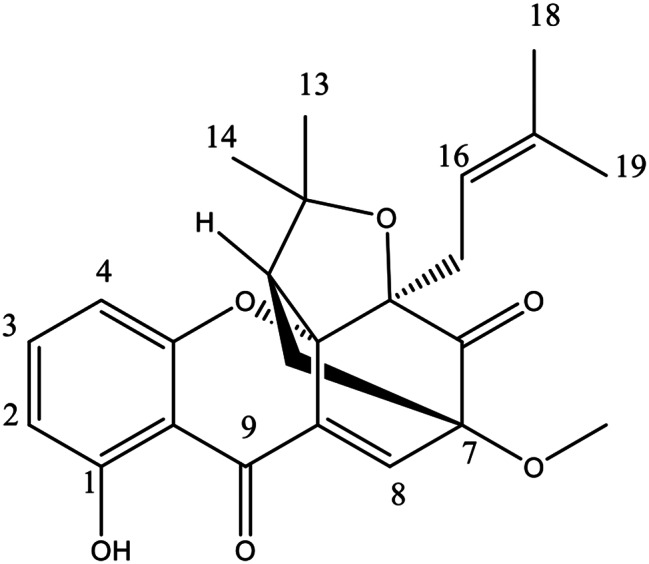
Results: Extracts derived from the roots of Cratoxylum arborescens, obtained through dichloromethane extraction, exhibited significant activity against protozoa, with an IC50 value ranging from 0.1 to 8.2 µg/mL. Furthermore, cochinchinone C was identified as an active compound capable of inhibiting the growth of Pf, Eh, Ld, and Tbr, Tc trypomastigote, and Tc epimastigote with IC50 values of 5.8 µM, 6.1 µM, 0.2 µM, 0.1 µM, 0.7 µM, and 0.07 µM, respectively. Cochinchinone C is the first compound reported to exhibit activity against protozoal neglected tropical diseases, showing low cytotoxicity with a selectivity index greater than 10 when tested against carcinoma and normal cell lines. This suggests indicating its potential as a candidate for further drug development. This is the first report of cochinchinone C's activity against these protozoans.
Conclusion: These findings establish cochinchinone C as a strong candidate for antiprotozoal drug development, highlighting the untapped therapeutic potential of Indonesia's rich plant biodiversity.




 京公网安备 11010802042870号
京ICP备2023020795号-1
京公网安备 11010802042870号
京ICP备2023020795号-1

 分享
分享
 求助内容:
求助内容: 应助结果提醒方式:
 扫码关注我们
