Rajani P Brandsen, Roselie M H Diederen, Gizem Kocabas, Erfan Nur, Arjan Malekzadeh, Reinier O Schlingemann, Bart J Biemond
{"title":"Clinical and laboratory risk factors for sickle cell retinopathy and maculopathy: a scoping review of the current evidence.","authors":"Rajani P Brandsen, Roselie M H Diederen, Gizem Kocabas, Erfan Nur, Arjan Malekzadeh, Reinier O Schlingemann, Bart J Biemond","doi":"10.3324/haematol.2024.286420","DOIUrl":null,"url":null,"abstract":"<p><p>Sickle cell retinopathy (SCR) is a complication of sickle cell disease (SCD) and can drastically impair visual acuity. Screening for SCR is, therefore, recommended, but evidence for optimal screening frequency on an individual level is lacking. This scoping review mapped the current evidence on risk factors for SCR and sickle cell maculopathy (SCM). A literature search (in Medline [Ovid]), Embase [Ovid]), and Scopus) resulted in 67 included articles which covered demographic risk factors, genetic risk factors, systemic therapy, correlations with other forms of SCD-related organ damage, and hematologic risk factors. SCR risk factors include older age, male sex, HbSC genotype, hemolysis, and HbF% <15% (in HbSS) and increased blood viscosity (in HbSC). For SCM, risk factors are older age, HbSS genotype, and higher degree of hemolysis. The pathophysiology of SCR and SCM appears multifactorial, but distinct patterns emerge suggesting that vaso-occlusion and hemolysis cause SCM and NPSCR in HbSS, while hyperviscosity in HbSC leads to peripheral retinopathy. We recommend yearly screening for high-risk patients (older HbSC males) and triennial screening for low-risk patients (young females HbSS with HbF>15%) to ensure comprehensive yet proportionate ophthalmic care. However, future studies are needed on the role of interventions for SCR and the long-term consequences of SCM in order to evaluate and define appropriate screening schedules.</p>","PeriodicalId":12964,"journal":{"name":"Haematologica","volume":" ","pages":"1092-1104"},"PeriodicalIF":7.9000,"publicationDate":"2025-05-01","publicationTypes":"Journal Article","fieldsOfStudy":null,"isOpenAccess":false,"openAccessPdf":"https://www.ncbi.nlm.nih.gov/pmc/articles/PMC12050931/pdf/","citationCount":"0","resultStr":null,"platform":"Semanticscholar","paperid":null,"PeriodicalName":"Haematologica","FirstCategoryId":"3","ListUrlMain":"https://doi.org/10.3324/haematol.2024.286420","RegionNum":1,"RegionCategory":"医学","ArticlePicture":[],"TitleCN":null,"AbstractTextCN":null,"PMCID":null,"EPubDate":"2024/12/19 0:00:00","PubModel":"Epub","JCR":"Q1","JCRName":"HEMATOLOGY","Score":null,"Total":0}
引用次数: 0
Abstract
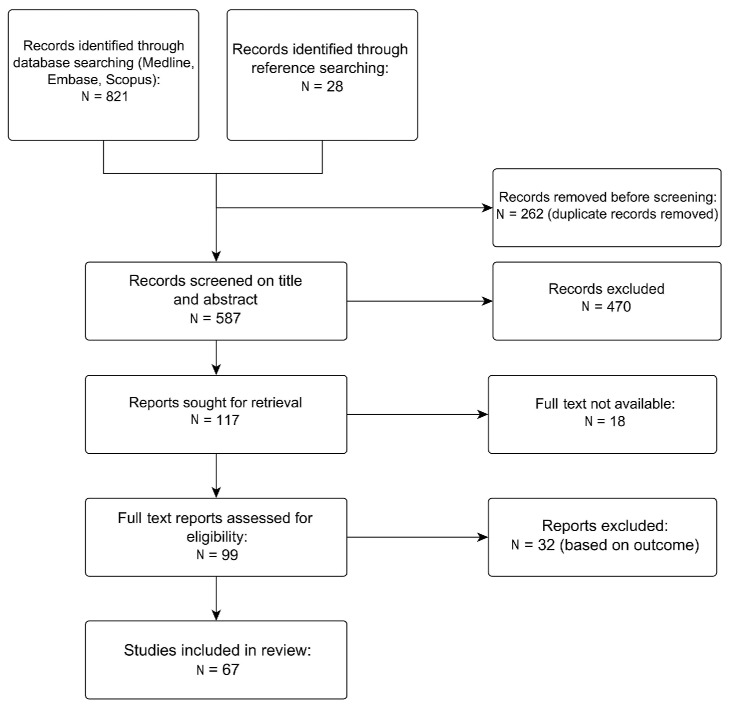
Sickle cell retinopathy (SCR) is a complication of sickle cell disease (SCD) and can drastically impair visual acuity. Screening for SCR is, therefore, recommended, but evidence for optimal screening frequency on an individual level is lacking. This scoping review mapped the current evidence on risk factors for SCR and sickle cell maculopathy (SCM). A literature search (in Medline [Ovid]), Embase [Ovid]), and Scopus) resulted in 67 included articles which covered demographic risk factors, genetic risk factors, systemic therapy, correlations with other forms of SCD-related organ damage, and hematologic risk factors. SCR risk factors include older age, male sex, HbSC genotype, hemolysis, and HbF% <15% (in HbSS) and increased blood viscosity (in HbSC). For SCM, risk factors are older age, HbSS genotype, and higher degree of hemolysis. The pathophysiology of SCR and SCM appears multifactorial, but distinct patterns emerge suggesting that vaso-occlusion and hemolysis cause SCM and NPSCR in HbSS, while hyperviscosity in HbSC leads to peripheral retinopathy. We recommend yearly screening for high-risk patients (older HbSC males) and triennial screening for low-risk patients (young females HbSS with HbF>15%) to ensure comprehensive yet proportionate ophthalmic care. However, future studies are needed on the role of interventions for SCR and the long-term consequences of SCM in order to evaluate and define appropriate screening schedules.
期刊介绍:
Haematologica is a journal that publishes articles within the broad field of hematology. It reports on novel findings in basic, clinical, and translational research.
Scope:
The scope of the journal includes reporting novel research results that:
Have a significant impact on understanding normal hematology or the development of hematological diseases.
Are likely to bring important changes to the diagnosis or treatment of hematological diseases.





 京公网安备 11010802042870号
京ICP备2023020795号-1
京公网安备 11010802042870号
京ICP备2023020795号-1

 分享
分享
 求助内容:
求助内容: 应助结果提醒方式:
 扫码关注我们
