{"title":"Photocatalytic Estrogen Degradation by the Composite of Tin Oxide Fine Particles and Graphene-like Carbon Nitride.","authors":"Yuzuki Amino, Ayar Al-Zubaidi, Yosuke Ishii, Shinji Kawasaki","doi":"10.1021/acsomega.4c03390","DOIUrl":null,"url":null,"abstract":"<p><p>This study investigates whether 17β-estradiol (E2), a natural estrogen and one of the endocrine-disrupting chemicals responsible for water pollution, can be oxidatively decomposed under simulated solar light using a composite of tin oxide nanoparticles and graphene-like carbon nitride (g-CN) as a photocatalyst. The composite photocatalyst was prepared by heating a mixture of urea and tin acetate. FT-IR measurements revealed that g-CN possesses structural units similar to g-C<sub>3</sub>N<sub>4</sub>, a well-studied graphite-like carbon nitride. However, unlike g-C<sub>3</sub>N<sub>4</sub>, sharp diffraction lines were not observed in the XRD diffraction pattern of g-CN, indicating lower crystallinity. Elemental analysis showed that g-CN is slightly nitrogen-rich compared to g-C<sub>3</sub>N<sub>4</sub>, and UV-vis measurements indicated that the band gap of g-CN is slightly smaller than that of g-C<sub>3</sub>N<sub>4</sub>. The presence of tin in the composite of tin oxide and g-CN was clearly confirmed by XPS, although no sharp diffraction peaks were observed in the XRD patterns, suggesting the presence of microcrystals. Furthermore, FE-SEM observations did not reveal large tin oxide crystals, although EDS mapping indicated the presence of tin oxide. It was found that the prepared tin oxide and g-CN composites function effectively as photocatalysts for degrading E2 under simulated solar light. The degradation rate constant was evaluated to be <i>k</i> = 3.34 (0.14) × 10<sup>-2</sup> min<sup>-1</sup>. Peroxide ion radicals were detected in ESR measurements from the irradiated solution, suggesting that peroxide ion radicals are generated through oxygen photoreduction as the counter-reaction of the oxidative decomposition of E2.</p>","PeriodicalId":22,"journal":{"name":"ACS Omega","volume":"9 50","pages":"49064-49070"},"PeriodicalIF":4.3000,"publicationDate":"2024-12-06","publicationTypes":"Journal Article","fieldsOfStudy":null,"isOpenAccess":false,"openAccessPdf":"https://www.ncbi.nlm.nih.gov/pmc/articles/PMC11656215/pdf/","citationCount":"0","resultStr":null,"platform":"Semanticscholar","paperid":null,"PeriodicalName":"ACS Omega","FirstCategoryId":"92","ListUrlMain":"https://doi.org/10.1021/acsomega.4c03390","RegionNum":3,"RegionCategory":"化学","ArticlePicture":[],"TitleCN":null,"AbstractTextCN":null,"PMCID":null,"EPubDate":"2024/12/17 0:00:00","PubModel":"eCollection","JCR":"Q2","JCRName":"CHEMISTRY, MULTIDISCIPLINARY","Score":null,"Total":0}
引用次数: 0
Abstract
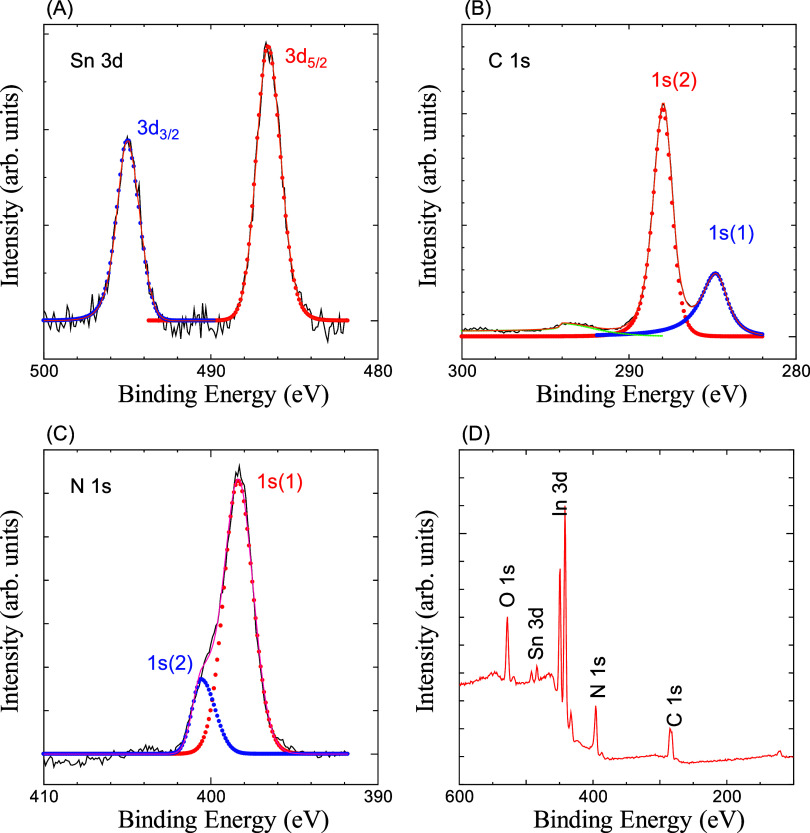
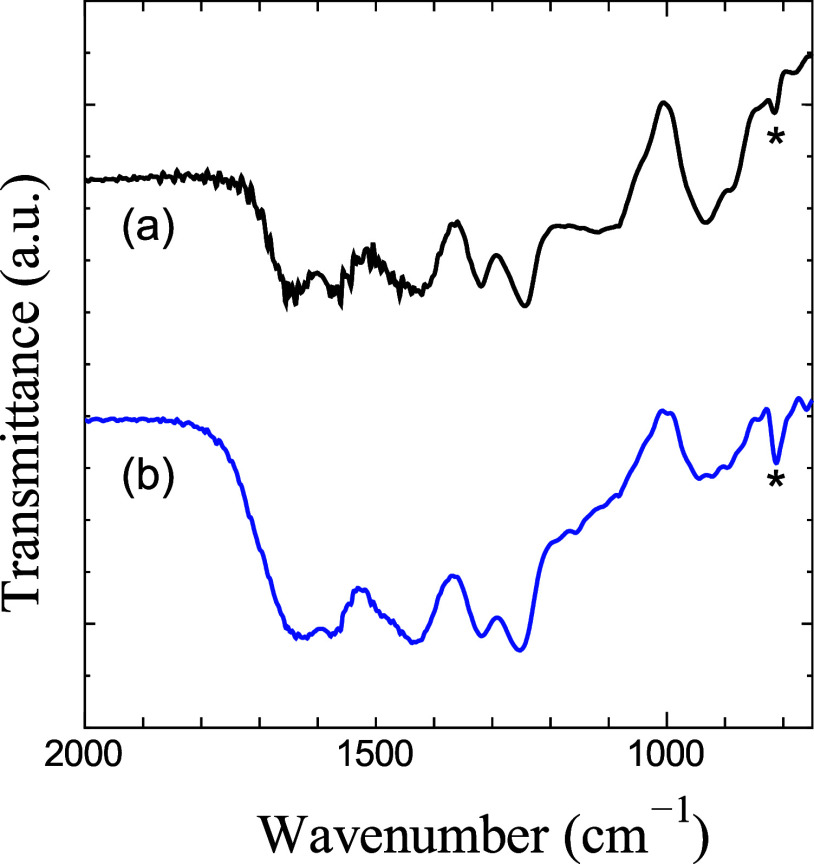
This study investigates whether 17β-estradiol (E2), a natural estrogen and one of the endocrine-disrupting chemicals responsible for water pollution, can be oxidatively decomposed under simulated solar light using a composite of tin oxide nanoparticles and graphene-like carbon nitride (g-CN) as a photocatalyst. The composite photocatalyst was prepared by heating a mixture of urea and tin acetate. FT-IR measurements revealed that g-CN possesses structural units similar to g-C3N4, a well-studied graphite-like carbon nitride. However, unlike g-C3N4, sharp diffraction lines were not observed in the XRD diffraction pattern of g-CN, indicating lower crystallinity. Elemental analysis showed that g-CN is slightly nitrogen-rich compared to g-C3N4, and UV-vis measurements indicated that the band gap of g-CN is slightly smaller than that of g-C3N4. The presence of tin in the composite of tin oxide and g-CN was clearly confirmed by XPS, although no sharp diffraction peaks were observed in the XRD patterns, suggesting the presence of microcrystals. Furthermore, FE-SEM observations did not reveal large tin oxide crystals, although EDS mapping indicated the presence of tin oxide. It was found that the prepared tin oxide and g-CN composites function effectively as photocatalysts for degrading E2 under simulated solar light. The degradation rate constant was evaluated to be k = 3.34 (0.14) × 10-2 min-1. Peroxide ion radicals were detected in ESR measurements from the irradiated solution, suggesting that peroxide ion radicals are generated through oxygen photoreduction as the counter-reaction of the oxidative decomposition of E2.
ACS OmegaChemical Engineering-General Chemical Engineering
CiteScore
6.60
自引率
4.90%
发文量
3945
审稿时长
2.4 months
期刊介绍:
ACS Omega is an open-access global publication for scientific articles that describe new findings in chemistry and interfacing areas of science, without any perceived evaluation of immediate impact.



 京公网安备 11010802042870号
京ICP备2023020795号-1
京公网安备 11010802042870号
京ICP备2023020795号-1

 分享
分享
 求助内容:
求助内容: 应助结果提醒方式:
 扫码关注我们
