{"title":"FN1 and VEGFA Are Potential Therapeutic Targets in Glioblastoma as Determined by Bioinformatics Analysis.","authors":"Mijung Im, Jungwook Roh, Wonyi Jang, Wanyeon Kim","doi":"10.21873/cgp.20488","DOIUrl":null,"url":null,"abstract":"<p><strong>Background/aim: </strong>Glioblastoma is the most malignant brain tumor, and despite advances in treatment, survival rates are still dismal. Therefore, a comprehensive understanding of the underlying molecular mechanisms of glioblastoma is needed. This study suggests potential therapeutic targets in glioblastoma that may provide new therapeutic insights.</p><p><strong>Materials and methods: </strong>To identify hub genes in glioblastoma, three datasets were selected from the GEO database. After screening DEGs using GEO2R, GO and KEGG analyses were performed using DAVID. The PPI network was visualized using Cytoscape and 7 hub genes were extracted. The prognostic potential of 7 hub genes was investigated using the Gliovis and GEPIA2 databases.</p><p><strong>Results: </strong>In total, 176 up-regulated and 263 down-regulated genes were identified. From the PPI network, 7 hub genes were identified including CAMK2A, DLG4, SNAP25, SYT1, MYC, FN1, and VEGFA. Out of the 7 hub genes identified, FN1 and VEGFA have been associated with a poor prognosis in glioblastoma based on the survival analysis.</p><p><strong>Conclusion: </strong>This study suggests that high levels of FN1 and VEGFA expression are associated with a poor prognosis in glioblastoma and that both genes are promising targets for glioblastoma therapy. Bioinformatics analysis of DEGs revealed putative targets that might reveal the molecular mechanisms underlying glioblastoma.</p>","PeriodicalId":9516,"journal":{"name":"Cancer Genomics & Proteomics","volume":"22 1","pages":"70-80"},"PeriodicalIF":2.6000,"publicationDate":"2025-01-01","publicationTypes":"Journal Article","fieldsOfStudy":null,"isOpenAccess":false,"openAccessPdf":"https://www.ncbi.nlm.nih.gov/pmc/articles/PMC11696323/pdf/","citationCount":"0","resultStr":null,"platform":"Semanticscholar","paperid":null,"PeriodicalName":"Cancer Genomics & Proteomics","FirstCategoryId":"3","ListUrlMain":"https://doi.org/10.21873/cgp.20488","RegionNum":4,"RegionCategory":"医学","ArticlePicture":[],"TitleCN":null,"AbstractTextCN":null,"PMCID":null,"EPubDate":"","PubModel":"","JCR":"Q2","JCRName":"GENETICS & HEREDITY","Score":null,"Total":0}
引用次数: 0
Abstract
Background/aim: Glioblastoma is the most malignant brain tumor, and despite advances in treatment, survival rates are still dismal. Therefore, a comprehensive understanding of the underlying molecular mechanisms of glioblastoma is needed. This study suggests potential therapeutic targets in glioblastoma that may provide new therapeutic insights.
Materials and methods: To identify hub genes in glioblastoma, three datasets were selected from the GEO database. After screening DEGs using GEO2R, GO and KEGG analyses were performed using DAVID. The PPI network was visualized using Cytoscape and 7 hub genes were extracted. The prognostic potential of 7 hub genes was investigated using the Gliovis and GEPIA2 databases.
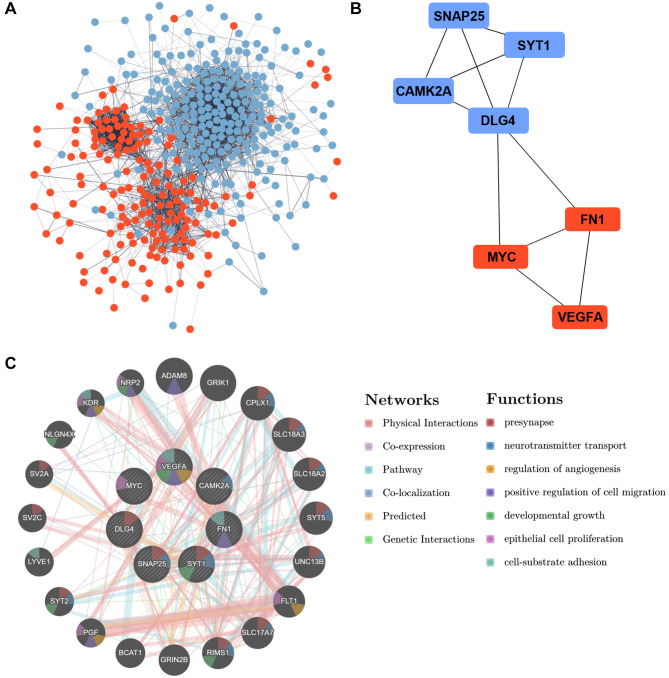
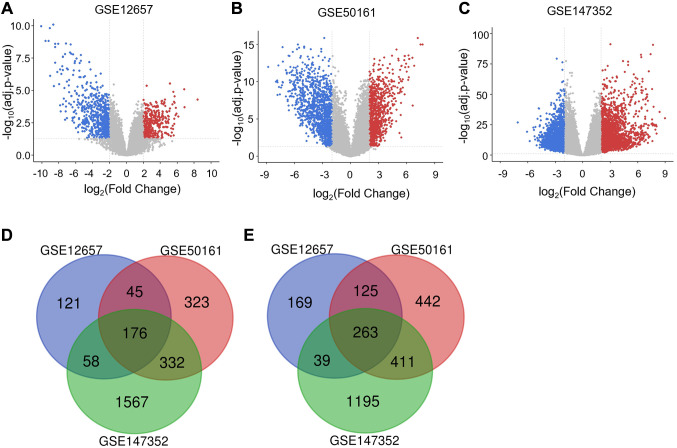
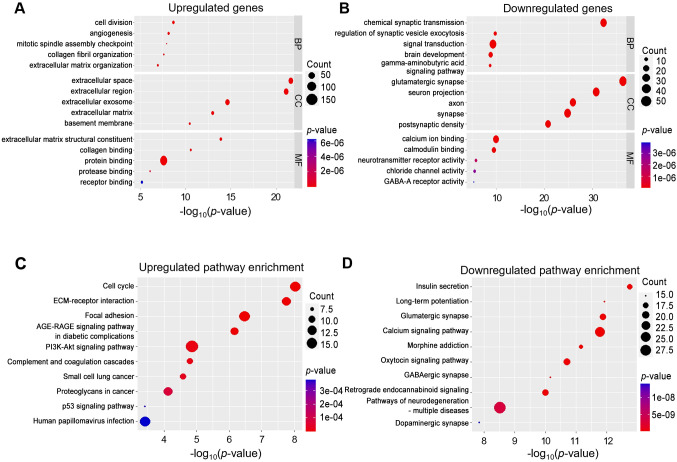
Results: In total, 176 up-regulated and 263 down-regulated genes were identified. From the PPI network, 7 hub genes were identified including CAMK2A, DLG4, SNAP25, SYT1, MYC, FN1, and VEGFA. Out of the 7 hub genes identified, FN1 and VEGFA have been associated with a poor prognosis in glioblastoma based on the survival analysis.
Conclusion: This study suggests that high levels of FN1 and VEGFA expression are associated with a poor prognosis in glioblastoma and that both genes are promising targets for glioblastoma therapy. Bioinformatics analysis of DEGs revealed putative targets that might reveal the molecular mechanisms underlying glioblastoma.
期刊介绍:
Cancer Genomics & Proteomics (CGP) is an international peer-reviewed journal designed to publish rapidly high quality articles and reviews on the application of genomic and proteomic technology to basic, experimental and clinical cancer research. In this site you may find information concerning the editorial board, editorial policy, issue contents, subscriptions, submission of manuscripts and advertising. The first issue of CGP circulated in January 2004.
Cancer Genomics & Proteomics is a journal of the International Institute of Anticancer Research. From January 2013 CGP is converted to an online-only open access journal.
Cancer Genomics & Proteomics supports (a) the aims and the research projects of the INTERNATIONAL INSTITUTE OF ANTICANCER RESEARCH and (b) the organization of the INTERNATIONAL CONFERENCES OF ANTICANCER RESEARCH.



 京公网安备 11010802042870号
京ICP备2023020795号-1
京公网安备 11010802042870号
京ICP备2023020795号-1

 分享
分享
 求助内容:
求助内容: 应助结果提醒方式:
 扫码关注我们
