Recent advances in examining the factors influencing the efficacy of biocides against Listeria monocytogenes biofilms in the food industry: A systematic review
Michael Arthur, Edmund Larbi Afari, Elena-Alexandra Alexa, Mei-Jun Zhu, Michael T. Gaffney, Jesus Maria Frias Celayeta, Catherine M. Burgess
{"title":"Recent advances in examining the factors influencing the efficacy of biocides against Listeria monocytogenes biofilms in the food industry: A systematic review","authors":"Michael Arthur, Edmund Larbi Afari, Elena-Alexandra Alexa, Mei-Jun Zhu, Michael T. Gaffney, Jesus Maria Frias Celayeta, Catherine M. Burgess","doi":"10.1111/1541-4337.70083","DOIUrl":null,"url":null,"abstract":"<p>Controlling <i>Listeria monocytogenes</i> and its associated biofilms in the food industry requires various disinfection techniques, including physical, chemical, and biological treatments. Biocides, owing to their ease of use, cost-effectiveness, dissolvability in water, and efficacy against a wide range of microorganisms, are frequently selected options. Nonetheless, concerns have been raised about their efficacy in controlling <i>L. monocytogenes</i> biofilm, as laboratory-based and commercial studies have reported the persistence of this bacterium after cleaning and disinfection. This review systematically examined scientific studies, sourced from the Web of Science, Scopus, and PubMed databases between January 2010 and May 2024, that investigated the effectiveness of the most commonly used biocides in the food industry against <i>L. monocytogenes</i> biofilms. A total of 92 articles which met the screening criteria, were included, with studies utilizing biocides containing sodium hypochlorite, quaternary ammonium compounds, and peroxyacetic acid being predominant. Studies indicated that several key factors may potentially influence biocides’ efficacy against <i>L. monocytogenes</i> biofilms. These factors included strain type (persistent, sporadic), serotype, strain origin (clinical, environmental, or food), surface type (biotic or abiotic), surface material (stainless steel, polystyrene, etc.), incubation time (biofilm age) and temperature, presence of organic matter, biocide's active agent, and the co-culture of <i>L. monocytogenes</i> with other bacteria. The induction of the viable but nonculturable (VBNC) state following disinfection is also a critical concern. This review aims to provide a global understanding of how <i>L. monocytogenes</i> biofilms respond to biocides under different treatment conditions, facilitating the development of effective cleaning and disinfection strategies in the food industry.</p>","PeriodicalId":155,"journal":{"name":"Comprehensive Reviews in Food Science and Food Safety","volume":"24 1","pages":""},"PeriodicalIF":14.1000,"publicationDate":"2024-12-30","publicationTypes":"Journal Article","fieldsOfStudy":null,"isOpenAccess":false,"openAccessPdf":"https://www.ncbi.nlm.nih.gov/pmc/articles/PMC11684510/pdf/","citationCount":"0","resultStr":null,"platform":"Semanticscholar","paperid":null,"PeriodicalName":"Comprehensive Reviews in Food Science and Food Safety","FirstCategoryId":"97","ListUrlMain":"https://ift.onlinelibrary.wiley.com/doi/10.1111/1541-4337.70083","RegionNum":1,"RegionCategory":"农林科学","ArticlePicture":[],"TitleCN":null,"AbstractTextCN":null,"PMCID":null,"EPubDate":"","PubModel":"","JCR":"Q1","JCRName":"FOOD SCIENCE & TECHNOLOGY","Score":null,"Total":0}
引用次数: 0
Abstract
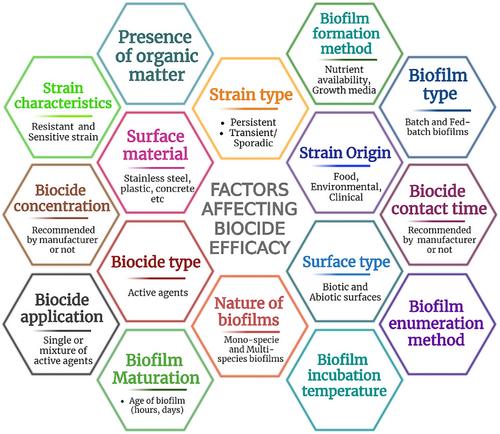
Controlling Listeria monocytogenes and its associated biofilms in the food industry requires various disinfection techniques, including physical, chemical, and biological treatments. Biocides, owing to their ease of use, cost-effectiveness, dissolvability in water, and efficacy against a wide range of microorganisms, are frequently selected options. Nonetheless, concerns have been raised about their efficacy in controlling L. monocytogenes biofilm, as laboratory-based and commercial studies have reported the persistence of this bacterium after cleaning and disinfection. This review systematically examined scientific studies, sourced from the Web of Science, Scopus, and PubMed databases between January 2010 and May 2024, that investigated the effectiveness of the most commonly used biocides in the food industry against L. monocytogenes biofilms. A total of 92 articles which met the screening criteria, were included, with studies utilizing biocides containing sodium hypochlorite, quaternary ammonium compounds, and peroxyacetic acid being predominant. Studies indicated that several key factors may potentially influence biocides’ efficacy against L. monocytogenes biofilms. These factors included strain type (persistent, sporadic), serotype, strain origin (clinical, environmental, or food), surface type (biotic or abiotic), surface material (stainless steel, polystyrene, etc.), incubation time (biofilm age) and temperature, presence of organic matter, biocide's active agent, and the co-culture of L. monocytogenes with other bacteria. The induction of the viable but nonculturable (VBNC) state following disinfection is also a critical concern. This review aims to provide a global understanding of how L. monocytogenes biofilms respond to biocides under different treatment conditions, facilitating the development of effective cleaning and disinfection strategies in the food industry.
在食品工业中控制单核增生李斯特菌及其相关生物膜需要多种消毒技术,包括物理、化学和生物处理。杀菌剂,由于其易于使用,成本效益,可溶于水,对多种微生物的功效,经常被选择。尽管如此,由于实验室和商业研究报告了这种细菌在清洁和消毒后的持久性,人们对它们控制单核增生乳杆菌生物膜的功效提出了担忧。本综述系统地检查了2010年1月至2024年5月期间来自Web of Science、Scopus和PubMed数据库的科学研究,这些研究调查了食品工业中最常用的杀菌剂对单核增生乳杆菌生物膜的有效性。共纳入92篇符合筛选标准的研究,其中使用含次氯酸钠、季铵化合物和过氧乙酸的杀菌剂的研究占主导地位。研究表明,有几个关键因素可能影响杀菌剂对单核增生乳杆菌生物膜的药效。这些因素包括菌株类型(持续性,散发性),血清型,菌株来源(临床,环境或食物),表面类型(生物或非生物),表面材料(不锈钢,聚苯乙烯等),培养时间(生物膜年龄)和温度,有机物的存在,杀菌剂的活性剂,以及单核增生乳杆菌与其他细菌的共培养。在消毒后诱导有活力但不可培养(VBNC)状态也是一个关键问题。本文旨在全面了解单核增生乳杆菌生物膜在不同处理条件下对杀菌剂的反应,促进食品工业中有效清洁和消毒策略的发展。
期刊介绍:
Comprehensive Reviews in Food Science and Food Safety (CRFSFS) is an online peer-reviewed journal established in 2002. It aims to provide scientists with unique and comprehensive reviews covering various aspects of food science and technology.
CRFSFS publishes in-depth reviews addressing the chemical, microbiological, physical, sensory, and nutritional properties of foods, as well as food processing, engineering, analytical methods, and packaging. Manuscripts should contribute new insights and recommendations to the scientific knowledge on the topic. The journal prioritizes recent developments and encourages critical assessment of experimental design and interpretation of results.
Topics related to food safety, such as preventive controls, ingredient contaminants, storage, food authenticity, and adulteration, are considered. Reviews on food hazards must demonstrate validity and reliability in real food systems, not just in model systems. Additionally, reviews on nutritional properties should provide a realistic perspective on how foods influence health, considering processing and storage effects on bioactivity.
The journal also accepts reviews on consumer behavior, risk assessment, food regulations, and post-harvest physiology. Authors are encouraged to consult the Editor in Chief before submission to ensure topic suitability. Systematic reviews and meta-analyses on analytical and sensory methods, quality control, and food safety approaches are welcomed, with authors advised to follow IFIS Good review practice guidelines.







 京公网安备 11010802042870号
京ICP备2023020795号-1
京公网安备 11010802042870号
京ICP备2023020795号-1

 分享
分享
 求助内容:
求助内容: 应助结果提醒方式:
 扫码关注我们
