{"title":"Chirality of sub-nanometer nanowires/nanobelts","authors":"Kaiyang Xing, Junfeng Hui and Simin Zhang","doi":"10.1039/D4NR05262E","DOIUrl":null,"url":null,"abstract":"<p >Chirality is a widespread phenomenon in the fields of nature and chemicals, endowing compounds with distinctive chemical and biological characteristics. The conventional synthesis of chiral nanomaterials relies on the introduction of chiral ligands or additives and environmental factors such as solvents and mechanical forces. Sub-nanometer nanowires (SNWs) and sub-nanometer nanobelts (SNBs) are one-dimensional nanomaterials with high anisotropy, nearly 100% atomic exposure ratio and some other distinctive characteristics. In addition to traditional synthesis methods, the intrinsic chirality of SNWs/SNBs can also be achieved by several methods, such as the construction of asymmetric defects and counterion exchange. Chiral SNWs/SNBs have wide application prospects in chiral catalysis, chiral optical devices, chiral drug delivery, chiral liquid crystal materials, chiral sensors, and so on. In this work, we briefly introduce several examples of the origination, amplification, and transfer of the chirality in SNWs/SNBs. This review aims to deepen chirality researchers’ understanding of the fundamental origins of intrinsic chirality in SNWs/SNBs and lays the foundation for expanding their potential applications.</p>","PeriodicalId":92,"journal":{"name":"Nanoscale","volume":" 8","pages":" 4328-4337"},"PeriodicalIF":5.1000,"publicationDate":"2025-01-09","publicationTypes":"Journal Article","fieldsOfStudy":null,"isOpenAccess":false,"openAccessPdf":"","citationCount":"0","resultStr":null,"platform":"Semanticscholar","paperid":null,"PeriodicalName":"Nanoscale","FirstCategoryId":"88","ListUrlMain":"https://pubs.rsc.org/en/content/articlelanding/2025/nr/d4nr05262e","RegionNum":3,"RegionCategory":"材料科学","ArticlePicture":[],"TitleCN":null,"AbstractTextCN":null,"PMCID":null,"EPubDate":"","PubModel":"","JCR":"Q1","JCRName":"CHEMISTRY, MULTIDISCIPLINARY","Score":null,"Total":0}
引用次数: 0
Abstract
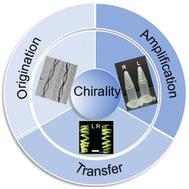
Chirality is a widespread phenomenon in the fields of nature and chemicals, endowing compounds with distinctive chemical and biological characteristics. The conventional synthesis of chiral nanomaterials relies on the introduction of chiral ligands or additives and environmental factors such as solvents and mechanical forces. Sub-nanometer nanowires (SNWs) and sub-nanometer nanobelts (SNBs) are one-dimensional nanomaterials with high anisotropy, nearly 100% atomic exposure ratio and some other distinctive characteristics. In addition to traditional synthesis methods, the intrinsic chirality of SNWs/SNBs can also be achieved by several methods, such as the construction of asymmetric defects and counterion exchange. Chiral SNWs/SNBs have wide application prospects in chiral catalysis, chiral optical devices, chiral drug delivery, chiral liquid crystal materials, chiral sensors, and so on. In this work, we briefly introduce several examples of the origination, amplification, and transfer of the chirality in SNWs/SNBs. This review aims to deepen chirality researchers’ understanding of the fundamental origins of intrinsic chirality in SNWs/SNBs and lays the foundation for expanding their potential applications.
期刊介绍:
Nanoscale is a high-impact international journal, publishing high-quality research across nanoscience and nanotechnology. Nanoscale publishes a full mix of research articles on experimental and theoretical work, including reviews, communications, and full papers.Highly interdisciplinary, this journal appeals to scientists, researchers and professionals interested in nanoscience and nanotechnology, quantum materials and quantum technology, including the areas of physics, chemistry, biology, medicine, materials, energy/environment, information technology, detection science, healthcare and drug discovery, and electronics.



 京公网安备 11010802042870号
京ICP备2023020795号-1
京公网安备 11010802042870号
京ICP备2023020795号-1

 分享
分享
 求助内容:
求助内容: 应助结果提醒方式:
 扫码关注我们
