{"title":"Application of Mendelian randomization analysis to explore causal associations of aspirin use with bone mineral density and risk of fracture.","authors":"Qi-Pei Liu","doi":"10.1186/s41065-024-00359-3","DOIUrl":null,"url":null,"abstract":"<p><strong>Objective: </strong>Previous observational studies on the association between aspirin use, bone mineral density (BMD), and fracture risk have yielded controversial results. This study explored the causal relationship between aspirin use, BMD, and fracture risk using Mendelian randomization (MR).</p><p><strong>Methods: </strong>Summary data for aspirin use and BMD of five different body parts (femoral neck, lumbar spine, forearm, heel, and ultra distal forearm) and fractures were obtained from the integrative epidemiology unit open genome-wide association studies database for bidirectional MR analysis. An appropriate model was chosen based on Cochran's Q test, with inverse variance-weighted as the primary method for MR analysis, supplemented by the weighted-median and MR-Egger methods. MR-Egger and MR-PRESSO were used to test for horizontal pleiotropy and exclude significant outliers that could bias the results. Various sensitivity analyses, including leave-one-out analysis, were conducted to ensure the robustness of the findings.</p><p><strong>Results: </strong>Aspirin use significantly increased lumbar spine BMD (odds ratio [OR] = 4.660; 95% confidence interval [CI]: 1.365-15.906; P = 0.014). No significant causal association was found between aspirin use and fracture risk (beta = 59.951; 95% CI: -265.189-385.091; P = 0.718). No significant reverse causality was observed.</p><p><strong>Conclusion: </strong>This study indicates that aspirin use does not significantly affect fracture risk but has a significant protective effect on lumbar spine BMD, revealing a potential benefit of aspirin against osteoporosis.</p>","PeriodicalId":12862,"journal":{"name":"Hereditas","volume":"162 1","pages":"3"},"PeriodicalIF":2.5000,"publicationDate":"2025-01-07","publicationTypes":"Journal Article","fieldsOfStudy":null,"isOpenAccess":false,"openAccessPdf":"https://www.ncbi.nlm.nih.gov/pmc/articles/PMC11708298/pdf/","citationCount":"0","resultStr":null,"platform":"Semanticscholar","paperid":null,"PeriodicalName":"Hereditas","FirstCategoryId":"99","ListUrlMain":"https://doi.org/10.1186/s41065-024-00359-3","RegionNum":3,"RegionCategory":"生物学","ArticlePicture":[],"TitleCN":null,"AbstractTextCN":null,"PMCID":null,"EPubDate":"","PubModel":"","JCR":"","JCRName":"","Score":null,"Total":0}
引用次数: 0
Abstract
Objective: Previous observational studies on the association between aspirin use, bone mineral density (BMD), and fracture risk have yielded controversial results. This study explored the causal relationship between aspirin use, BMD, and fracture risk using Mendelian randomization (MR).
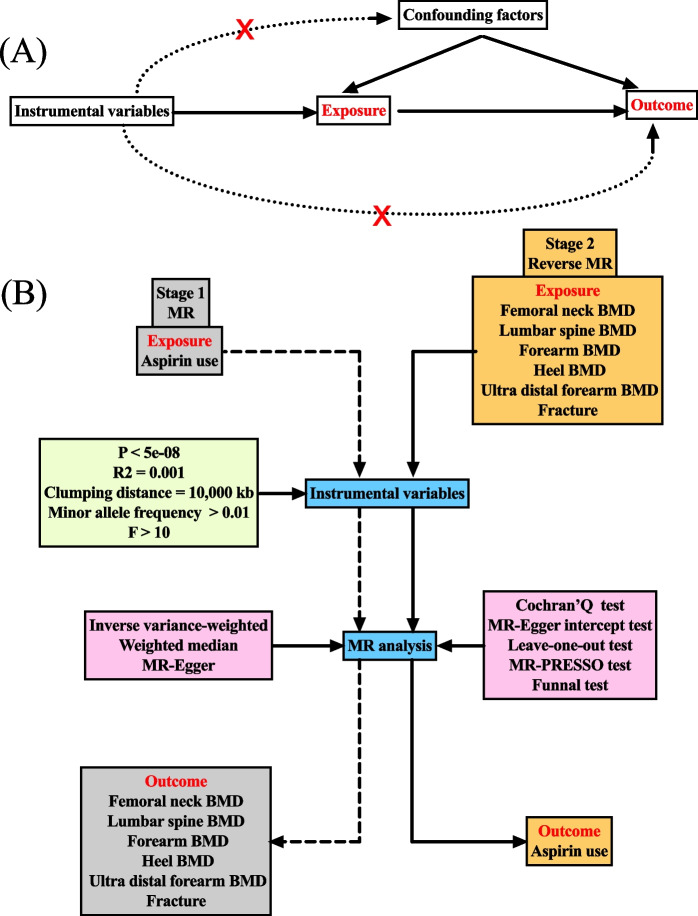
Methods: Summary data for aspirin use and BMD of five different body parts (femoral neck, lumbar spine, forearm, heel, and ultra distal forearm) and fractures were obtained from the integrative epidemiology unit open genome-wide association studies database for bidirectional MR analysis. An appropriate model was chosen based on Cochran's Q test, with inverse variance-weighted as the primary method for MR analysis, supplemented by the weighted-median and MR-Egger methods. MR-Egger and MR-PRESSO were used to test for horizontal pleiotropy and exclude significant outliers that could bias the results. Various sensitivity analyses, including leave-one-out analysis, were conducted to ensure the robustness of the findings.
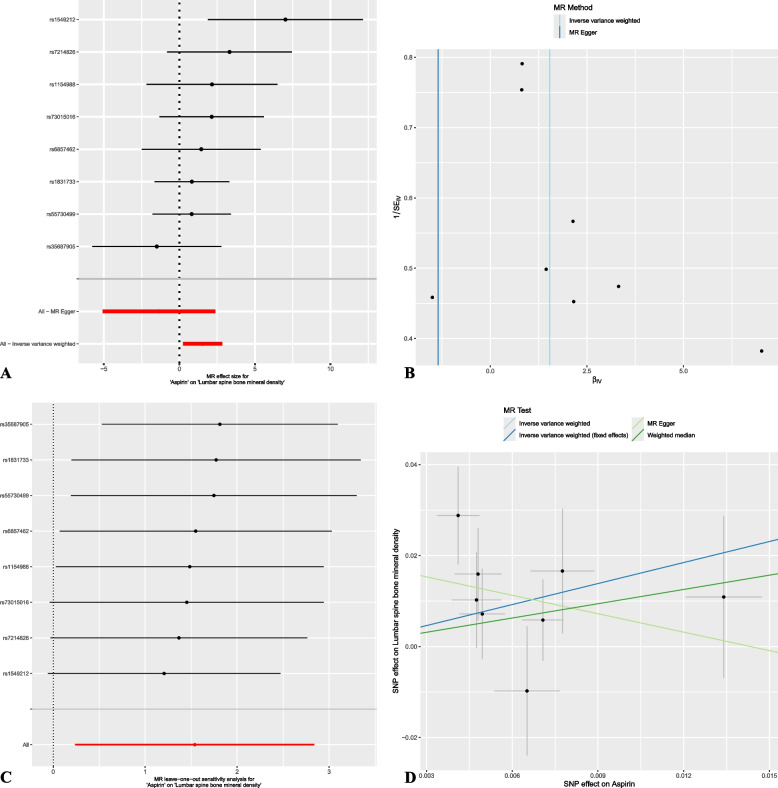
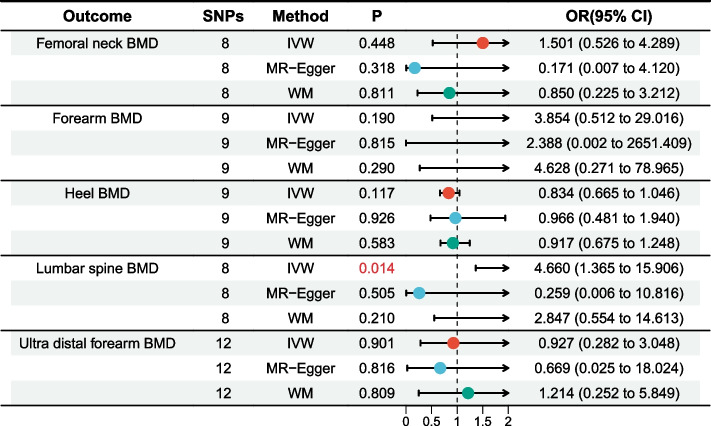
Results: Aspirin use significantly increased lumbar spine BMD (odds ratio [OR] = 4.660; 95% confidence interval [CI]: 1.365-15.906; P = 0.014). No significant causal association was found between aspirin use and fracture risk (beta = 59.951; 95% CI: -265.189-385.091; P = 0.718). No significant reverse causality was observed.
Conclusion: This study indicates that aspirin use does not significantly affect fracture risk but has a significant protective effect on lumbar spine BMD, revealing a potential benefit of aspirin against osteoporosis.
HereditasBiochemistry, Genetics and Molecular Biology-Genetics
CiteScore
3.80
自引率
3.70%
发文量
0
期刊介绍:
For almost a century, Hereditas has published original cutting-edge research and reviews. As the Official journal of the Mendelian Society of Lund, the journal welcomes research from across all areas of genetics and genomics. Topics of interest include human and medical genetics, animal and plant genetics, microbial genetics, agriculture and bioinformatics.



 京公网安备 11010802042870号
京ICP备2023020795号-1
京公网安备 11010802042870号
京ICP备2023020795号-1

 分享
分享
 求助内容:
求助内容: 应助结果提醒方式:
 扫码关注我们
