{"title":"Photodynamic therapy-induced precise attenuation of light-targeted semicircular canals for treating intractable vertigo.","authors":"Yingkun Yang, Tong Zhao, Feixue Mi, Hongzhe Li, Pingbo Huang, Fangyi Chen","doi":"10.1002/SMMD.20230044","DOIUrl":null,"url":null,"abstract":"<p><p>Vertigo is a common symptom of various diseases that affects a large number of people worldwide. Current leading treatments for intractable peripheral vertigo are to intratympanically inject ototoxic drugs such as gentamicin to attenuate the semicircular canal function but inevitably cause hearing injury. Photodynamic therapy (PDT) is a noninvasive therapeutic approach by precisely targeting the diseased tissue. Here, we developed a PDT-based method for treating intractable peripheral vertigo in a mouse model using a polymer-coated photosensitizer chlorin e6 excited by red light. We found that a high dose of PDT attenuated the function of both semicircular canals and otolith organs and damaged their hair cells. Conversely, the PDT exerted no effect on hearing function or cochlear hair-cell viability. These results suggest the therapeutic potential of PDT for treating intractable peripheral vertigo without hurting hearing. Besides, the attenuation level and affected area can be precisely controlled by adjusting the light exposure time. Furthermore, we demonstrated the potential of this therapeutic approach to be minimally invasive with light irradiation through bone results. Thus, our PDT-based approach for attenuating the function of the semicircular canals offers a basis for developing a less-invasive and targeted therapeutic option for treating vertigo.</p>","PeriodicalId":74816,"journal":{"name":"Smart medicine","volume":"3 4","pages":"e20230044"},"PeriodicalIF":11.6000,"publicationDate":"2024-10-19","publicationTypes":"Journal Article","fieldsOfStudy":null,"isOpenAccess":false,"openAccessPdf":"https://www.ncbi.nlm.nih.gov/pmc/articles/PMC11669792/pdf/","citationCount":"0","resultStr":null,"platform":"Semanticscholar","paperid":null,"PeriodicalName":"Smart medicine","FirstCategoryId":"1085","ListUrlMain":"https://doi.org/10.1002/SMMD.20230044","RegionNum":0,"RegionCategory":null,"ArticlePicture":[],"TitleCN":null,"AbstractTextCN":null,"PMCID":null,"EPubDate":"2024/12/1 0:00:00","PubModel":"eCollection","JCR":"","JCRName":"","Score":null,"Total":0}
引用次数: 0
Abstract
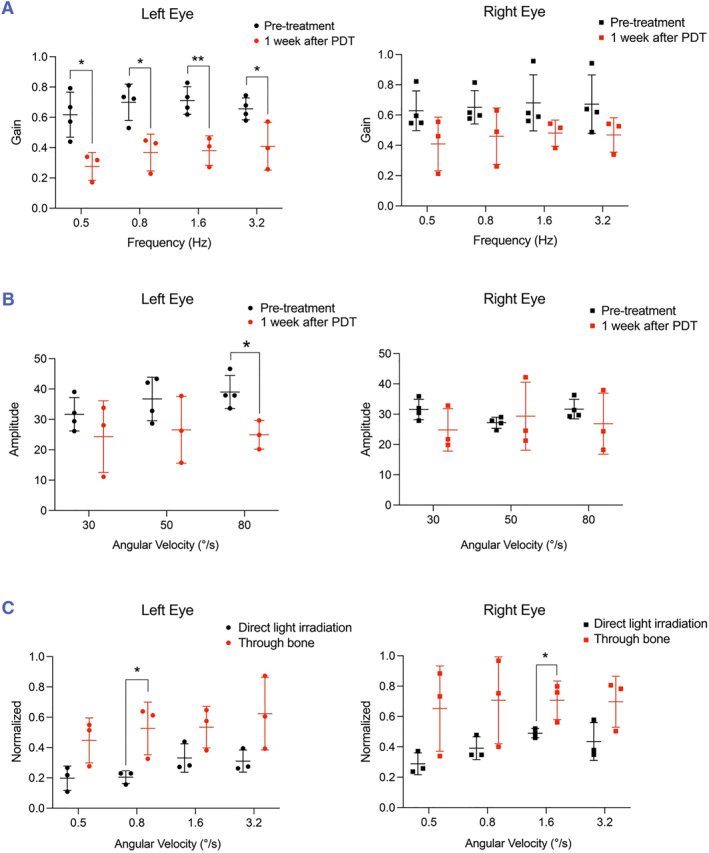
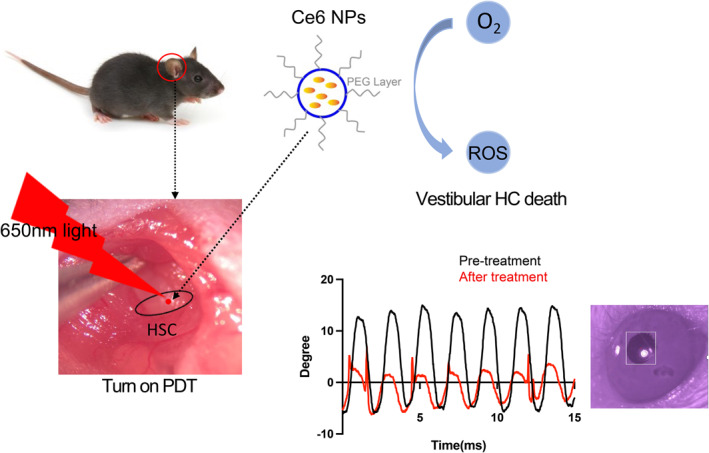
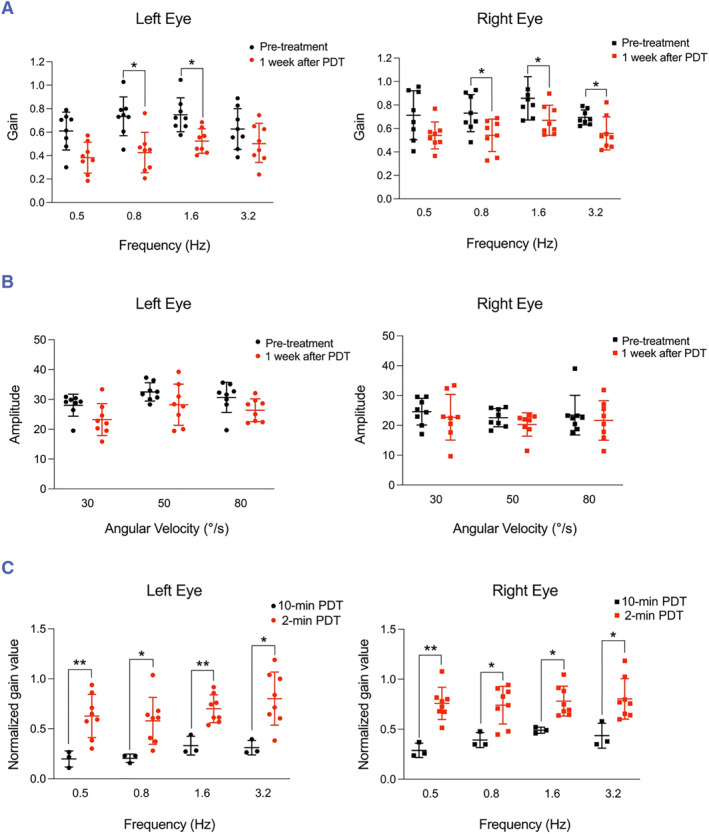
Vertigo is a common symptom of various diseases that affects a large number of people worldwide. Current leading treatments for intractable peripheral vertigo are to intratympanically inject ototoxic drugs such as gentamicin to attenuate the semicircular canal function but inevitably cause hearing injury. Photodynamic therapy (PDT) is a noninvasive therapeutic approach by precisely targeting the diseased tissue. Here, we developed a PDT-based method for treating intractable peripheral vertigo in a mouse model using a polymer-coated photosensitizer chlorin e6 excited by red light. We found that a high dose of PDT attenuated the function of both semicircular canals and otolith organs and damaged their hair cells. Conversely, the PDT exerted no effect on hearing function or cochlear hair-cell viability. These results suggest the therapeutic potential of PDT for treating intractable peripheral vertigo without hurting hearing. Besides, the attenuation level and affected area can be precisely controlled by adjusting the light exposure time. Furthermore, we demonstrated the potential of this therapeutic approach to be minimally invasive with light irradiation through bone results. Thus, our PDT-based approach for attenuating the function of the semicircular canals offers a basis for developing a less-invasive and targeted therapeutic option for treating vertigo.



 京公网安备 11010802042870号
京ICP备2023020795号-1
京公网安备 11010802042870号
京ICP备2023020795号-1

 分享
分享

 求助内容:
求助内容: 应助结果提醒方式:
 扫码关注我们
