An algorithm for identifying causes of reoperations after orthopedic fracture surgery in health administrative data: a diagnostic accuracy study using the Danish National Patient Register.
Signe S Jensen, Anders B Rønnegaard, Per H Gundtoft, Søren Kold, Bjarke Viberg
{"title":"An algorithm for identifying causes of reoperations after orthopedic fracture surgery in health administrative data: a diagnostic accuracy study using the Danish National Patient Register.","authors":"Signe S Jensen, Anders B Rønnegaard, Per H Gundtoft, Søren Kold, Bjarke Viberg","doi":"10.2340/17453674.2024.42633","DOIUrl":null,"url":null,"abstract":"<p><strong>Background and purpose: </strong>Disease- or procedure-specific registers offer valuable information but are costly and often inaccurate regarding outcome measures. Alternatively, automatically collected data from administrative systems could be a solution, given their high completeness. Our primary aim was to validate a method for identifying secondary surgical procedures (reoperations) in the Danish National Patient Register (DNPR) within the first year following primary fracture surgery. The secondary aim was to evaluate the accuracy of the diagnosis and procedure codes used to determine the causes of these reoperations. Finally, we developed algorithms to enhance precision in identifying the reasons for reoperations.</p><p><strong>Methods: </strong>In a national cohort of 11,551 patients with primary fracture surgery, reoperations were identified through subsequent surgical procedure codes in the DNPR. Each patient record was reviewed to confirm the reoperations and causes. To improve accuracy, a stepwise algorithm was developed for each cause.</p><p><strong>Results: </strong>We identified 2,347 possible reoperations; 2,212 were validated as true reoperations by review of patient record, i.e., a 94% positive predictive value (PPV). However, the coding for the causes of these reoperations was inaccurate. Our algorithm identified major reoperations with a sensitivity/PPV of 89/77%, minor reoperations 99%/89%, infections 77/85%, nonunion 82/56%, early re-osteosynthesis 90/75%, and secondary arthroplasties 95/87%.</p><p><strong>Conclusion: </strong>While the overall reported reoperations in the DNPR had a high PPV, the predefined diagnosis and procedure codes alone were not sufficient to accurately determine the causes of these reoperations. An algorithm was developed for this purpose, yielding acceptable results for all causes except nonunion.</p>","PeriodicalId":6916,"journal":{"name":"Acta Orthopaedica","volume":"96 ","pages":"66-72"},"PeriodicalIF":2.4000,"publicationDate":"2025-01-13","publicationTypes":"Journal Article","fieldsOfStudy":null,"isOpenAccess":false,"openAccessPdf":"https://www.ncbi.nlm.nih.gov/pmc/articles/PMC11726852/pdf/","citationCount":"0","resultStr":null,"platform":"Semanticscholar","paperid":null,"PeriodicalName":"Acta Orthopaedica","FirstCategoryId":"3","ListUrlMain":"https://doi.org/10.2340/17453674.2024.42633","RegionNum":2,"RegionCategory":"医学","ArticlePicture":[],"TitleCN":null,"AbstractTextCN":null,"PMCID":null,"EPubDate":"","PubModel":"","JCR":"Q1","JCRName":"ORTHOPEDICS","Score":null,"Total":0}
引用次数: 0
Abstract
Background and purpose: Disease- or procedure-specific registers offer valuable information but are costly and often inaccurate regarding outcome measures. Alternatively, automatically collected data from administrative systems could be a solution, given their high completeness. Our primary aim was to validate a method for identifying secondary surgical procedures (reoperations) in the Danish National Patient Register (DNPR) within the first year following primary fracture surgery. The secondary aim was to evaluate the accuracy of the diagnosis and procedure codes used to determine the causes of these reoperations. Finally, we developed algorithms to enhance precision in identifying the reasons for reoperations.
Methods: In a national cohort of 11,551 patients with primary fracture surgery, reoperations were identified through subsequent surgical procedure codes in the DNPR. Each patient record was reviewed to confirm the reoperations and causes. To improve accuracy, a stepwise algorithm was developed for each cause.
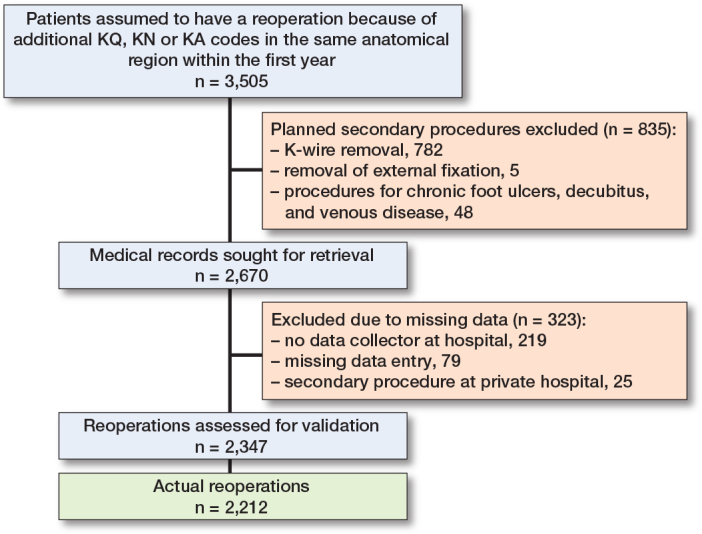
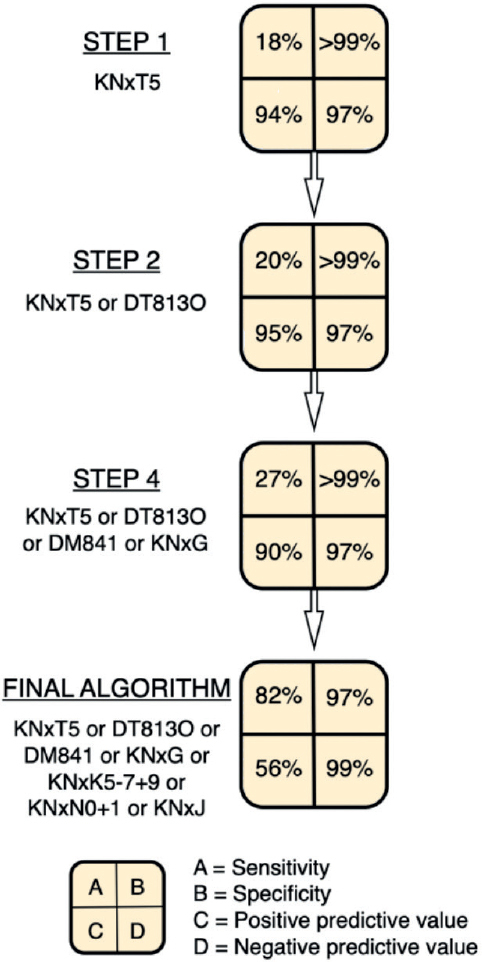
Results: We identified 2,347 possible reoperations; 2,212 were validated as true reoperations by review of patient record, i.e., a 94% positive predictive value (PPV). However, the coding for the causes of these reoperations was inaccurate. Our algorithm identified major reoperations with a sensitivity/PPV of 89/77%, minor reoperations 99%/89%, infections 77/85%, nonunion 82/56%, early re-osteosynthesis 90/75%, and secondary arthroplasties 95/87%.
Conclusion: While the overall reported reoperations in the DNPR had a high PPV, the predefined diagnosis and procedure codes alone were not sufficient to accurately determine the causes of these reoperations. An algorithm was developed for this purpose, yielding acceptable results for all causes except nonunion.
期刊介绍:
Acta Orthopaedica (previously Acta Orthopaedica Scandinavica) presents original articles of basic research interest, as well as clinical studies in the field of orthopedics and related sub disciplines. Ever since the journal was founded in 1930, by a group of Scandinavian orthopedic surgeons, the journal has been published for an international audience. Acta Orthopaedica is owned by the Nordic Orthopaedic Federation and is the official publication of this federation.



 京公网安备 11010802042870号
京ICP备2023020795号-1
京公网安备 11010802042870号
京ICP备2023020795号-1

 分享
分享
 求助内容:
求助内容: 应助结果提醒方式:
 扫码关注我们
