Georgios Mavrovounis, Maria Mermiri, Ioannis Drivas, Konstantinos Drivas, Theodosis Kalamatianos, Sotirios G Zarogiannis, Ioannis Pantazopoulos
{"title":"The landscape of experimental cardiac arrest research models in rats: a bibliometric analysis of the 100 most cited articles.","authors":"Georgios Mavrovounis, Maria Mermiri, Ioannis Drivas, Konstantinos Drivas, Theodosis Kalamatianos, Sotirios G Zarogiannis, Ioannis Pantazopoulos","doi":"10.15441/ceem.24.290","DOIUrl":null,"url":null,"abstract":"<p><p>This bibliometric analysis of the 100 most cited articles on experimental cardiac arrest models in rats identifies key contributors, publication trends, research themes, and collaboration networks. A comprehensive literature search of the Web of Science database was performed on June 11, 2024, using keywords related to cardiac arrest and rat models. The top 100 most cited articles were analyzed using the biblioshiny web application from the bibliometrix R ver. 4.2.3 and categorized by primary research focus. The articles were published from 1980 to 2022 and involved 416 authors and 44 journals, averaging 106.7 citations each. The primary research themes were neurology (72%), organ transplantation (7%), cardiovascular system (6%), Cardiopulmonary resuscitation outcomes after local anesthetic toxicity (4%), and other topics (5%). The United States, Japan, and Germany were leading contributors. Major clusters identified include \"cerebral ischemia and outcomes,\" \"brain imaging metrics,\" and \"blood brain barrier.\" The most commonly used methodologies for cardiac arrest induction were asphyxia, induction by magnesium or potassium chloride, and electrical stimulation. This first bibliometric analysis on this topic reveals the dominance of neuroscience in experimental cardiac arrest models in rats. High-impact journals such as the Journal of Cerebral Blood Flow and Metabolism play critical roles in disseminating significant research. The study highlights substantial gaps in global research engagement, with minimal contributions from lower income countries and few international collaborations. This analysis provides a roadmap for future research and opportunities for more extensive international and interdisciplinary collaboration, always with a focus on scientific rigor.</p>","PeriodicalId":10325,"journal":{"name":"Clinical and Experimental Emergency Medicine","volume":" ","pages":"198-211"},"PeriodicalIF":2.3000,"publicationDate":"2025-09-01","publicationTypes":"Journal Article","fieldsOfStudy":null,"isOpenAccess":false,"openAccessPdf":"https://www.ncbi.nlm.nih.gov/pmc/articles/PMC12541529/pdf/","citationCount":"0","resultStr":null,"platform":"Semanticscholar","paperid":null,"PeriodicalName":"Clinical and Experimental Emergency Medicine","FirstCategoryId":"1085","ListUrlMain":"https://doi.org/10.15441/ceem.24.290","RegionNum":0,"RegionCategory":null,"ArticlePicture":[],"TitleCN":null,"AbstractTextCN":null,"PMCID":null,"EPubDate":"2025/1/14 0:00:00","PubModel":"Epub","JCR":"Q2","JCRName":"EMERGENCY MEDICINE","Score":null,"Total":0}
引用次数: 0
Abstract
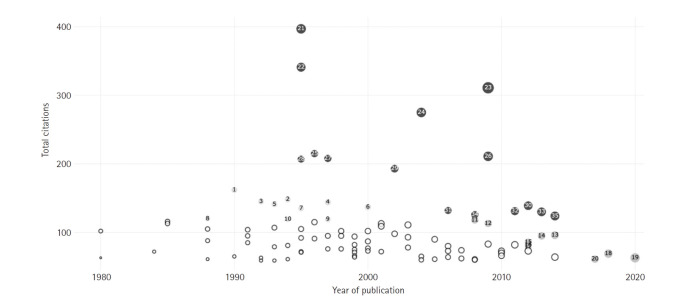
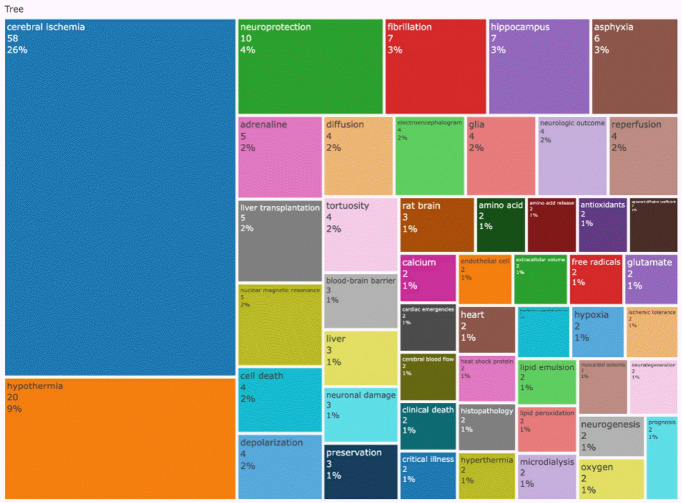
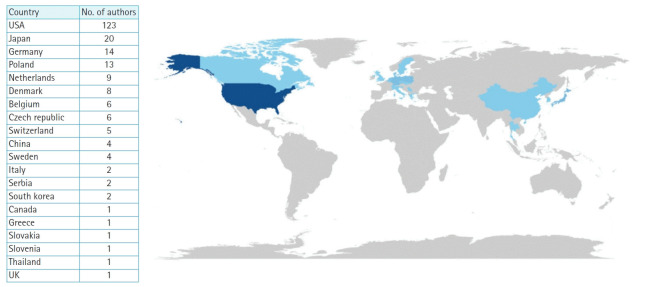
This bibliometric analysis of the 100 most cited articles on experimental cardiac arrest models in rats identifies key contributors, publication trends, research themes, and collaboration networks. A comprehensive literature search of the Web of Science database was performed on June 11, 2024, using keywords related to cardiac arrest and rat models. The top 100 most cited articles were analyzed using the biblioshiny web application from the bibliometrix R ver. 4.2.3 and categorized by primary research focus. The articles were published from 1980 to 2022 and involved 416 authors and 44 journals, averaging 106.7 citations each. The primary research themes were neurology (72%), organ transplantation (7%), cardiovascular system (6%), Cardiopulmonary resuscitation outcomes after local anesthetic toxicity (4%), and other topics (5%). The United States, Japan, and Germany were leading contributors. Major clusters identified include "cerebral ischemia and outcomes," "brain imaging metrics," and "blood brain barrier." The most commonly used methodologies for cardiac arrest induction were asphyxia, induction by magnesium or potassium chloride, and electrical stimulation. This first bibliometric analysis on this topic reveals the dominance of neuroscience in experimental cardiac arrest models in rats. High-impact journals such as the Journal of Cerebral Blood Flow and Metabolism play critical roles in disseminating significant research. The study highlights substantial gaps in global research engagement, with minimal contributions from lower income countries and few international collaborations. This analysis provides a roadmap for future research and opportunities for more extensive international and interdisciplinary collaboration, always with a focus on scientific rigor.




 京公网安备 11010802042870号
京ICP备2023020795号-1
京公网安备 11010802042870号
京ICP备2023020795号-1

 分享
分享
 求助内容:
求助内容: 应助结果提醒方式:
 扫码关注我们
