Comparison of the efficacy of bolus low-dose ketamine versus bolus plus infusion low-dose ketamine on pain management in emergency departments: a randomized clinical trial.
{"title":"Comparison of the efficacy of bolus low-dose ketamine versus bolus plus infusion low-dose ketamine on pain management in emergency departments: a randomized clinical trial.","authors":"Reza Azizikhani, Ali Sanaei, Farhad Heydari, Saeed Majidinejad, Keihan Golshani, Fateme Sadeghi, Pardis Rafiei","doi":"10.15441/ceem.24.244","DOIUrl":null,"url":null,"abstract":"<p><strong>Objective: </strong>Ketamine is a promising drug for analgesia in emergency medicine, but the high rate of side effects is a barrier to widespread usage. We hypothesized that ketamine bolus followed by ketamine infusion would provide a more even and longer duration of analgesia and lower rates of side effects in comparison to bolus-only administration.</p><p><strong>Methods: </strong>This was a double-blinded clinical trial. Eligible trauma patients were randomly allocated with the numeric rating scale ≥6 in two study groups. The first group received a dose of 0.3 mg/kg of ketamine over 1 minute, followed by an infusion of saline 0.9% over the next 30 minutes (bolus-only group). The second group was given 0.15 mg/kg of ketamine over 1 minute, followed by an infusion of 0.15 mg/kg over the next 30 minutes (bolus-and-infusion group). The primary outcome was to measure the average reduction in pain scores.</p><p><strong>Results: </strong>In total, 80 patients were recruited. Of these, 77 patients were analyzed. Both groups achieved a statistically significant decrease in pain scores (all P<0.001). After 30 minutes, patients in the bolus-and-infusion group reported lower pain scores in all intervals with lower rates of need for rescue analgesia, but this difference was not statistically significant. Vital signs remained stable during the study in both groups. No statistically significant difference was observed between study groups for any side effect (P<0.05).</p><p><strong>Conclusion: </strong>Both administration protocols resulted in significant pain control. No statistically significant difference was observed between study groups in terms of analgesic efficacy and side effects.</p>","PeriodicalId":10325,"journal":{"name":"Clinical and Experimental Emergency Medicine","volume":" ","pages":"259-266"},"PeriodicalIF":2.3000,"publicationDate":"2025-09-01","publicationTypes":"Journal Article","fieldsOfStudy":null,"isOpenAccess":false,"openAccessPdf":"https://www.ncbi.nlm.nih.gov/pmc/articles/PMC12541530/pdf/","citationCount":"0","resultStr":null,"platform":"Semanticscholar","paperid":null,"PeriodicalName":"Clinical and Experimental Emergency Medicine","FirstCategoryId":"1085","ListUrlMain":"https://doi.org/10.15441/ceem.24.244","RegionNum":0,"RegionCategory":null,"ArticlePicture":[],"TitleCN":null,"AbstractTextCN":null,"PMCID":null,"EPubDate":"2025/1/14 0:00:00","PubModel":"Epub","JCR":"Q2","JCRName":"EMERGENCY MEDICINE","Score":null,"Total":0}
引用次数: 0
Abstract
Objective: Ketamine is a promising drug for analgesia in emergency medicine, but the high rate of side effects is a barrier to widespread usage. We hypothesized that ketamine bolus followed by ketamine infusion would provide a more even and longer duration of analgesia and lower rates of side effects in comparison to bolus-only administration.
Methods: This was a double-blinded clinical trial. Eligible trauma patients were randomly allocated with the numeric rating scale ≥6 in two study groups. The first group received a dose of 0.3 mg/kg of ketamine over 1 minute, followed by an infusion of saline 0.9% over the next 30 minutes (bolus-only group). The second group was given 0.15 mg/kg of ketamine over 1 minute, followed by an infusion of 0.15 mg/kg over the next 30 minutes (bolus-and-infusion group). The primary outcome was to measure the average reduction in pain scores.
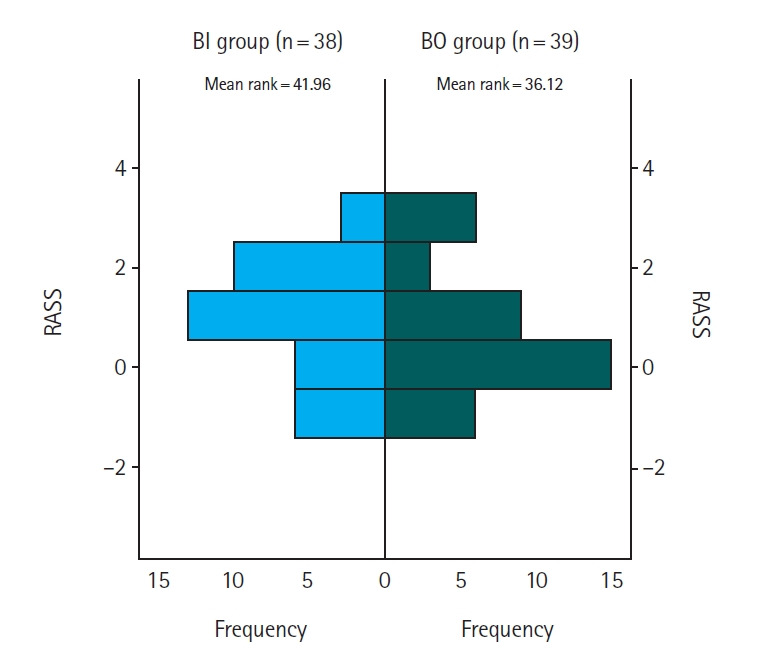
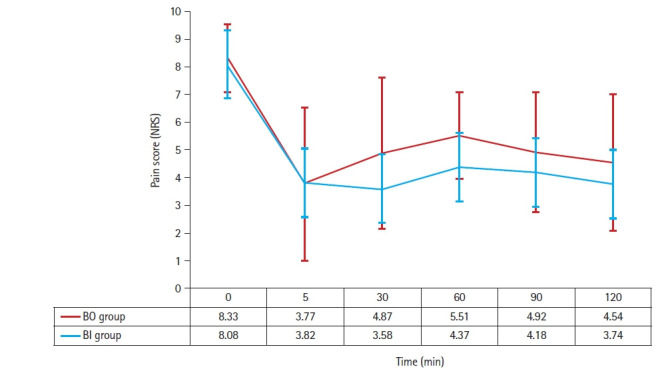
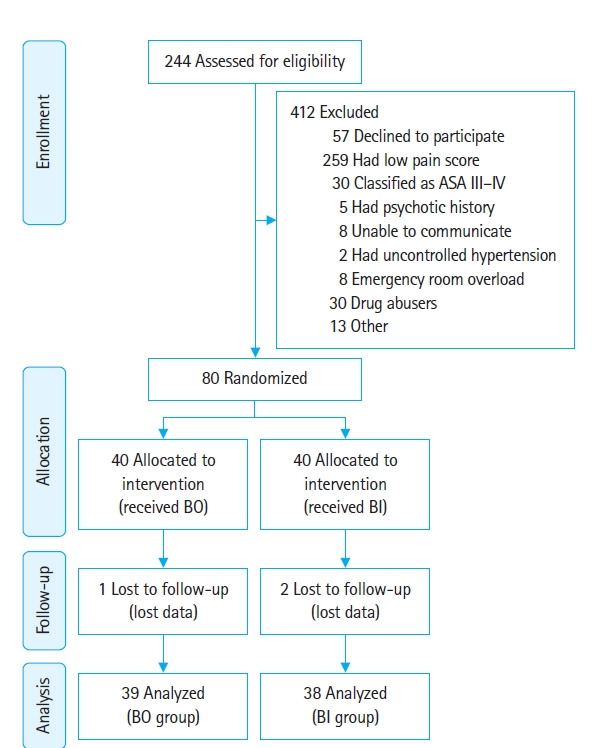
Results: In total, 80 patients were recruited. Of these, 77 patients were analyzed. Both groups achieved a statistically significant decrease in pain scores (all P<0.001). After 30 minutes, patients in the bolus-and-infusion group reported lower pain scores in all intervals with lower rates of need for rescue analgesia, but this difference was not statistically significant. Vital signs remained stable during the study in both groups. No statistically significant difference was observed between study groups for any side effect (P<0.05).
Conclusion: Both administration protocols resulted in significant pain control. No statistically significant difference was observed between study groups in terms of analgesic efficacy and side effects.





 京公网安备 11010802042870号
京ICP备2023020795号-1
京公网安备 11010802042870号
京ICP备2023020795号-1

 分享
分享
 求助内容:
求助内容: 应助结果提醒方式:
 扫码关注我们
