Abdul Mannan Baig, Sandy Rosko, Beate Jaeger, Joachim Gerlach
{"title":"Strategic Inhibition of CHRM Autoantibodies: Molecular Insights and Therapeutic Potentials in Long COVID","authors":"Abdul Mannan Baig, Sandy Rosko, Beate Jaeger, Joachim Gerlach","doi":"10.1021/acs.jmedchem.4c00691","DOIUrl":null,"url":null,"abstract":"In addition to the conventional symptoms reported for COVID-19, it is becoming increasingly clear that patients with long COVID are exhibiting new symptoms due to the emergence of autoantibodies against G-protein-coupled receptors, among which human muscarinic cholinergic receptors (CHRMs) have been prominently reported. With a chronic condition such as long COVID, additional symptoms caused by anti-CHRM autoantibodies (AAbs) have proven to be an added burden on these patients. The origins of these AAbs, their interactions with, and effects on the function of neural and non-neural cells within the nervous system have remained unknown. Furthermore, the specific symptom complex to which they contribute has not been clearly understood. In this context, we address these issues here and suggest methods to combat the autoantibodies that contribute to neurological symptoms in long COVID.","PeriodicalId":46,"journal":{"name":"Journal of Medicinal Chemistry","volume":"46 1","pages":""},"PeriodicalIF":6.8000,"publicationDate":"2025-01-21","publicationTypes":"Journal Article","fieldsOfStudy":null,"isOpenAccess":false,"openAccessPdf":"","citationCount":"0","resultStr":null,"platform":"Semanticscholar","paperid":null,"PeriodicalName":"Journal of Medicinal Chemistry","FirstCategoryId":"3","ListUrlMain":"https://doi.org/10.1021/acs.jmedchem.4c00691","RegionNum":1,"RegionCategory":"医学","ArticlePicture":[],"TitleCN":null,"AbstractTextCN":null,"PMCID":null,"EPubDate":"","PubModel":"","JCR":"Q1","JCRName":"CHEMISTRY, MEDICINAL","Score":null,"Total":0}
引用次数: 0
Abstract
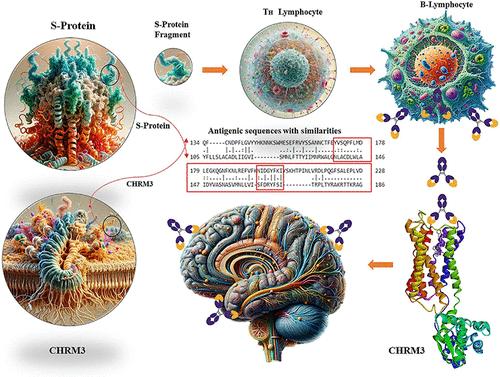
In addition to the conventional symptoms reported for COVID-19, it is becoming increasingly clear that patients with long COVID are exhibiting new symptoms due to the emergence of autoantibodies against G-protein-coupled receptors, among which human muscarinic cholinergic receptors (CHRMs) have been prominently reported. With a chronic condition such as long COVID, additional symptoms caused by anti-CHRM autoantibodies (AAbs) have proven to be an added burden on these patients. The origins of these AAbs, their interactions with, and effects on the function of neural and non-neural cells within the nervous system have remained unknown. Furthermore, the specific symptom complex to which they contribute has not been clearly understood. In this context, we address these issues here and suggest methods to combat the autoantibodies that contribute to neurological symptoms in long COVID.
期刊介绍:
The Journal of Medicinal Chemistry is a prestigious biweekly peer-reviewed publication that focuses on the multifaceted field of medicinal chemistry. Since its inception in 1959 as the Journal of Medicinal and Pharmaceutical Chemistry, it has evolved to become a cornerstone in the dissemination of research findings related to the design, synthesis, and development of therapeutic agents.
The Journal of Medicinal Chemistry is recognized for its significant impact in the scientific community, as evidenced by its 2022 impact factor of 7.3. This metric reflects the journal's influence and the importance of its content in shaping the future of drug discovery and development. The journal serves as a vital resource for chemists, pharmacologists, and other researchers interested in the molecular mechanisms of drug action and the optimization of therapeutic compounds.



 京公网安备 11010802042870号
京ICP备2023020795号-1
京公网安备 11010802042870号
京ICP备2023020795号-1

 分享
分享
 求助内容:
求助内容: 应助结果提醒方式:
 扫码关注我们
