{"title":"Multi-Targeting Phytochemicals for Alzheimer's Disease.","authors":"Radha Shree Bhattacharya, Raghuraj Singh, Archna Panghal, Ashima Thakur, Lachhman Singh, Rahul Kumar Verma, Charan Singh, Manoj Goyal, Jayant Kumar","doi":"10.1002/ptr.8435","DOIUrl":null,"url":null,"abstract":"<p><p>Alzheimer's disease (AD) is a type of neurodegenerative illness in which β-amyloid (Aβ) and tau protein accumulate in neurons in the form of tangles. The pathophysiological pathway of AD consists of Aβ-amyloid peptides, tau proteins, and oxidative stress in neurons and increased neuro-inflammatory response. Food and Drug Administration in the United States has authorized various drugs for the effective treatment of AD, which include galantamine, rivastigmine, donepezil, memantine, sodium oligomannate, lecanemab, and aducanumab. The major disadvantage of these drugs is that they only provide \"symptomatic\" relief. They are most effective in the early stages or for mild to moderate cases of the disease, but are not suitable for long-term use. Besides conventional therapies, phytochemicals have the potential to stop the progression of AD. According to research, the use of potential phytochemicals against AD has gained attention due to their potent anti-inflammatory, antioxidant, anti-hyperphosphorylation of the tau protein, metal chelation, and anti-amyloid properties. This study seeks to provide an up-to-date compilation of the most current and promising breakthroughs in AD therapy using phytochemicals. It could be concluded that phytochemicals light serve as an effective therapy for AD. However, more mechanistic investigations are needed to determine the clinical implications of phytochemicals in AD treatment.</p>","PeriodicalId":20110,"journal":{"name":"Phytotherapy Research","volume":" ","pages":"1453-1483"},"PeriodicalIF":6.3000,"publicationDate":"2025-03-01","publicationTypes":"Journal Article","fieldsOfStudy":null,"isOpenAccess":false,"openAccessPdf":"","citationCount":"0","resultStr":null,"platform":"Semanticscholar","paperid":null,"PeriodicalName":"Phytotherapy Research","FirstCategoryId":"3","ListUrlMain":"https://doi.org/10.1002/ptr.8435","RegionNum":2,"RegionCategory":"医学","ArticlePicture":[],"TitleCN":null,"AbstractTextCN":null,"PMCID":null,"EPubDate":"2025/1/15 0:00:00","PubModel":"Epub","JCR":"Q1","JCRName":"CHEMISTRY, MEDICINAL","Score":null,"Total":0}
引用次数: 0
Abstract
Alzheimer's disease (AD) is a type of neurodegenerative illness in which β-amyloid (Aβ) and tau protein accumulate in neurons in the form of tangles. The pathophysiological pathway of AD consists of Aβ-amyloid peptides, tau proteins, and oxidative stress in neurons and increased neuro-inflammatory response. Food and Drug Administration in the United States has authorized various drugs for the effective treatment of AD, which include galantamine, rivastigmine, donepezil, memantine, sodium oligomannate, lecanemab, and aducanumab. The major disadvantage of these drugs is that they only provide "symptomatic" relief. They are most effective in the early stages or for mild to moderate cases of the disease, but are not suitable for long-term use. Besides conventional therapies, phytochemicals have the potential to stop the progression of AD. According to research, the use of potential phytochemicals against AD has gained attention due to their potent anti-inflammatory, antioxidant, anti-hyperphosphorylation of the tau protein, metal chelation, and anti-amyloid properties. This study seeks to provide an up-to-date compilation of the most current and promising breakthroughs in AD therapy using phytochemicals. It could be concluded that phytochemicals light serve as an effective therapy for AD. However, more mechanistic investigations are needed to determine the clinical implications of phytochemicals in AD treatment.
期刊介绍:
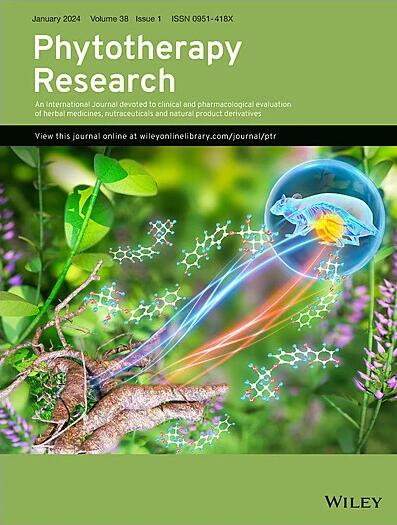
Phytotherapy Research is an internationally recognized pharmacological journal that serves as a trailblazing resource for biochemists, pharmacologists, and toxicologists. We strive to disseminate groundbreaking research on medicinal plants, pushing the boundaries of knowledge and understanding in this field.
Our primary focus areas encompass pharmacology, toxicology, and the clinical applications of herbs and natural products in medicine. We actively encourage submissions on the effects of commonly consumed food ingredients and standardized plant extracts. We welcome a range of contributions including original research papers, review articles, and letters.
By providing a platform for the latest developments and discoveries in phytotherapy, we aim to support the advancement of scientific knowledge and contribute to the improvement of modern medicine.



 京公网安备 11010802042870号
京ICP备2023020795号-1
京公网安备 11010802042870号
京ICP备2023020795号-1

 分享
分享
 求助内容:
求助内容: 应助结果提醒方式:
 扫码关注我们
