Barbara Iansã de Lima Barroso, Katia Cristina Bassichetto, Denise Leite Vieira, Ísis Gois, Julliana Luiz Rodrigues, Naila Janilde Seabra Santos, Paola Alves de Souza, Angela Tayra, Aline Kumow, Karin Di Monteiro Moreira, Fe Maidel, Maria Amélia de Sousa Mascena Veras, Carla Regina Mota Alonso Dièguez, Alícia Kruger, Maria Clara Gianna Garcia Ribeiro, Rosa de Alencar Souza, Carla Gianna Luppi
{"title":"Mapping of the trans population in the Baixada Santista region, Brazil, 2023: a descriptive study.","authors":"Barbara Iansã de Lima Barroso, Katia Cristina Bassichetto, Denise Leite Vieira, Ísis Gois, Julliana Luiz Rodrigues, Naila Janilde Seabra Santos, Paola Alves de Souza, Angela Tayra, Aline Kumow, Karin Di Monteiro Moreira, Fe Maidel, Maria Amélia de Sousa Mascena Veras, Carla Regina Mota Alonso Dièguez, Alícia Kruger, Maria Clara Gianna Garcia Ribeiro, Rosa de Alencar Souza, Carla Gianna Luppi","doi":"10.1590/S2237-96222024v33e2024409.especial.en","DOIUrl":null,"url":null,"abstract":"<p><strong>Objective: </strong>To describe the socioeconomic and demographic characteristics of the trans population in the Baixada Santista region, São Paulo state.</p><p><strong>Methods: </strong>This was a descriptive study involving adult trans people, selected through convenience sampling in 2023. A quantitative questionnaire was administered and in-depth interviews were conducted, which were analyzed using thematic grouping.</p><p><strong>Results: </strong>A total of 237 people were recruited. Of these, 42.2% identified as trans women/travestis and 36.3% as trans men/ transmasculine; 65.4% were aged up to 29 years; 51.1% self-identified as White race/skin color; 52.7% were single; 80.5% had completed at least high school; 32.5% reported no income. Self-perception of transgender identity occurred predominantly between the ages of 10 and 19 (55.7%), with social transition beginning between the ages of 15 and 19 (41.8%). Fourteen in-depth interviews were conducted.</p><p><strong>Conclusion: </strong>Socioeconomic factors - education level, employment and income - are central to gender identity. Public actions and policies need to be developed and improved.</p>","PeriodicalId":51473,"journal":{"name":"Epidemiologia e Servicos de Saude","volume":"33 spe1","pages":"e2024409"},"PeriodicalIF":2.0000,"publicationDate":"2025-01-10","publicationTypes":"Journal Article","fieldsOfStudy":null,"isOpenAccess":false,"openAccessPdf":"https://www.ncbi.nlm.nih.gov/pmc/articles/PMC11734653/pdf/","citationCount":"0","resultStr":null,"platform":"Semanticscholar","paperid":null,"PeriodicalName":"Epidemiologia e Servicos de Saude","FirstCategoryId":"1085","ListUrlMain":"https://doi.org/10.1590/S2237-96222024v33e2024409.especial.en","RegionNum":0,"RegionCategory":null,"ArticlePicture":[],"TitleCN":null,"AbstractTextCN":null,"PMCID":null,"EPubDate":"2025/1/1 0:00:00","PubModel":"eCollection","JCR":"Q1","JCRName":"Multidisciplinary","Score":null,"Total":0}
引用次数: 0
Abstract
Objective: To describe the socioeconomic and demographic characteristics of the trans population in the Baixada Santista region, São Paulo state.
Methods: This was a descriptive study involving adult trans people, selected through convenience sampling in 2023. A quantitative questionnaire was administered and in-depth interviews were conducted, which were analyzed using thematic grouping.
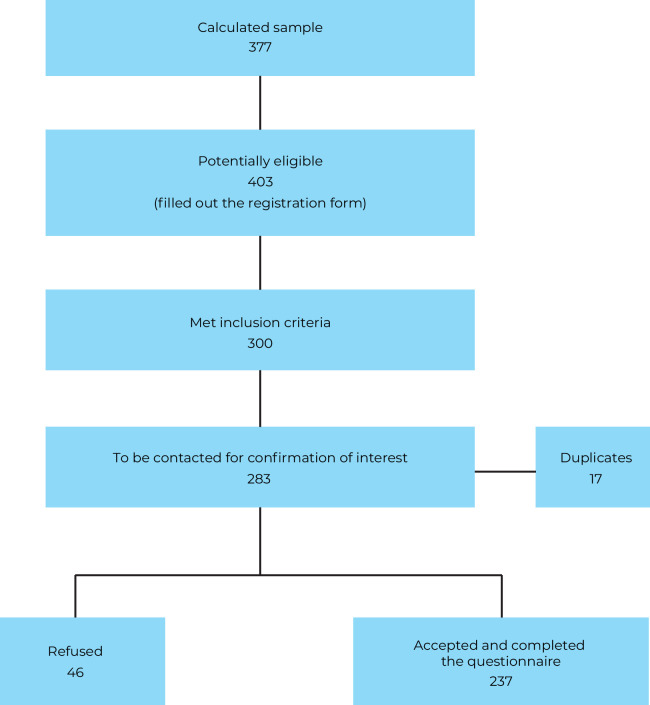
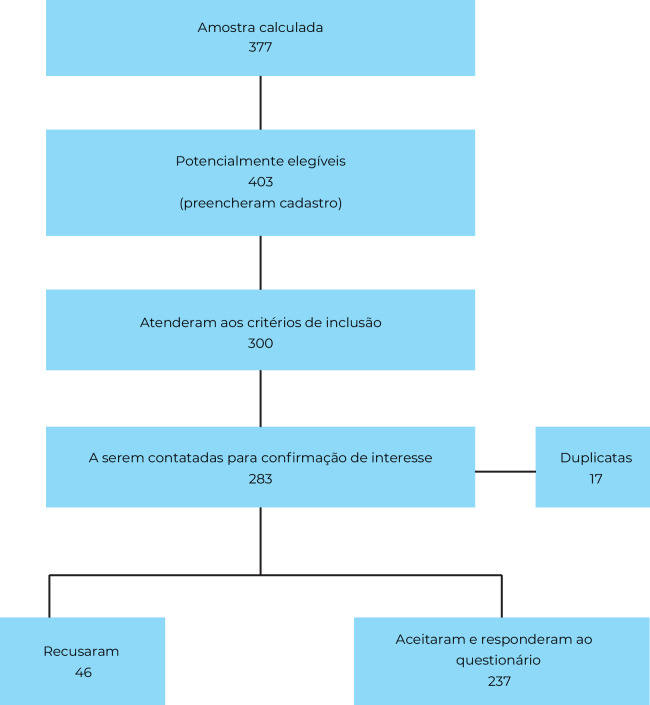
Results: A total of 237 people were recruited. Of these, 42.2% identified as trans women/travestis and 36.3% as trans men/ transmasculine; 65.4% were aged up to 29 years; 51.1% self-identified as White race/skin color; 52.7% were single; 80.5% had completed at least high school; 32.5% reported no income. Self-perception of transgender identity occurred predominantly between the ages of 10 and 19 (55.7%), with social transition beginning between the ages of 15 and 19 (41.8%). Fourteen in-depth interviews were conducted.
Conclusion: Socioeconomic factors - education level, employment and income - are central to gender identity. Public actions and policies need to be developed and improved.




 京公网安备 11010802042870号
京ICP备2023020795号-1
京公网安备 11010802042870号
京ICP备2023020795号-1

 分享
分享
 求助内容:
求助内容: 应助结果提醒方式:
 扫码关注我们
