{"title":"Artificial intelligence driven innovations in biochemistry: A review of emerging research frontiers.","authors":"Mohammed Abdul Lateef Junaid","doi":"10.17305/bb.2024.11537","DOIUrl":null,"url":null,"abstract":"<p><p>Artificial intelligence (AI) has become a powerful tool in biochemistry, greatly enhancing research capabilities by enabling the analysis of complex datasets, predicting molecular interactions, and accelerating drug discovery. As AI continues to evolve, its applications in biochemistry are poised to expand, revolutionizing both theoretical and applied research. This review explores current and potential AI applications in biochemistry, with a focus on data analysis, molecular modeling, enzyme engineering, and metabolic pathway studies. Key AI techniques-such as machine learning algorithms, natural language processing, and AI-based molecular modeling-are discussed. The review also highlights emerging research areas benefiting from AI, including personalized medicine and synthetic biology. The methodology involves an extensive analysis of existing literature, particularly peer-reviewed studies on AI applications in biochemistry. AI-driven tools like AlphaFold, which have significantly advanced protein structure prediction, are evaluated alongside AI's role in expediting drug discovery. The review also addresses challenges such as data quality, model interpretability, and ethical considerations. Results indicate that AI has expanded the scope of biochemical research by facilitating large-scale data analysis, enhancing molecular simulations, and opening new avenues of inquiry. However, challenges remain, particularly in data handling and ethical concerns. In conclusion, AI is transforming biochemistry by driving innovation and expanding research possibilities. Future advancements in AI algorithms, interdisciplinary collaboration, and integration with automated techniques will be crucial to fully unlocking AI's potential in advancing biochemical research.</p>","PeriodicalId":72398,"journal":{"name":"Biomolecules & biomedicine","volume":" ","pages":"739-750"},"PeriodicalIF":0.0000,"publicationDate":"2025-03-07","publicationTypes":"Journal Article","fieldsOfStudy":null,"isOpenAccess":false,"openAccessPdf":"https://www.ncbi.nlm.nih.gov/pmc/articles/PMC11959397/pdf/","citationCount":"0","resultStr":null,"platform":"Semanticscholar","paperid":null,"PeriodicalName":"Biomolecules & biomedicine","FirstCategoryId":"1085","ListUrlMain":"https://doi.org/10.17305/bb.2024.11537","RegionNum":0,"RegionCategory":null,"ArticlePicture":[],"TitleCN":null,"AbstractTextCN":null,"PMCID":null,"EPubDate":"","PubModel":"","JCR":"0","JCRName":"MEDICINE, RESEARCH & EXPERIMENTAL","Score":null,"Total":0}
引用次数: 0
Abstract
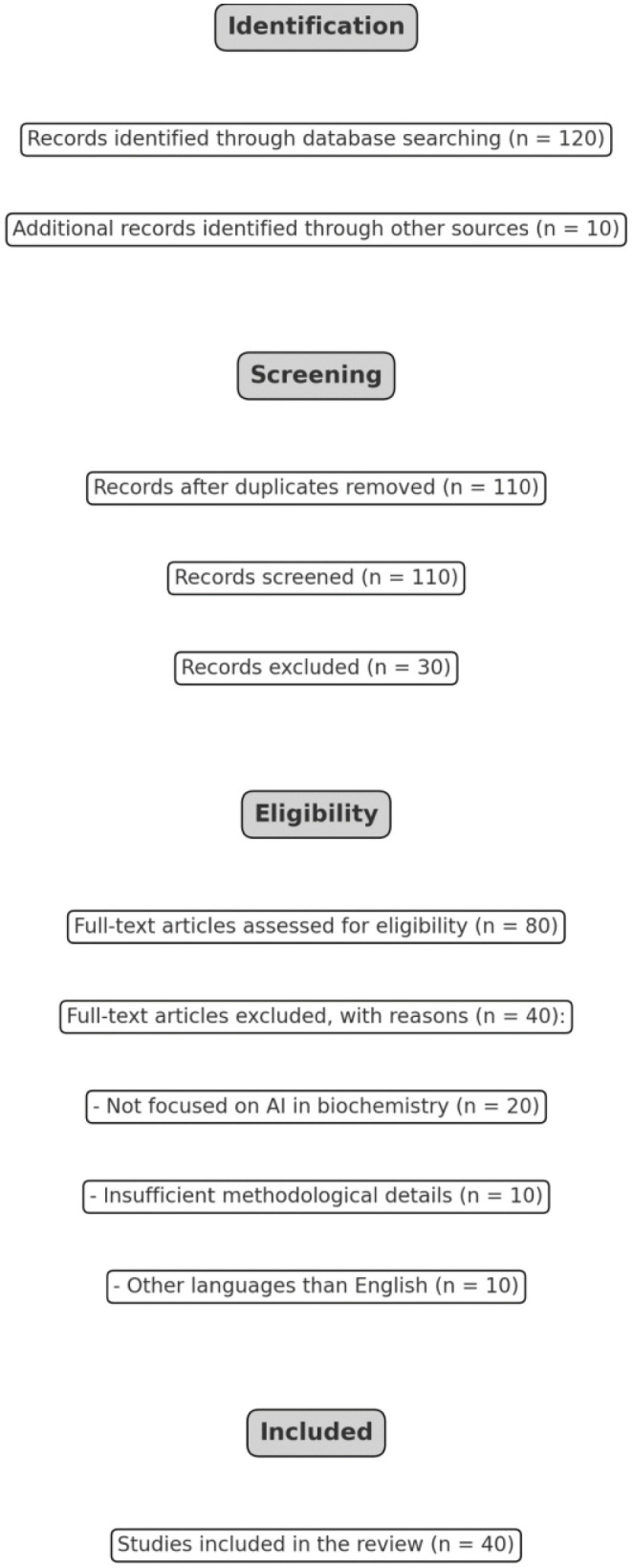
Artificial intelligence (AI) has become a powerful tool in biochemistry, greatly enhancing research capabilities by enabling the analysis of complex datasets, predicting molecular interactions, and accelerating drug discovery. As AI continues to evolve, its applications in biochemistry are poised to expand, revolutionizing both theoretical and applied research. This review explores current and potential AI applications in biochemistry, with a focus on data analysis, molecular modeling, enzyme engineering, and metabolic pathway studies. Key AI techniques-such as machine learning algorithms, natural language processing, and AI-based molecular modeling-are discussed. The review also highlights emerging research areas benefiting from AI, including personalized medicine and synthetic biology. The methodology involves an extensive analysis of existing literature, particularly peer-reviewed studies on AI applications in biochemistry. AI-driven tools like AlphaFold, which have significantly advanced protein structure prediction, are evaluated alongside AI's role in expediting drug discovery. The review also addresses challenges such as data quality, model interpretability, and ethical considerations. Results indicate that AI has expanded the scope of biochemical research by facilitating large-scale data analysis, enhancing molecular simulations, and opening new avenues of inquiry. However, challenges remain, particularly in data handling and ethical concerns. In conclusion, AI is transforming biochemistry by driving innovation and expanding research possibilities. Future advancements in AI algorithms, interdisciplinary collaboration, and integration with automated techniques will be crucial to fully unlocking AI's potential in advancing biochemical research.



 京公网安备 11010802042870号
京ICP备2023020795号-1
京公网安备 11010802042870号
京ICP备2023020795号-1

 分享
分享

 求助内容:
求助内容: 应助结果提醒方式:
 扫码关注我们
