Matthew J. Little, Jody M. Mason and Nazia Mehrban
{"title":"Evolution of branched peptides as novel biomaterials","authors":"Matthew J. Little, Jody M. Mason and Nazia Mehrban","doi":"10.1039/D4TB01897D","DOIUrl":null,"url":null,"abstract":"<p >Branched peptide-based materials draw inspiration from dendritic structures to emulate the complex architecture of native tissues, aiming to enhance the performance of biomaterials in medical applications. These innovative materials benefit from several key features: they exhibit slower degradation rates, greater stiffness, and the ability to self-assemble. These properties are crucial for maintaining the structural integrity and functionality of the materials over time. By integrating bioactive peptides and natural polymers within their branched frameworks, these materials offer modularity and tunability and can accommodate a range of mechanical properties, degradation rates, and biological functions making them suitable for biomedical applications, including drug delivery systems, wound healing scaffolds, and tissue engineering constructs. In drug delivery, these materials can be engineered to release therapeutic agents in a controlled manner, enhancing the efficacy and safety of treatments. In wound healing, they provide a supportive environment which promotes rapid and efficient tissue repair. The combination of biomimetic design and functional adaptability makes branched peptide-based materials a promising candidate for the development of next-generation biomaterials, paving the way for significant advancements in healthcare.</p>","PeriodicalId":83,"journal":{"name":"Journal of Materials Chemistry B","volume":" 7","pages":" 2226-2241"},"PeriodicalIF":6.1000,"publicationDate":"2025-01-13","publicationTypes":"Journal Article","fieldsOfStudy":null,"isOpenAccess":false,"openAccessPdf":"https://www.ncbi.nlm.nih.gov/pmc/articles/PMC11747965/pdf/","citationCount":"0","resultStr":null,"platform":"Semanticscholar","paperid":null,"PeriodicalName":"Journal of Materials Chemistry B","FirstCategoryId":"1","ListUrlMain":"https://pubs.rsc.org/en/content/articlelanding/2025/tb/d4tb01897d","RegionNum":3,"RegionCategory":"医学","ArticlePicture":[],"TitleCN":null,"AbstractTextCN":null,"PMCID":null,"EPubDate":"","PubModel":"","JCR":"Q1","JCRName":"MATERIALS SCIENCE, BIOMATERIALS","Score":null,"Total":0}
引用次数: 0
Abstract
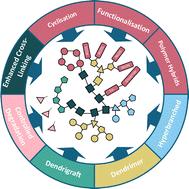
Branched peptide-based materials draw inspiration from dendritic structures to emulate the complex architecture of native tissues, aiming to enhance the performance of biomaterials in medical applications. These innovative materials benefit from several key features: they exhibit slower degradation rates, greater stiffness, and the ability to self-assemble. These properties are crucial for maintaining the structural integrity and functionality of the materials over time. By integrating bioactive peptides and natural polymers within their branched frameworks, these materials offer modularity and tunability and can accommodate a range of mechanical properties, degradation rates, and biological functions making them suitable for biomedical applications, including drug delivery systems, wound healing scaffolds, and tissue engineering constructs. In drug delivery, these materials can be engineered to release therapeutic agents in a controlled manner, enhancing the efficacy and safety of treatments. In wound healing, they provide a supportive environment which promotes rapid and efficient tissue repair. The combination of biomimetic design and functional adaptability makes branched peptide-based materials a promising candidate for the development of next-generation biomaterials, paving the way for significant advancements in healthcare.
期刊介绍:
Journal of Materials Chemistry A, B & C cover high quality studies across all fields of materials chemistry. The journals focus on those theoretical or experimental studies that report new understanding, applications, properties and synthesis of materials. Journal of Materials Chemistry A, B & C are separated by the intended application of the material studied. Broadly, applications in energy and sustainability are of interest to Journal of Materials Chemistry A, applications in biology and medicine are of interest to Journal of Materials Chemistry B, and applications in optical, magnetic and electronic devices are of interest to Journal of Materials Chemistry C.Journal of Materials Chemistry B is a Transformative Journal and Plan S compliant. Example topic areas within the scope of Journal of Materials Chemistry B are listed below. This list is neither exhaustive nor exclusive:
Antifouling coatings
Biocompatible materials
Bioelectronics
Bioimaging
Biomimetics
Biomineralisation
Bionics
Biosensors
Diagnostics
Drug delivery
Gene delivery
Immunobiology
Nanomedicine
Regenerative medicine & Tissue engineering
Scaffolds
Soft robotics
Stem cells
Therapeutic devices



 京公网安备 11010802042870号
京ICP备2023020795号-1
京公网安备 11010802042870号
京ICP备2023020795号-1

 分享
分享
 求助内容:
求助内容: 应助结果提醒方式:
 扫码关注我们
