Martin Thißen, Angela Fehr, Aline Anton, Stefanie Seeling, Thomas Ziese
{"title":"Towards a European health information system: The BRIDGE Health, InfAct and PHIRI projects.","authors":"Martin Thißen, Angela Fehr, Aline Anton, Stefanie Seeling, Thomas Ziese","doi":"10.25646/12943","DOIUrl":null,"url":null,"abstract":"<p><strong>Background: </strong>National health systems in Europe are facing similar challenges - demographic change, a rising burden of disease due to chronic non-communicable diseases, and health inequalities. Comparable health data and knowledge sharing between countries are therefore an important basis for policy decision-making. However, health information in the European Union (EU) is fragmented and approaches to establishing a comprehensive system are largely project-based.</p><p><strong>Methods: </strong>This contribution describes the European projects BRIDGE Health (2015 - 2017), InfAct (Information for Action, 2018 - 2021) and PHIRI (Population Health Information Research Infrastructure, 2020 - 2023), which aimed at developing a sustainable health information infrastructure.</p><p><strong>Results: </strong>The projects, which build on one another, laid the groundwork for an EU-wide health information system. For example, a health information portal was established, a federated research infrastructure was implemented, handouts were created and training on capacity building was provided.</p><p><strong>Conclusions: </strong>An integrated EU-wide health information system is an important basis for policy decision-making and a prerequisite for a rapid and coordinated response to health crises. A sustainable structure or institution with a mandate for non-communicable diseases (NCD) and their determinants at the EU level would be desirable.</p>","PeriodicalId":73767,"journal":{"name":"Journal of health monitoring","volume":"9 4","pages":"e12943"},"PeriodicalIF":0.0000,"publicationDate":"2024-12-11","publicationTypes":"Journal Article","fieldsOfStudy":null,"isOpenAccess":false,"openAccessPdf":"https://www.ncbi.nlm.nih.gov/pmc/articles/PMC11736667/pdf/","citationCount":"0","resultStr":null,"platform":"Semanticscholar","paperid":null,"PeriodicalName":"Journal of health monitoring","FirstCategoryId":"1085","ListUrlMain":"https://doi.org/10.25646/12943","RegionNum":0,"RegionCategory":null,"ArticlePicture":[],"TitleCN":null,"AbstractTextCN":null,"PMCID":null,"EPubDate":"2024/12/1 0:00:00","PubModel":"eCollection","JCR":"","JCRName":"","Score":null,"Total":0}
引用次数: 0
Abstract
Background: National health systems in Europe are facing similar challenges - demographic change, a rising burden of disease due to chronic non-communicable diseases, and health inequalities. Comparable health data and knowledge sharing between countries are therefore an important basis for policy decision-making. However, health information in the European Union (EU) is fragmented and approaches to establishing a comprehensive system are largely project-based.
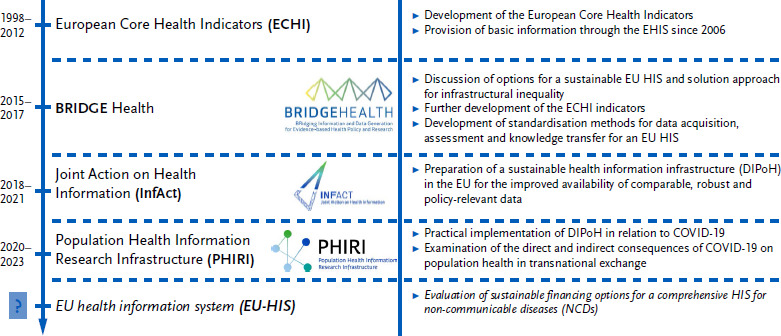
Methods: This contribution describes the European projects BRIDGE Health (2015 - 2017), InfAct (Information for Action, 2018 - 2021) and PHIRI (Population Health Information Research Infrastructure, 2020 - 2023), which aimed at developing a sustainable health information infrastructure.
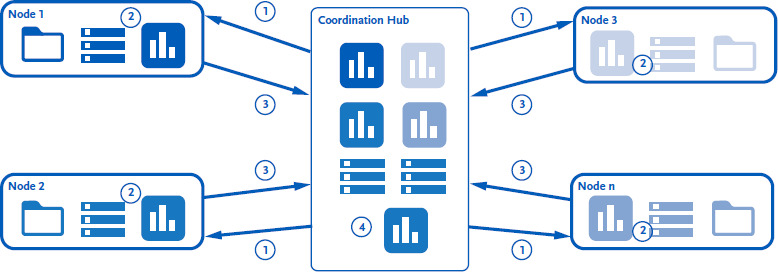
Results: The projects, which build on one another, laid the groundwork for an EU-wide health information system. For example, a health information portal was established, a federated research infrastructure was implemented, handouts were created and training on capacity building was provided.
Conclusions: An integrated EU-wide health information system is an important basis for policy decision-making and a prerequisite for a rapid and coordinated response to health crises. A sustainable structure or institution with a mandate for non-communicable diseases (NCD) and their determinants at the EU level would be desirable.



 京公网安备 11010802042870号
京ICP备2023020795号-1
京公网安备 11010802042870号
京ICP备2023020795号-1

 分享
分享

 求助内容:
求助内容: 应助结果提醒方式:
 扫码关注我们
