Xu Wang , Lanying Li , Dan Liu , Yuhang Jin , Xuan Zhao , Sijin Li , Rui Hou , Zhangchun Guan , Wen Ma , Junnian Zheng , Ming Lv , Ming Shi
{"title":"LILRB4 as a novel immunotherapeutic target for multiple diseases","authors":"Xu Wang , Lanying Li , Dan Liu , Yuhang Jin , Xuan Zhao , Sijin Li , Rui Hou , Zhangchun Guan , Wen Ma , Junnian Zheng , Ming Lv , Ming Shi","doi":"10.1016/j.bcp.2025.116762","DOIUrl":null,"url":null,"abstract":"<div><div>Immune checkpoints are critical for maintaining autoimmune homeostasis and are implicated in various autoimmune diseases, with their significance increasingly recognized. Investigating the functions and mechanisms of these checkpoints is essential for the development of more effective treatments. Leukocyte immunoglobulin-like receptor subfamily B member 4 (LILRB4) stands out as a unique immune checkpoint, with limited expression in most normal tissues but prominent presence in various hematological and solid tumors. It is also expressed on numerous immune and stromal cells, functioning as both a “Tumor Immune Checkpoint” and a “Tumor Stromal Immune Checkpoint.” Due to its distinct expression profile, LILRB4 plays a pivotal role in tumors, autoimmune diseases, allergic reactions, and the maintenance of immune homeostasis during transplantation and pregnancy. A thorough understanding of its ligands, functions, mechanisms, and ongoing therapeutic strategies targeting LILRB4 will be crucial for the development of advanced therapeutic options. This review examines LILRB4 expression and function across multiple diseases and discusses therapeutic approaches targeting LILRB4 in various contexts. Additionally, the potential of combining current drugs with LILRB4-targeted therapies is explored. Challenges in developing LILRB4-targeting drugs are also addressed, offering valuable insights for future research.</div></div>","PeriodicalId":8806,"journal":{"name":"Biochemical pharmacology","volume":"233 ","pages":"Article 116762"},"PeriodicalIF":5.6000,"publicationDate":"2025-01-20","publicationTypes":"Journal Article","fieldsOfStudy":null,"isOpenAccess":false,"openAccessPdf":"","citationCount":"0","resultStr":null,"platform":"Semanticscholar","paperid":null,"PeriodicalName":"Biochemical pharmacology","FirstCategoryId":"3","ListUrlMain":"https://www.sciencedirect.com/science/article/pii/S0006295225000243","RegionNum":2,"RegionCategory":"医学","ArticlePicture":[],"TitleCN":null,"AbstractTextCN":null,"PMCID":null,"EPubDate":"","PubModel":"","JCR":"Q1","JCRName":"PHARMACOLOGY & PHARMACY","Score":null,"Total":0}
引用次数: 0
Abstract
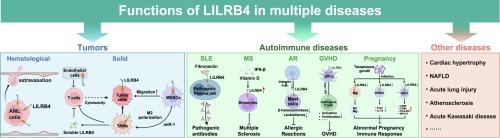
Immune checkpoints are critical for maintaining autoimmune homeostasis and are implicated in various autoimmune diseases, with their significance increasingly recognized. Investigating the functions and mechanisms of these checkpoints is essential for the development of more effective treatments. Leukocyte immunoglobulin-like receptor subfamily B member 4 (LILRB4) stands out as a unique immune checkpoint, with limited expression in most normal tissues but prominent presence in various hematological and solid tumors. It is also expressed on numerous immune and stromal cells, functioning as both a “Tumor Immune Checkpoint” and a “Tumor Stromal Immune Checkpoint.” Due to its distinct expression profile, LILRB4 plays a pivotal role in tumors, autoimmune diseases, allergic reactions, and the maintenance of immune homeostasis during transplantation and pregnancy. A thorough understanding of its ligands, functions, mechanisms, and ongoing therapeutic strategies targeting LILRB4 will be crucial for the development of advanced therapeutic options. This review examines LILRB4 expression and function across multiple diseases and discusses therapeutic approaches targeting LILRB4 in various contexts. Additionally, the potential of combining current drugs with LILRB4-targeted therapies is explored. Challenges in developing LILRB4-targeting drugs are also addressed, offering valuable insights for future research.
期刊介绍:
Biochemical Pharmacology publishes original research findings, Commentaries and review articles related to the elucidation of cellular and tissue function(s) at the biochemical and molecular levels, the modification of cellular phenotype(s) by genetic, transcriptional/translational or drug/compound-induced modifications, as well as the pharmacodynamics and pharmacokinetics of xenobiotics and drugs, the latter including both small molecules and biologics.
The journal''s target audience includes scientists engaged in the identification and study of the mechanisms of action of xenobiotics, biologics and drugs and in the drug discovery and development process.
All areas of cellular biology and cellular, tissue/organ and whole animal pharmacology fall within the scope of the journal. Drug classes covered include anti-infectives, anti-inflammatory agents, chemotherapeutics, cardiovascular, endocrinological, immunological, metabolic, neurological and psychiatric drugs, as well as research on drug metabolism and kinetics. While medicinal chemistry is a topic of complimentary interest, manuscripts in this area must contain sufficient biological data to characterize pharmacologically the compounds reported. Submissions describing work focused predominately on chemical synthesis and molecular modeling will not be considered for review.
While particular emphasis is placed on reporting the results of molecular and biochemical studies, research involving the use of tissue and animal models of human pathophysiology and toxicology is of interest to the extent that it helps define drug mechanisms of action, safety and efficacy.



 京公网安备 11010802042870号
京ICP备2023020795号-1
京公网安备 11010802042870号
京ICP备2023020795号-1

 分享
分享
 求助内容:
求助内容: 应助结果提醒方式:
 扫码关注我们
