Changing trends in the global burden of polycystic ovarian syndrome-related infertility over the past 30 years: retrospective data analysis of the global burden of disease study 2019.
Ming Huo, Yixiang Wang, Xianbin Yuan, Yue Yuan, Xuehong Zhang
{"title":"Changing trends in the global burden of polycystic ovarian syndrome-related infertility over the past 30 years: retrospective data analysis of the global burden of disease study 2019.","authors":"Ming Huo, Yixiang Wang, Xianbin Yuan, Yue Yuan, Xuehong Zhang","doi":"10.1186/s12905-024-03537-7","DOIUrl":null,"url":null,"abstract":"<p><strong>Objectives: </strong>Polycystic ovary syndrome (PCOS) represents a significant and persistent metabolic disorder, emerging as a leading factor contributing to infertility. Despite its profound impact, there remains an inadequate understanding of the global burden of PCOS-related infertility across diverse regions and countries. The aim of this study was to evaluate the global, regional, and national burden of PCOS-related infertility from 1990 to 2019.</p><p><strong>Methods: </strong>The data utilized in this study were derived from the Global Burden of Disease Study 2019. The global burden of PCOS-related infertility was collected and subsequently categorized based on age and sociodemographic index (SDI) spanning the period from 1990 to 2019. Temporal trends in PCOS-related infertility over the past three decades were scrutinized employing joinpoint regression analysis, enabling the determination of annual percentage change (APC) and average annual percentage changes (AAPCs). The association between the age-standardized prevalence rate (ASPR), age-standardized YLD rate (ASYR), and the AAPCs in ASPR and ASYR and the SDI was performed using linear regression analysis. Additionally, the Slope Index of Inequality (SII) and the Relative Concentration Index were employed to assess the inequalities in the distribution of infertility burdens related to PCOS.</p><p><strong>Results: </strong>Globally, the number of prevalent cases and YLDs due to PCOS-related infertility increased from 5,997,589 (95% UI: 3,772,636-8,764,813), and 35,201 (95% UI: 13,282 - 80,010) in 1990 to 12,131,849 (95% UI: 7,625,027 - 17,945,905), and 69,694 (95% UI: 26,756 - 160,420) in 2019, respectively. The age-standardized rates of prevalence and YLDs consistently increased over the same period, with respective AAPCs of 2.45 (95% CI: 2.4-2.5) and 2.37 (95% CI: 2.32-2.43), respectively. The number of prevalent cases and rate of PCOS peaked in the 25-29 years. Populations with high SDI had the highest ASPRs and ASYRs of PCOS-related infertility, while populations with low SDI exhibited more pronounced upward trends. Additionally, linear regression analysis revealed that ASPRs and ASYRs were positively correlated with SDI (R = 0.419 and 0.433, respectively, all P < 0.0001), and the AAPCs in ASPRs and ASYRs were negatively correlated with SDI (R= - 0.570 and - 0.571, respectively, all P < 0.0001). The SII for prevalent cases and YLDs were 121.94 (95% CI: 94.66-149.23) and 0.75 (95% CI: 0.55-0.85) to 146.56 (95% CI: 110.27-182.86) and 0.91 (95% CI: 0.71-1.03), respectively.</p><p><strong>Conclusion: </strong>The prevalent cases and YLDs, along with the ASPRs and ASYRs attributable to PCOS-related infertility, exhibited a consistent upward trajectory over the past 30 years. This escalation was closely associated with factors such as age, socioeconomic status, and geographic location. It is crucial to bolster healthcare management, devise timely and efficacious prevention and control strategies, and provide epidemiological theoretical evidence to alleviate the burden of PCOS-related infertility.</p>","PeriodicalId":9204,"journal":{"name":"BMC Women's Health","volume":"25 1","pages":"35"},"PeriodicalIF":2.7000,"publicationDate":"2025-01-23","publicationTypes":"Journal Article","fieldsOfStudy":null,"isOpenAccess":false,"openAccessPdf":"https://www.ncbi.nlm.nih.gov/pmc/articles/PMC11756084/pdf/","citationCount":"0","resultStr":null,"platform":"Semanticscholar","paperid":null,"PeriodicalName":"BMC Women's Health","FirstCategoryId":"3","ListUrlMain":"https://doi.org/10.1186/s12905-024-03537-7","RegionNum":3,"RegionCategory":"医学","ArticlePicture":[],"TitleCN":null,"AbstractTextCN":null,"PMCID":null,"EPubDate":"","PubModel":"","JCR":"Q2","JCRName":"OBSTETRICS & GYNECOLOGY","Score":null,"Total":0}
引用次数: 0
Abstract
Objectives: Polycystic ovary syndrome (PCOS) represents a significant and persistent metabolic disorder, emerging as a leading factor contributing to infertility. Despite its profound impact, there remains an inadequate understanding of the global burden of PCOS-related infertility across diverse regions and countries. The aim of this study was to evaluate the global, regional, and national burden of PCOS-related infertility from 1990 to 2019.
Methods: The data utilized in this study were derived from the Global Burden of Disease Study 2019. The global burden of PCOS-related infertility was collected and subsequently categorized based on age and sociodemographic index (SDI) spanning the period from 1990 to 2019. Temporal trends in PCOS-related infertility over the past three decades were scrutinized employing joinpoint regression analysis, enabling the determination of annual percentage change (APC) and average annual percentage changes (AAPCs). The association between the age-standardized prevalence rate (ASPR), age-standardized YLD rate (ASYR), and the AAPCs in ASPR and ASYR and the SDI was performed using linear regression analysis. Additionally, the Slope Index of Inequality (SII) and the Relative Concentration Index were employed to assess the inequalities in the distribution of infertility burdens related to PCOS.
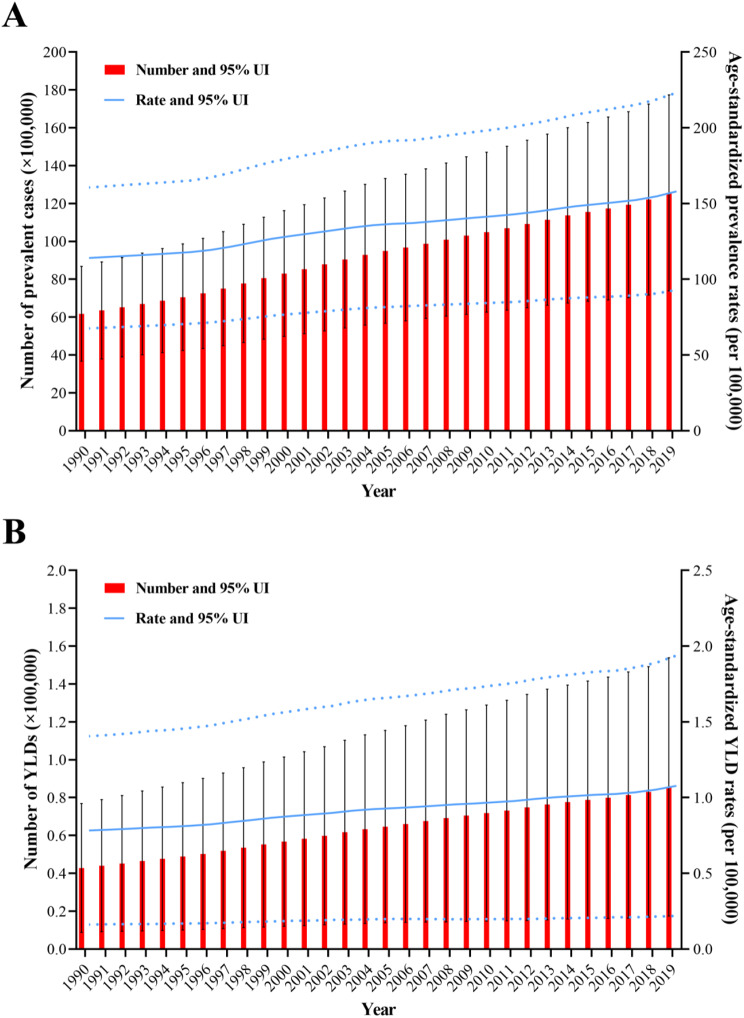
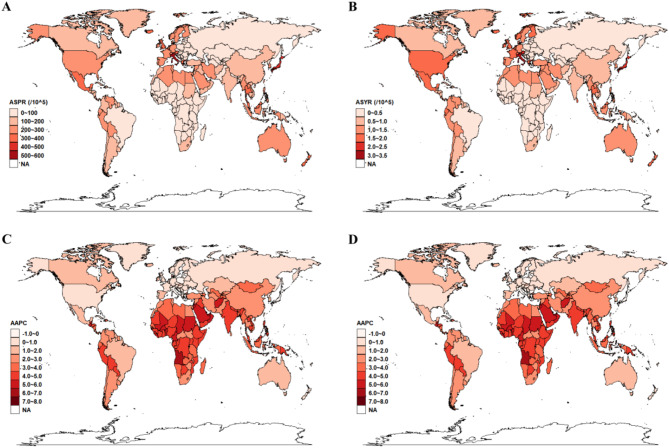
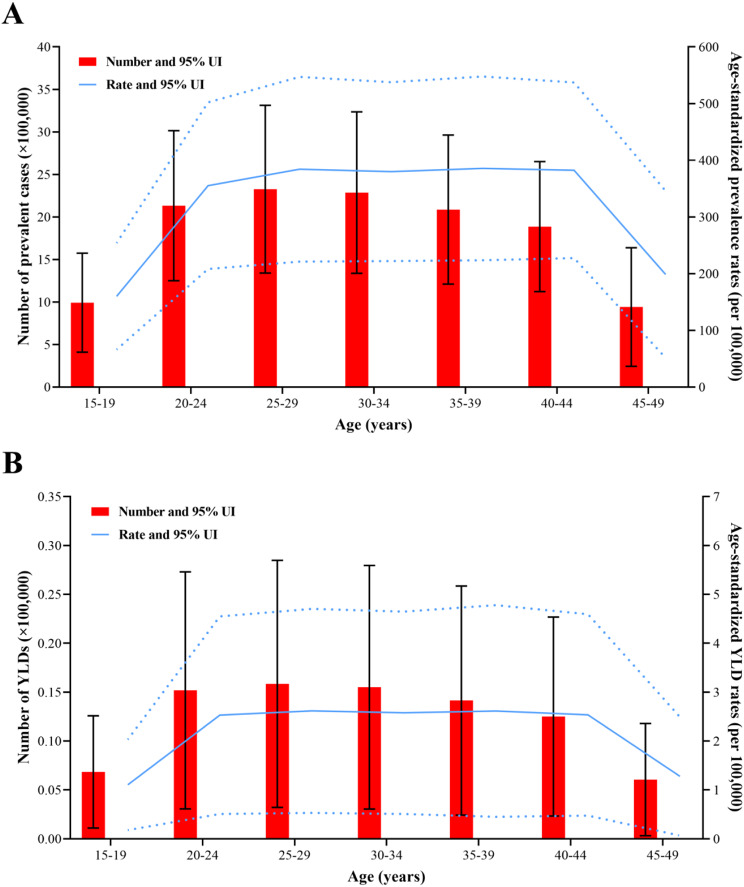
Results: Globally, the number of prevalent cases and YLDs due to PCOS-related infertility increased from 5,997,589 (95% UI: 3,772,636-8,764,813), and 35,201 (95% UI: 13,282 - 80,010) in 1990 to 12,131,849 (95% UI: 7,625,027 - 17,945,905), and 69,694 (95% UI: 26,756 - 160,420) in 2019, respectively. The age-standardized rates of prevalence and YLDs consistently increased over the same period, with respective AAPCs of 2.45 (95% CI: 2.4-2.5) and 2.37 (95% CI: 2.32-2.43), respectively. The number of prevalent cases and rate of PCOS peaked in the 25-29 years. Populations with high SDI had the highest ASPRs and ASYRs of PCOS-related infertility, while populations with low SDI exhibited more pronounced upward trends. Additionally, linear regression analysis revealed that ASPRs and ASYRs were positively correlated with SDI (R = 0.419 and 0.433, respectively, all P < 0.0001), and the AAPCs in ASPRs and ASYRs were negatively correlated with SDI (R= - 0.570 and - 0.571, respectively, all P < 0.0001). The SII for prevalent cases and YLDs were 121.94 (95% CI: 94.66-149.23) and 0.75 (95% CI: 0.55-0.85) to 146.56 (95% CI: 110.27-182.86) and 0.91 (95% CI: 0.71-1.03), respectively.
Conclusion: The prevalent cases and YLDs, along with the ASPRs and ASYRs attributable to PCOS-related infertility, exhibited a consistent upward trajectory over the past 30 years. This escalation was closely associated with factors such as age, socioeconomic status, and geographic location. It is crucial to bolster healthcare management, devise timely and efficacious prevention and control strategies, and provide epidemiological theoretical evidence to alleviate the burden of PCOS-related infertility.
期刊介绍:
BMC Women''s Health is an open access, peer-reviewed journal that considers articles on all aspects of the health and wellbeing of adolescent girls and women, with a particular focus on the physical, mental, and emotional health of women in developed and developing nations. The journal welcomes submissions on women''s public health issues, health behaviours, breast cancer, gynecological diseases, mental health and health promotion.



 京公网安备 11010802042870号
京ICP备2023020795号-1
京公网安备 11010802042870号
京ICP备2023020795号-1

 分享
分享
 求助内容:
求助内容: 应助结果提醒方式:
 扫码关注我们
