Yukiko Kikuchi, Mohammed Uddin, Joris A Veltman, Sara Wells, Christopher Morris, Marc Woodbury-Smith
{"title":"Evolutionary constrained genes associated with autism spectrum disorder across 2,054 nonhuman primate genomes.","authors":"Yukiko Kikuchi, Mohammed Uddin, Joris A Veltman, Sara Wells, Christopher Morris, Marc Woodbury-Smith","doi":"10.1186/s13229-024-00633-1","DOIUrl":null,"url":null,"abstract":"<p><strong>Background: </strong>Significant progress has been made in elucidating the genetic underpinnings of Autism Spectrum Disorder (ASD). However, there are still significant gaps in our understanding of the link between genomics, neurobiology and clinical phenotype in scientific discovery. New models are therefore needed to address these gaps. Rhesus macaques (Macaca mulatta) have been extensively used for preclinical neurobiological research because of remarkable similarities to humans across biology and behaviour that cannot be captured by other experimental animals.</p><p><strong>Methods: </strong>We used the macaque Genotype and Phenotype (mGAP) resource consisting of 2,054 macaque genomes to examine patterns of evolutionary constraint in known human neurodevelopmental genes. Residual variation intolerance scores (RVIS) were calculated for all annotated autosomal genes (N = 18,168) and Gene Set Enrichment Analysis (GSEA) was used to examine patterns of constraint across ASD genes and related neurodevelopmental genes.</p><p><strong>Results: </strong>We demonstrated that patterns of constraint across autosomal genes are correlated in humans and macaques, and that ASD-associated genes exhibit significant constraint in macaques (p = 9.4 × 10<sup>- 27</sup>). Among macaques, many key ASD-implicated genes were observed to harbour predicted damaging mutations. A small number of key ASD-implicated genes that are highly intolerant to mutation in humans, however, showed no evidence of similar intolerance in macaques (CACNA1D, MBD5, AUTS2 and NRXN1). Constraint was also observed across genes associated with intellectual disability (p = 1.1 × 10<sup>- 46</sup>), epilepsy (p = 2.1 × 10<sup>- 33</sup>) and schizophrenia (p = 4.2 × 10<sup>- 45</sup>), and for an overlapping neurodevelopmental gene set (p = 4.0 × 10<sup>- 10</sup>).</p><p><strong>Limitations: </strong>The lack of behavioural phenotypes among the macaques whose genotypes were studied means that we are unable to further investigate whether genetic variants have similar phenotypic consequences among nonhuman primates.</p><p><strong>Conclusion: </strong>The presence of pathological mutations in ASD genes among macaques, along with evidence of similar genetic constraints to those in humans, provides a strong rationale for further investigation of genotype-phenotype relationships in macaques. This highlights the importance of developing primate models of ASD to elucidate the neurobiological underpinnings and advance approaches for precision medicine and therapeutic interventions.</p>","PeriodicalId":18733,"journal":{"name":"Molecular Autism","volume":"16 1","pages":"5"},"PeriodicalIF":5.5000,"publicationDate":"2025-01-23","publicationTypes":"Journal Article","fieldsOfStudy":null,"isOpenAccess":false,"openAccessPdf":"https://www.ncbi.nlm.nih.gov/pmc/articles/PMC11755938/pdf/","citationCount":"0","resultStr":null,"platform":"Semanticscholar","paperid":null,"PeriodicalName":"Molecular Autism","FirstCategoryId":"3","ListUrlMain":"https://doi.org/10.1186/s13229-024-00633-1","RegionNum":1,"RegionCategory":"医学","ArticlePicture":[],"TitleCN":null,"AbstractTextCN":null,"PMCID":null,"EPubDate":"","PubModel":"","JCR":"Q1","JCRName":"GENETICS & HEREDITY","Score":null,"Total":0}
引用次数: 0
Abstract
Background: Significant progress has been made in elucidating the genetic underpinnings of Autism Spectrum Disorder (ASD). However, there are still significant gaps in our understanding of the link between genomics, neurobiology and clinical phenotype in scientific discovery. New models are therefore needed to address these gaps. Rhesus macaques (Macaca mulatta) have been extensively used for preclinical neurobiological research because of remarkable similarities to humans across biology and behaviour that cannot be captured by other experimental animals.
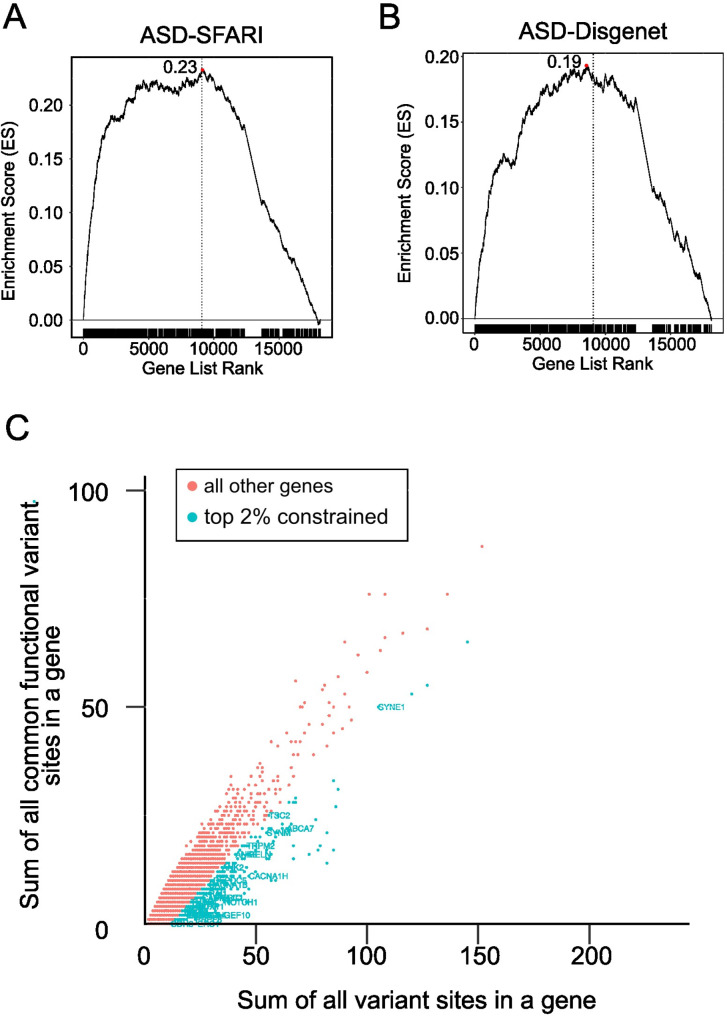
Methods: We used the macaque Genotype and Phenotype (mGAP) resource consisting of 2,054 macaque genomes to examine patterns of evolutionary constraint in known human neurodevelopmental genes. Residual variation intolerance scores (RVIS) were calculated for all annotated autosomal genes (N = 18,168) and Gene Set Enrichment Analysis (GSEA) was used to examine patterns of constraint across ASD genes and related neurodevelopmental genes.
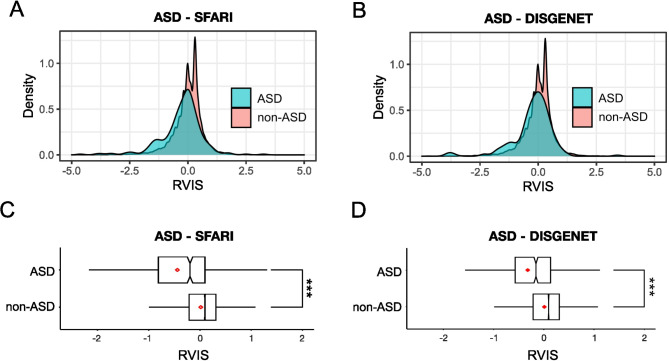
Results: We demonstrated that patterns of constraint across autosomal genes are correlated in humans and macaques, and that ASD-associated genes exhibit significant constraint in macaques (p = 9.4 × 10- 27). Among macaques, many key ASD-implicated genes were observed to harbour predicted damaging mutations. A small number of key ASD-implicated genes that are highly intolerant to mutation in humans, however, showed no evidence of similar intolerance in macaques (CACNA1D, MBD5, AUTS2 and NRXN1). Constraint was also observed across genes associated with intellectual disability (p = 1.1 × 10- 46), epilepsy (p = 2.1 × 10- 33) and schizophrenia (p = 4.2 × 10- 45), and for an overlapping neurodevelopmental gene set (p = 4.0 × 10- 10).
Limitations: The lack of behavioural phenotypes among the macaques whose genotypes were studied means that we are unable to further investigate whether genetic variants have similar phenotypic consequences among nonhuman primates.
Conclusion: The presence of pathological mutations in ASD genes among macaques, along with evidence of similar genetic constraints to those in humans, provides a strong rationale for further investigation of genotype-phenotype relationships in macaques. This highlights the importance of developing primate models of ASD to elucidate the neurobiological underpinnings and advance approaches for precision medicine and therapeutic interventions.
期刊介绍:
Molecular Autism is a peer-reviewed, open access journal that publishes high-quality basic, translational and clinical research that has relevance to the etiology, pathobiology, or treatment of autism and related neurodevelopmental conditions. Research that includes integration across levels is encouraged. Molecular Autism publishes empirical studies, reviews, and brief communications.





 京公网安备 11010802042870号
京ICP备2023020795号-1
京公网安备 11010802042870号
京ICP备2023020795号-1

 分享
分享
 求助内容:
求助内容: 应助结果提醒方式:
 扫码关注我们
