Krunal Pawar, Pramodkumar P Gupta, Pooran Singh Solanki, Ravi Ranjan Kumar Niraj, Shanker L Kothari
{"title":"Targeting SLC4A4: A Novel Approach in Colorectal Cancer Drug Repurposing.","authors":"Krunal Pawar, Pramodkumar P Gupta, Pooran Singh Solanki, Ravi Ranjan Kumar Niraj, Shanker L Kothari","doi":"10.3390/cimb47010067","DOIUrl":null,"url":null,"abstract":"<p><strong>Background: </strong>Colorectal cancer (CRC) is a complex and increasingly prevalent malignancy with significant challenges in its treatment and prognosis. This study aims to explore the role of the SLC4A4 transporter as a biomarker in CRC progression and its potential as a therapeutic target, particularly in relation to tumor acidity and immune response.</p><p><strong>Methods: </strong>The study utilized computational approaches, including receptor-based virtual screening and high-throughput docking, to identify potential SLC4A4 inhibitors. A model of the human SLC4A4 structure was generated based on CryoEM data (PDB ID 6CAA), and drug candidates from the DrugBank database were evaluated using two computational tools (DrugRep and CB-DOCK2).</p><p><strong>Results: </strong>The study identified the compound (5R)-N-[(1r)-3-(4-hydroxyphenyl)butanoyl]-2-decanamide (DB07991) as the best ligand, demonstrating favorable binding affinity and stability. Molecular dynamics simulations revealed strong protein-ligand interactions with consistent RMSD (~0.25 nm), RMSF (~0.5 nm), compact Rg (4.0-3.9 nm), and stable SASA profiles, indicating that the SLC4A4 structure remains stable upon ligand binding.</p><p><strong>Conclusions: </strong>The findings suggest that DB07991 is a promising drug candidate for further investigation as a therapeutic agent against CRC, particularly for targeting SLC4A4. This study highlights the potential of computational drug repositioning in identifying effective treatments for colorectal cancer.</p>","PeriodicalId":10839,"journal":{"name":"Current Issues in Molecular Biology","volume":"47 1","pages":""},"PeriodicalIF":3.0000,"publicationDate":"2025-01-20","publicationTypes":"Journal Article","fieldsOfStudy":null,"isOpenAccess":false,"openAccessPdf":"https://www.ncbi.nlm.nih.gov/pmc/articles/PMC11764095/pdf/","citationCount":"0","resultStr":null,"platform":"Semanticscholar","paperid":null,"PeriodicalName":"Current Issues in Molecular Biology","FirstCategoryId":"99","ListUrlMain":"https://doi.org/10.3390/cimb47010067","RegionNum":3,"RegionCategory":"生物学","ArticlePicture":[],"TitleCN":null,"AbstractTextCN":null,"PMCID":null,"EPubDate":"","PubModel":"","JCR":"Q3","JCRName":"BIOCHEMISTRY & MOLECULAR BIOLOGY","Score":null,"Total":0}
引用次数: 0
Abstract
Background: Colorectal cancer (CRC) is a complex and increasingly prevalent malignancy with significant challenges in its treatment and prognosis. This study aims to explore the role of the SLC4A4 transporter as a biomarker in CRC progression and its potential as a therapeutic target, particularly in relation to tumor acidity and immune response.
Methods: The study utilized computational approaches, including receptor-based virtual screening and high-throughput docking, to identify potential SLC4A4 inhibitors. A model of the human SLC4A4 structure was generated based on CryoEM data (PDB ID 6CAA), and drug candidates from the DrugBank database were evaluated using two computational tools (DrugRep and CB-DOCK2).
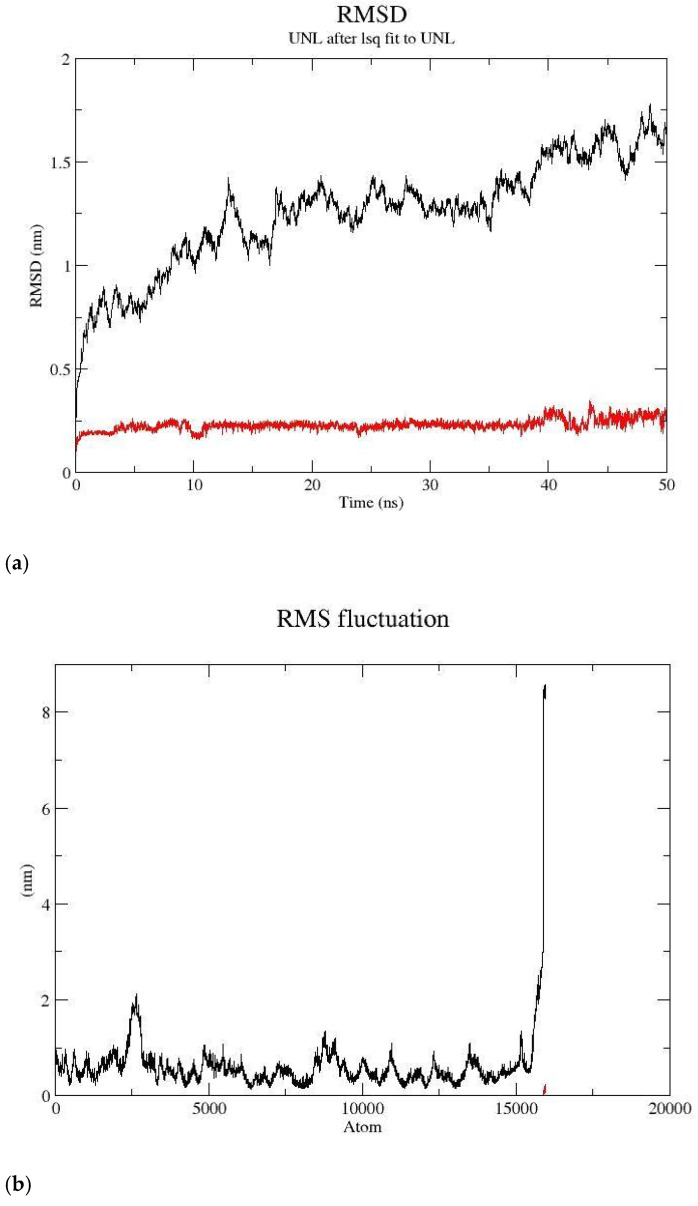
Results: The study identified the compound (5R)-N-[(1r)-3-(4-hydroxyphenyl)butanoyl]-2-decanamide (DB07991) as the best ligand, demonstrating favorable binding affinity and stability. Molecular dynamics simulations revealed strong protein-ligand interactions with consistent RMSD (~0.25 nm), RMSF (~0.5 nm), compact Rg (4.0-3.9 nm), and stable SASA profiles, indicating that the SLC4A4 structure remains stable upon ligand binding.
Conclusions: The findings suggest that DB07991 is a promising drug candidate for further investigation as a therapeutic agent against CRC, particularly for targeting SLC4A4. This study highlights the potential of computational drug repositioning in identifying effective treatments for colorectal cancer.
期刊介绍:
Current Issues in Molecular Biology (CIMB) is a peer-reviewed journal publishing review articles and minireviews in all areas of molecular biology and microbiology. Submitted articles are subject to an Article Processing Charge (APC) and are open access immediately upon publication. All manuscripts undergo a peer-review process.





 京公网安备 11010802042870号
京ICP备2023020795号-1
京公网安备 11010802042870号
京ICP备2023020795号-1

 分享
分享
 求助内容:
求助内容: 应助结果提醒方式:
 扫码关注我们
