Enhancing Treatment Decisions for Advanced Non-Small Cell Lung Cancer with Epidermal Growth Factor Receptor Mutations: A Reinforcement Learning Approach.
Hakan Şat Bozcuk, Leyla Sert, Muhammet Ali Kaplan, Ali Murat Tatlı, Mustafa Karaca, Harun Muğlu, Ahmet Bilici, Bilge Şah Kılıçtaş, Mehmet Artaç, Pınar Erel, Perran Fulden Yumuk, Burak Bilgin, Mehmet Ali Nahit Şendur, Saadettin Kılıçkap, Hakan Taban, Sevinç Ballı, Ahmet Demirkazık, Fatma Akdağ, İlhan Hacıbekiroğlu, Halil Göksel Güzel, Murat Koçer, Pınar Gürsoy, Bahadır Köylü, Fatih Selçukbiricik, Gökhan Karakaya, Mustafa Serkan Alemdar
{"title":"Enhancing Treatment Decisions for Advanced Non-Small Cell Lung Cancer with Epidermal Growth Factor Receptor Mutations: A Reinforcement Learning Approach.","authors":"Hakan Şat Bozcuk, Leyla Sert, Muhammet Ali Kaplan, Ali Murat Tatlı, Mustafa Karaca, Harun Muğlu, Ahmet Bilici, Bilge Şah Kılıçtaş, Mehmet Artaç, Pınar Erel, Perran Fulden Yumuk, Burak Bilgin, Mehmet Ali Nahit Şendur, Saadettin Kılıçkap, Hakan Taban, Sevinç Ballı, Ahmet Demirkazık, Fatma Akdağ, İlhan Hacıbekiroğlu, Halil Göksel Güzel, Murat Koçer, Pınar Gürsoy, Bahadır Köylü, Fatih Selçukbiricik, Gökhan Karakaya, Mustafa Serkan Alemdar","doi":"10.3390/cancers17020233","DOIUrl":null,"url":null,"abstract":"<p><strong>Background: </strong>Although higher-generation TKIs are associated with improved progression-free survival in advanced NSCLC patients with EGFR mutations, the optimal selection of TKI treatment remains uncertain. To address this gap, we developed a web application powered by a reinforcement learning (RL) algorithm to assist in guiding initial TKI treatment decisions.</p><p><strong>Methods: </strong>Clinical and mutational data from advanced NSCLC patients were retrospectively collected from 14 medical centers. Only patients with complete data and sufficient follow-up were included. Multiple supervised machine learning models were tested, with the Extra Trees Classifier (ETC) identified as the most effective for predicting progression-free survival. Feature importance scores were calculated by the ETC, and features were then integrated into a Deep Q-Network (DQN) RL algorithm. The RL model was designed to select optimal TKI generation and a treatment line for each patient and was embedded into an open-source web application for experimental clinical use.</p><p><strong>Results: </strong>In total, 318 cases of EGFR-mutant advanced NSCLC were analyzed, with a median patient age of 63. A total of 52.2% of patients were female, and 83.3% had ECOG scores of 0 or 1. The top three most influential features identified were neutrophil-to-lymphocyte ratio (log-transformed), age (log-transformed), and the treatment line of TKI administration, as tested by the ETC algorithm, with an area under curve (AUC) value of 0.73, whereas the DQN RL algorithm achieved a higher AUC value of 0.80, assigning distinct Q-values across four TKI treatment categories. This supports the decision-making process in the web-based 'EGFR Mutant NSCLC Treatment Advisory System', where clinicians can input patient-specific data to receive tailored recommendations.</p><p><strong>Conclusions: </strong>The RL-based web application shows promise in assisting TKI treatment selection for EGFR-mutant advanced NSCLC patients, underscoring the potential for reinforcement learning to enhance decision-making in oncology care.</p>","PeriodicalId":9681,"journal":{"name":"Cancers","volume":"17 2","pages":""},"PeriodicalIF":4.4000,"publicationDate":"2025-01-13","publicationTypes":"Journal Article","fieldsOfStudy":null,"isOpenAccess":false,"openAccessPdf":"https://www.ncbi.nlm.nih.gov/pmc/articles/PMC11763509/pdf/","citationCount":"0","resultStr":null,"platform":"Semanticscholar","paperid":null,"PeriodicalName":"Cancers","FirstCategoryId":"3","ListUrlMain":"https://doi.org/10.3390/cancers17020233","RegionNum":2,"RegionCategory":"医学","ArticlePicture":[],"TitleCN":null,"AbstractTextCN":null,"PMCID":null,"EPubDate":"","PubModel":"","JCR":"Q1","JCRName":"ONCOLOGY","Score":null,"Total":0}
引用次数: 0
Abstract
Background: Although higher-generation TKIs are associated with improved progression-free survival in advanced NSCLC patients with EGFR mutations, the optimal selection of TKI treatment remains uncertain. To address this gap, we developed a web application powered by a reinforcement learning (RL) algorithm to assist in guiding initial TKI treatment decisions.
Methods: Clinical and mutational data from advanced NSCLC patients were retrospectively collected from 14 medical centers. Only patients with complete data and sufficient follow-up were included. Multiple supervised machine learning models were tested, with the Extra Trees Classifier (ETC) identified as the most effective for predicting progression-free survival. Feature importance scores were calculated by the ETC, and features were then integrated into a Deep Q-Network (DQN) RL algorithm. The RL model was designed to select optimal TKI generation and a treatment line for each patient and was embedded into an open-source web application for experimental clinical use.
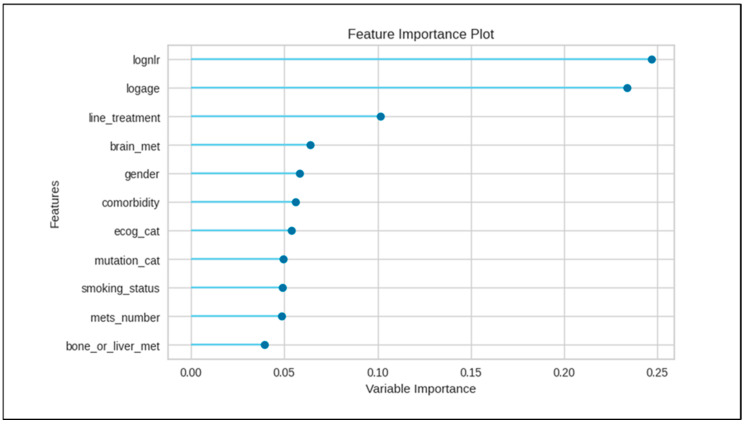
Results: In total, 318 cases of EGFR-mutant advanced NSCLC were analyzed, with a median patient age of 63. A total of 52.2% of patients were female, and 83.3% had ECOG scores of 0 or 1. The top three most influential features identified were neutrophil-to-lymphocyte ratio (log-transformed), age (log-transformed), and the treatment line of TKI administration, as tested by the ETC algorithm, with an area under curve (AUC) value of 0.73, whereas the DQN RL algorithm achieved a higher AUC value of 0.80, assigning distinct Q-values across four TKI treatment categories. This supports the decision-making process in the web-based 'EGFR Mutant NSCLC Treatment Advisory System', where clinicians can input patient-specific data to receive tailored recommendations.
Conclusions: The RL-based web application shows promise in assisting TKI treatment selection for EGFR-mutant advanced NSCLC patients, underscoring the potential for reinforcement learning to enhance decision-making in oncology care.
期刊介绍:
Cancers (ISSN 2072-6694) is an international, peer-reviewed open access journal on oncology. It publishes reviews, regular research papers and short communications. Our aim is to encourage scientists to publish their experimental and theoretical results in as much detail as possible. There is no restriction on the length of the papers. The full experimental details must be provided so that the results can be reproduced.





 京公网安备 11010802042870号
京ICP备2023020795号-1
京公网安备 11010802042870号
京ICP备2023020795号-1

 分享
分享
 求助内容:
求助内容: 应助结果提醒方式:
 扫码关注我们
