{"title":"Sexual dimorphism of the humerus bones in a French sample: comparison of several statistical models including machine learning models.","authors":"Manon Blanc, Siam Knecht, Kathy Nguyen, Clément Poulain, Gérald Quatrehomme, Véronique Alunni, Luísa Nogueira","doi":"10.1007/s00414-025-03417-1","DOIUrl":null,"url":null,"abstract":"<p><p>Sex estimation is an important part of skeletal analysis and forensic identification. Traditionally pelvic traits are utilized for accurate sex estimation. However, the long bones, especially humerus, have been proved to be as effective for determine the sex of the individual.The aim of this study was to compare the predictive accuracy of seven statistical modelling techniques including classical statistical methods and machine learning algorithms, to assess the sexual dimorphism of humerus on a French sample based on a metric analysis of 26 measurements. A total of 98 humeral bones (divided in two samples) were measured. Seven statistical models were compared: Linear Discriminant Analysis (LDA), Regularized Discriminant Analysis (RDA), Penalized Logistic Regression (PLR), Flexible Discriminant Analysis (FDA), Support Vector Machine (SVM), and Artificial Neural Network (ANN) and Random Forest (RF).With cross validation, classification accuracy was greater than 90% (ranges between 92% and 98%) for all models without variable selection methods. The simplification of the models has improved the accuracy between 98% and 100% and also a reduction of the number of variables to 6 or less. Penalized logistic regression (PLR), Random Forest (RF) and Linear discriminant analysis (LDA) were the best accuracy models.The measurements made at the proximal part of the humerus (WTT, CSD), at distal part (BEW, WT, MAW, THT) and of the entire bone (PLCT) stand out among the various models.The present study suggests that the humerus is an interesting alternative for sex estimation and that non-classical statistical models can provide a new approach.</p>","PeriodicalId":14071,"journal":{"name":"International Journal of Legal Medicine","volume":" ","pages":"1395-1408"},"PeriodicalIF":2.3000,"publicationDate":"2025-05-01","publicationTypes":"Journal Article","fieldsOfStudy":null,"isOpenAccess":false,"openAccessPdf":"https://www.ncbi.nlm.nih.gov/pmc/articles/PMC12003549/pdf/","citationCount":"0","resultStr":null,"platform":"Semanticscholar","paperid":null,"PeriodicalName":"International Journal of Legal Medicine","FirstCategoryId":"3","ListUrlMain":"https://doi.org/10.1007/s00414-025-03417-1","RegionNum":3,"RegionCategory":"医学","ArticlePicture":[],"TitleCN":null,"AbstractTextCN":null,"PMCID":null,"EPubDate":"2025/1/25 0:00:00","PubModel":"Epub","JCR":"Q1","JCRName":"MEDICINE, LEGAL","Score":null,"Total":0}
引用次数: 0
Abstract
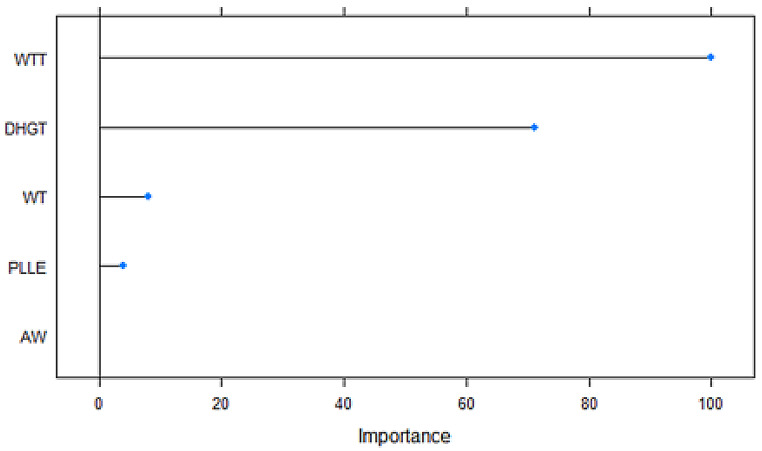
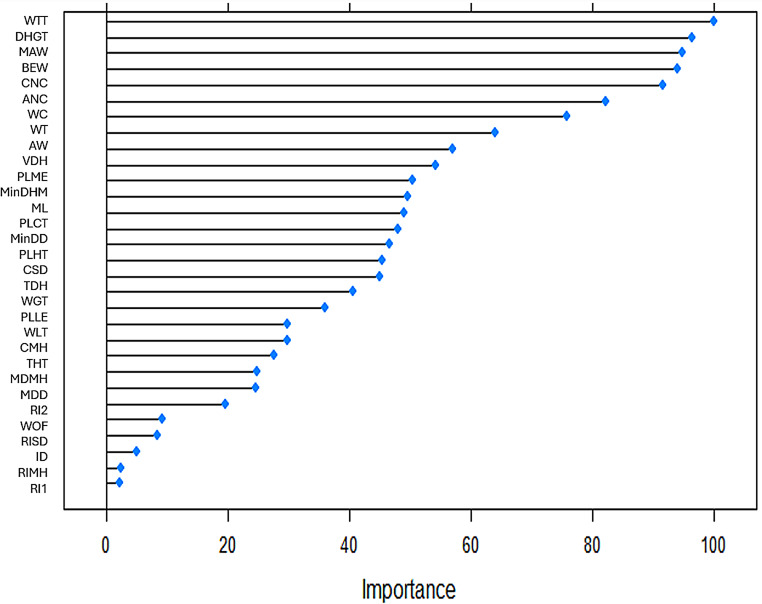
Sex estimation is an important part of skeletal analysis and forensic identification. Traditionally pelvic traits are utilized for accurate sex estimation. However, the long bones, especially humerus, have been proved to be as effective for determine the sex of the individual.The aim of this study was to compare the predictive accuracy of seven statistical modelling techniques including classical statistical methods and machine learning algorithms, to assess the sexual dimorphism of humerus on a French sample based on a metric analysis of 26 measurements. A total of 98 humeral bones (divided in two samples) were measured. Seven statistical models were compared: Linear Discriminant Analysis (LDA), Regularized Discriminant Analysis (RDA), Penalized Logistic Regression (PLR), Flexible Discriminant Analysis (FDA), Support Vector Machine (SVM), and Artificial Neural Network (ANN) and Random Forest (RF).With cross validation, classification accuracy was greater than 90% (ranges between 92% and 98%) for all models without variable selection methods. The simplification of the models has improved the accuracy between 98% and 100% and also a reduction of the number of variables to 6 or less. Penalized logistic regression (PLR), Random Forest (RF) and Linear discriminant analysis (LDA) were the best accuracy models.The measurements made at the proximal part of the humerus (WTT, CSD), at distal part (BEW, WT, MAW, THT) and of the entire bone (PLCT) stand out among the various models.The present study suggests that the humerus is an interesting alternative for sex estimation and that non-classical statistical models can provide a new approach.
期刊介绍:
The International Journal of Legal Medicine aims to improve the scientific resources used in the elucidation of crime and related forensic applications at a high level of evidential proof. The journal offers review articles tracing development in specific areas, with up-to-date analysis; original articles discussing significant recent research results; case reports describing interesting and exceptional examples; population data; letters to the editors; and technical notes, which appear in a section originally created for rapid publication of data in the dynamic field of DNA analysis.




 京公网安备 11010802042870号
京ICP备2023020795号-1
京公网安备 11010802042870号
京ICP备2023020795号-1

 分享
分享

 求助内容:
求助内容: 应助结果提醒方式:
 扫码关注我们
