Pharmacological Dissection Identifies Retatrutide Overcomes the Therapeutic Barrier of Obese TNBC Treatments through Suppressing the Interplay between Glycosylation and Ubiquitylation of YAP
Xin Cui, Yueming Zhu, Lidan Zeng, Mengyuan Zhang, Amad Uddin, Theresa W. Gillespie, Lauren E. McCullough, Shaying Zhao, Mylin A. Torres, Yong Wan
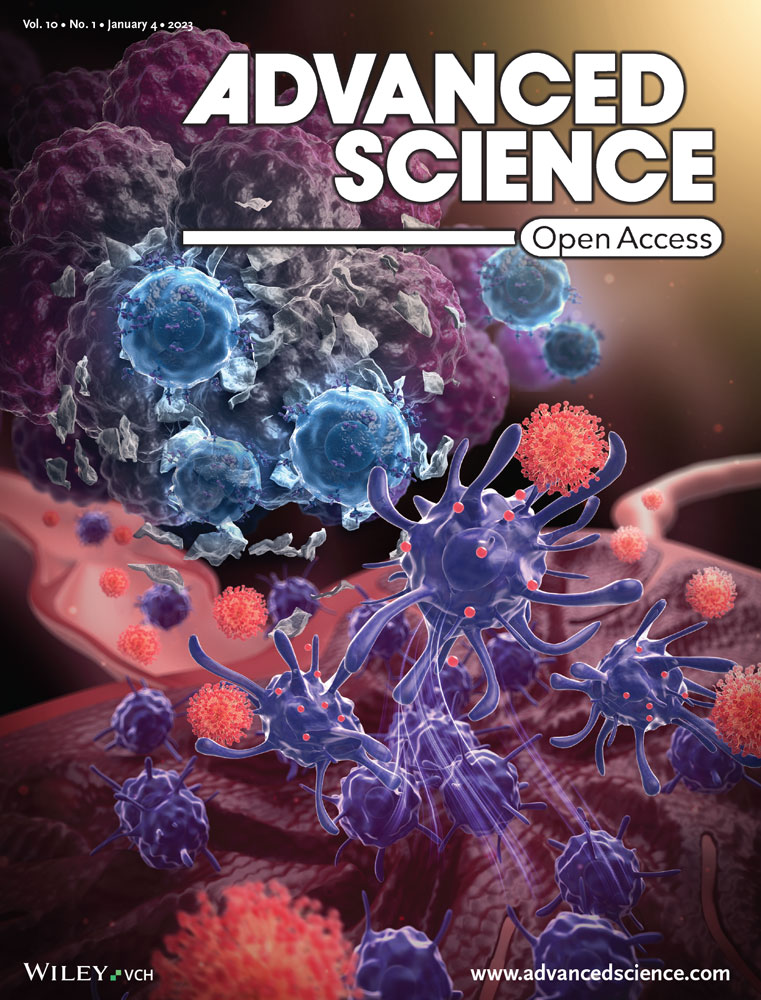
{"title":"Pharmacological Dissection Identifies Retatrutide Overcomes the Therapeutic Barrier of Obese TNBC Treatments through Suppressing the Interplay between Glycosylation and Ubiquitylation of YAP","authors":"Xin Cui, Yueming Zhu, Lidan Zeng, Mengyuan Zhang, Amad Uddin, Theresa W. Gillespie, Lauren E. McCullough, Shaying Zhao, Mylin A. Torres, Yong Wan","doi":"10.1002/advs.202407494","DOIUrl":null,"url":null,"abstract":"<p>Triple-negative breast cancer (TNBC) in obese patients remains challenging. Recent studies have linked obesity to an increased risk of TNBC and malignancies. Through multiomic analysis and experimental validation, a dysfunctional Eukaryotic Translation Initiation Factor 3 Subunit H (EIF3H)/Yes-associated protein (YAP) proteolytic axis is identified as a pivotal junction mediating the interplay between cancer-associated adipocytes and the response to anti-cancer drugs in TNBC. Mechanistically, cancer-associated adipocytes drive metabolic reprogramming resulting in an upregulated hexosamine biosynthetic pathway (HBP). This aberrant upregulation of HBP promotes YAP O-GlcNAcylation and the subsequent recruitment of EIF3H deubiquitinase, which stabilizes YAP, thus promoting tumor growth and chemotherapy resistance. It is found that Retatrutide, an anti-obesity agent, inhibits HBP and YAP O-GlcNAcylation leading to increased YAP degradation through the deprivation of EIF3H-mediated deubiquitylation of YAP. In preclinical models of obese TNBC, Retatrutide downregulates HBP, decreases YAP protein levels, and consequently decreases tumor size and enhances chemotherapy efficacy. This effect is particularly pronounced in obese mice bearing TNBC tumors. Overall, these findings reveal a critical interplay between adipocyte-mediated metabolic reprogramming and EIF3H-mediated YAP proteolytic control, offering promising therapeutic strategies to mitigate the adverse effects of obesity on TNBC progression.</p>","PeriodicalId":117,"journal":{"name":"Advanced Science","volume":"12 11","pages":""},"PeriodicalIF":14.1000,"publicationDate":"2025-01-27","publicationTypes":"Journal Article","fieldsOfStudy":null,"isOpenAccess":false,"openAccessPdf":"https://www.ncbi.nlm.nih.gov/pmc/articles/PMC11923992/pdf/","citationCount":"0","resultStr":null,"platform":"Semanticscholar","paperid":null,"PeriodicalName":"Advanced Science","FirstCategoryId":"88","ListUrlMain":"https://advanced.onlinelibrary.wiley.com/doi/10.1002/advs.202407494","RegionNum":1,"RegionCategory":"材料科学","ArticlePicture":[],"TitleCN":null,"AbstractTextCN":null,"PMCID":null,"EPubDate":"","PubModel":"","JCR":"Q1","JCRName":"CHEMISTRY, MULTIDISCIPLINARY","Score":null,"Total":0}
引用次数: 0
Abstract
Triple-negative breast cancer (TNBC) in obese patients remains challenging. Recent studies have linked obesity to an increased risk of TNBC and malignancies. Through multiomic analysis and experimental validation, a dysfunctional Eukaryotic Translation Initiation Factor 3 Subunit H (EIF3H)/Yes-associated protein (YAP) proteolytic axis is identified as a pivotal junction mediating the interplay between cancer-associated adipocytes and the response to anti-cancer drugs in TNBC. Mechanistically, cancer-associated adipocytes drive metabolic reprogramming resulting in an upregulated hexosamine biosynthetic pathway (HBP). This aberrant upregulation of HBP promotes YAP O-GlcNAcylation and the subsequent recruitment of EIF3H deubiquitinase, which stabilizes YAP, thus promoting tumor growth and chemotherapy resistance. It is found that Retatrutide, an anti-obesity agent, inhibits HBP and YAP O-GlcNAcylation leading to increased YAP degradation through the deprivation of EIF3H-mediated deubiquitylation of YAP. In preclinical models of obese TNBC, Retatrutide downregulates HBP, decreases YAP protein levels, and consequently decreases tumor size and enhances chemotherapy efficacy. This effect is particularly pronounced in obese mice bearing TNBC tumors. Overall, these findings reveal a critical interplay between adipocyte-mediated metabolic reprogramming and EIF3H-mediated YAP proteolytic control, offering promising therapeutic strategies to mitigate the adverse effects of obesity on TNBC progression.
肥胖患者的三阴性乳腺癌(TNBC)仍然具有挑战性。最近的研究表明,肥胖与三阴癌和恶性肿瘤的风险增加有关。通过多组学分析和实验验证,在TNBC中,一个功能失调的真核翻译起始因子3亚单位H (EIF3H)/ yes相关蛋白(YAP)蛋白水解轴被确定为介导癌症相关脂肪细胞与抗癌药物反应之间相互作用的关键连接点。从机制上讲,癌症相关脂肪细胞驱动代谢重编程,导致己糖胺生物合成途径(HBP)上调。HBP的异常上调促进YAP o - glcn酰化,随后EIF3H去泛素酶的募集,从而稳定YAP,从而促进肿瘤生长和化疗耐药。研究发现,抗肥胖药物利特鲁肽通过剥夺eif3h介导的YAP去泛素化,抑制HBP和YAP o - glcn酰化,导致YAP降解增加。在肥胖TNBC的临床前模型中,利特鲁肽下调HBP,降低YAP蛋白水平,从而减小肿瘤大小,提高化疗效果。这种效果在携带TNBC肿瘤的肥胖小鼠中尤为明显。总的来说,这些发现揭示了脂肪细胞介导的代谢重编程和eif3h介导的YAP蛋白水解控制之间的关键相互作用,为减轻肥胖对TNBC进展的不利影响提供了有希望的治疗策略。
期刊介绍:
Advanced Science is a prestigious open access journal that focuses on interdisciplinary research in materials science, physics, chemistry, medical and life sciences, and engineering. The journal aims to promote cutting-edge research by employing a rigorous and impartial review process. It is committed to presenting research articles with the highest quality production standards, ensuring maximum accessibility of top scientific findings. With its vibrant and innovative publication platform, Advanced Science seeks to revolutionize the dissemination and organization of scientific knowledge.





 京公网安备 11010802042870号
京ICP备2023020795号-1
京公网安备 11010802042870号
京ICP备2023020795号-1

 分享
分享
 求助内容:
求助内容: 应助结果提醒方式:
 扫码关注我们
