George A Wells, Shu-Ching Hsieh, Joan Peterson, Carine Zheng, Shannon E Kelly, Beverley Shea, Peter Tugwell
{"title":"Alendronate for the primary and secondary prevention of osteoporotic fractures in postmenopausal women.","authors":"George A Wells, Shu-Ching Hsieh, Joan Peterson, Carine Zheng, Shannon E Kelly, Beverley Shea, Peter Tugwell","doi":"10.1002/14651858.CD001155.pub3","DOIUrl":null,"url":null,"abstract":"<p><strong>Rationale: </strong>Osteoporosis is an abnormal reduction in bone mass and bone deterioration, leading to increased fracture risk. Alendronate belongs to the bisphosphonate class of drugs, which inhibit bone resorption by interfering with the activity of osteoclasts (bone cells that break down bone tissue). This is an update of a Cochrane review first published in 2008.</p><p><strong>Objectives: </strong>To assess the benefits and harms of alendronate in the primary and secondary prevention of osteoporotic fractures in postmenopausal women at lower and higher risk of fracture, respectively.</p><p><strong>Search methods: </strong>We searched Evidence-Based Medicine Reviews (which includes CENTRAL), MEDLINE, Embase, two trial registers, drug approval agency websites, and the bibliographies of relevant systematic reviews to identify the studies included in this review. The latest search date was 01 February 2023. We imposed no restrictions on language, date, form of publication, or reported outcomes.</p><p><strong>Eligibility criteria: </strong>We included only randomized controlled trials that assessed the effects of alendronate on postmenopausal women. Targeted participants must have received at least one year of alendronate. We classified a study as secondary prevention if its population met one or more of the following hierarchical criteria: a diagnosis of osteoporosis, a history of vertebral fractures, a low bone mineral density T-score (-2.5 or lower), and 75 years old or older. If a study population met none of those criteria, we classified it as a primary prevention study.</p><p><strong>Outcomes: </strong>Our major outcomes were clinical vertebral, non-vertebral, hip, and wrist fractures, withdrawals due to adverse events, and serious adverse events.</p><p><strong>Risk of bias: </strong>We used the Cochrane risk of bias 1 tool.</p><p><strong>Synthesis methods: </strong>We used standard methodological procedures expected by Cochrane. Based on the previous review experience, in which the clinical and methodological characteristics in the primary and secondary prevention studies were homogeneous, we used a fixed-effect model for meta-analysis and estimated effects using the risk ratio (RR) for dichotomous outcomes. Our base case analyses included all eligible placebo-controlled studies with usable data. We selected the data available for the longest treatment period. We consider a relative change exceeding 15% as clinically important.</p><p><strong>Included studies: </strong>We included 119 studies, of which 102 studies provided data for quantitative synthesis. Of these, we classified 34 studies (15,188 participants) as primary prevention and 68 studies (29,577 participants) as secondary prevention. We had concerns about risks of bias in most studies. Selection bias was the most frequently overlooked domain, with only 20 studies (19%) describing appropriate methods for both sequence generation and allocation concealment. Eight studies (8%) were at low risk of bias in all seven domains.</p><p><strong>Synthesis of results: </strong>The base case analyses included 16 primary prevention studies (one to five years in length; 10,057 women) and 20 secondary prevention studies (one to three years in length; 7375 women) which compared alendronate 10 mg/day (or 70 mg/week) to placebo, no treatment, or both. Indirectness, imprecision, and risk of bias emerged as the main factors contributing to the downgrading of the certainty of the evidence. For primary prevention, alendronate may lead to a clinically important reduction in clinical vertebral fractures (16/1190 in the alendronate group versus 24/926 in the placebo group; RR 0.45, 95% confidence interval [CI] 0.25 to 0.84; absolute risk reduction [ARR] 1.4% fewer, 95% CI 1.9% fewer to 0.4% fewer; low-certainty evidence) and non-vertebral fractures (RR 0.83, 95% CI 0.72 to 0.97; ARR 1.6% fewer, 95% CI 2.6% fewer to 0.3% fewer; low-certainty evidence). However, clinically important differences were not observed for the following outcomes: hip fractures (RR 0.76, 95% CI 0.43 to 1.32; ARR 0.2% fewer, 95% CI 0.4% fewer to 0.2% more; low-certainty evidence); wrist fractures (RR 1.12, 95% CI 0.84 to 1.49; ARR 0.3% more, 95% CI 0.4% fewer to 1.1% more; low-certainty evidence); withdrawals due to adverse events (RR 1.03, 95% CI 0.89 to 1.18; ARR 0.2% more, 95% CI 0.9% fewer to 1.5% more; low-certainty evidence); and serious adverse events (RR 1.08, 95% CI 0.82 to 1.43; ARR 0.5% more, 95% CI 1.2% fewer to 2.8% more; low-certainty evidence). For secondary prevention, alendronate probably results in a clinically important reduction in clinical vertebral fractures (24/1114 in the alendronate group versus 51/1055 in the placebo group; RR 0.45, 95% CI 0.28 to 0.73; ARR 2.7% fewer, 95% CI 3.5% fewer to 1.3% fewer; moderate-certainty evidence). It may lead to a clinically important reduction in non-vertebral fractures (RR 0.80, 95% CI 0.64 to 0.99; ARR 2.8% fewer, 95% CI 5.1% fewer to 0.1% fewer; low-certainty evidence); hip fractures (RR 0.49, 95% CI 0.25 to 0.96; ARR 1.0% fewer, 95% CI 1.5% fewer to 0.1% fewer; low-certainty evidence); wrist fractures (RR 0.54, 95% CI 0.33 to 0.90; ARR 1.8% fewer, 95% CI 2.6% fewer to 0.4% fewer; low-certainty evidence); and serious adverse events (RR 0.75, 95% CI 0.59 to 0.96; ARR 3.5% fewer, 95% CI 5.8% fewer to 0.6% fewer; low-certainty evidence). However, the effects of alendronate for withdrawals due to adverse events are uncertain (RR 0.95, 95% CI 0.78 to 1.16; ARR 0.4% fewer, 95% CI 1.7% fewer to 1.3% more; very low-certainty evidence). Furthermore, the updated evidence for the safety risks of alendronate suggests that, irrespective of participants' risk of fracture, alendronate may lead to little or no difference for gastrointestinal adverse events. Zero incidents of osteonecrosis of the jaw and atypical femoral fracture were observed.</p><p><strong>Authors' conclusions: </strong>For primary prevention, compared to placebo, alendronate 10 mg/day may reduce clinical vertebral and non-vertebral fractures, but it might make little or no difference to hip and wrist fractures, withdrawals due to adverse events, and serious adverse events. For secondary prevention, alendronate probably reduces clinical vertebral fractures, and may reduce non-vertebral, hip, and wrist fractures, and serious adverse events, compared to placebo. The evidence is very uncertain about the effect of alendronate on withdrawals due to adverse events.</p><p><strong>Funding: </strong>This Cochrane review had no dedicated funding.</p><p><strong>Registration: </strong>This review is an update of the previous review (DOI: 10.1002/14651858.CD001155).</p>","PeriodicalId":10473,"journal":{"name":"Cochrane Database of Systematic Reviews","volume":"1 ","pages":"CD001155"},"PeriodicalIF":8.8000,"publicationDate":"2025-01-27","publicationTypes":"Journal Article","fieldsOfStudy":null,"isOpenAccess":false,"openAccessPdf":"https://www.ncbi.nlm.nih.gov/pmc/articles/PMC11770842/pdf/","citationCount":"0","resultStr":null,"platform":"Semanticscholar","paperid":null,"PeriodicalName":"Cochrane Database of Systematic Reviews","FirstCategoryId":"3","ListUrlMain":"https://doi.org/10.1002/14651858.CD001155.pub3","RegionNum":2,"RegionCategory":"医学","ArticlePicture":[],"TitleCN":null,"AbstractTextCN":null,"PMCID":null,"EPubDate":"","PubModel":"","JCR":"Q1","JCRName":"MEDICINE, GENERAL & INTERNAL","Score":null,"Total":0}
引用次数: 0
Abstract
Rationale: Osteoporosis is an abnormal reduction in bone mass and bone deterioration, leading to increased fracture risk. Alendronate belongs to the bisphosphonate class of drugs, which inhibit bone resorption by interfering with the activity of osteoclasts (bone cells that break down bone tissue). This is an update of a Cochrane review first published in 2008.
Objectives: To assess the benefits and harms of alendronate in the primary and secondary prevention of osteoporotic fractures in postmenopausal women at lower and higher risk of fracture, respectively.
Search methods: We searched Evidence-Based Medicine Reviews (which includes CENTRAL), MEDLINE, Embase, two trial registers, drug approval agency websites, and the bibliographies of relevant systematic reviews to identify the studies included in this review. The latest search date was 01 February 2023. We imposed no restrictions on language, date, form of publication, or reported outcomes.
Eligibility criteria: We included only randomized controlled trials that assessed the effects of alendronate on postmenopausal women. Targeted participants must have received at least one year of alendronate. We classified a study as secondary prevention if its population met one or more of the following hierarchical criteria: a diagnosis of osteoporosis, a history of vertebral fractures, a low bone mineral density T-score (-2.5 or lower), and 75 years old or older. If a study population met none of those criteria, we classified it as a primary prevention study.
Outcomes: Our major outcomes were clinical vertebral, non-vertebral, hip, and wrist fractures, withdrawals due to adverse events, and serious adverse events.
Risk of bias: We used the Cochrane risk of bias 1 tool.
Synthesis methods: We used standard methodological procedures expected by Cochrane. Based on the previous review experience, in which the clinical and methodological characteristics in the primary and secondary prevention studies were homogeneous, we used a fixed-effect model for meta-analysis and estimated effects using the risk ratio (RR) for dichotomous outcomes. Our base case analyses included all eligible placebo-controlled studies with usable data. We selected the data available for the longest treatment period. We consider a relative change exceeding 15% as clinically important.
Included studies: We included 119 studies, of which 102 studies provided data for quantitative synthesis. Of these, we classified 34 studies (15,188 participants) as primary prevention and 68 studies (29,577 participants) as secondary prevention. We had concerns about risks of bias in most studies. Selection bias was the most frequently overlooked domain, with only 20 studies (19%) describing appropriate methods for both sequence generation and allocation concealment. Eight studies (8%) were at low risk of bias in all seven domains.
Synthesis of results: The base case analyses included 16 primary prevention studies (one to five years in length; 10,057 women) and 20 secondary prevention studies (one to three years in length; 7375 women) which compared alendronate 10 mg/day (or 70 mg/week) to placebo, no treatment, or both. Indirectness, imprecision, and risk of bias emerged as the main factors contributing to the downgrading of the certainty of the evidence. For primary prevention, alendronate may lead to a clinically important reduction in clinical vertebral fractures (16/1190 in the alendronate group versus 24/926 in the placebo group; RR 0.45, 95% confidence interval [CI] 0.25 to 0.84; absolute risk reduction [ARR] 1.4% fewer, 95% CI 1.9% fewer to 0.4% fewer; low-certainty evidence) and non-vertebral fractures (RR 0.83, 95% CI 0.72 to 0.97; ARR 1.6% fewer, 95% CI 2.6% fewer to 0.3% fewer; low-certainty evidence). However, clinically important differences were not observed for the following outcomes: hip fractures (RR 0.76, 95% CI 0.43 to 1.32; ARR 0.2% fewer, 95% CI 0.4% fewer to 0.2% more; low-certainty evidence); wrist fractures (RR 1.12, 95% CI 0.84 to 1.49; ARR 0.3% more, 95% CI 0.4% fewer to 1.1% more; low-certainty evidence); withdrawals due to adverse events (RR 1.03, 95% CI 0.89 to 1.18; ARR 0.2% more, 95% CI 0.9% fewer to 1.5% more; low-certainty evidence); and serious adverse events (RR 1.08, 95% CI 0.82 to 1.43; ARR 0.5% more, 95% CI 1.2% fewer to 2.8% more; low-certainty evidence). For secondary prevention, alendronate probably results in a clinically important reduction in clinical vertebral fractures (24/1114 in the alendronate group versus 51/1055 in the placebo group; RR 0.45, 95% CI 0.28 to 0.73; ARR 2.7% fewer, 95% CI 3.5% fewer to 1.3% fewer; moderate-certainty evidence). It may lead to a clinically important reduction in non-vertebral fractures (RR 0.80, 95% CI 0.64 to 0.99; ARR 2.8% fewer, 95% CI 5.1% fewer to 0.1% fewer; low-certainty evidence); hip fractures (RR 0.49, 95% CI 0.25 to 0.96; ARR 1.0% fewer, 95% CI 1.5% fewer to 0.1% fewer; low-certainty evidence); wrist fractures (RR 0.54, 95% CI 0.33 to 0.90; ARR 1.8% fewer, 95% CI 2.6% fewer to 0.4% fewer; low-certainty evidence); and serious adverse events (RR 0.75, 95% CI 0.59 to 0.96; ARR 3.5% fewer, 95% CI 5.8% fewer to 0.6% fewer; low-certainty evidence). However, the effects of alendronate for withdrawals due to adverse events are uncertain (RR 0.95, 95% CI 0.78 to 1.16; ARR 0.4% fewer, 95% CI 1.7% fewer to 1.3% more; very low-certainty evidence). Furthermore, the updated evidence for the safety risks of alendronate suggests that, irrespective of participants' risk of fracture, alendronate may lead to little or no difference for gastrointestinal adverse events. Zero incidents of osteonecrosis of the jaw and atypical femoral fracture were observed.
Authors' conclusions: For primary prevention, compared to placebo, alendronate 10 mg/day may reduce clinical vertebral and non-vertebral fractures, but it might make little or no difference to hip and wrist fractures, withdrawals due to adverse events, and serious adverse events. For secondary prevention, alendronate probably reduces clinical vertebral fractures, and may reduce non-vertebral, hip, and wrist fractures, and serious adverse events, compared to placebo. The evidence is very uncertain about the effect of alendronate on withdrawals due to adverse events.
Funding: This Cochrane review had no dedicated funding.
Registration: This review is an update of the previous review (DOI: 10.1002/14651858.CD001155).
期刊介绍:
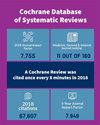
The Cochrane Database of Systematic Reviews (CDSR) stands as the premier database for systematic reviews in healthcare. It comprises Cochrane Reviews, along with protocols for these reviews, editorials, and supplements. Owned and operated by Cochrane, a worldwide independent network of healthcare stakeholders, the CDSR (ISSN 1469-493X) encompasses a broad spectrum of health-related topics, including health services.



 京公网安备 11010802042870号
京ICP备2023020795号-1
京公网安备 11010802042870号
京ICP备2023020795号-1

 分享
分享
 求助内容:
求助内容: 应助结果提醒方式:
 扫码关注我们
