Annika Theodoulou, Thomas R Fanshawe, Eleanor Leavens, Effie Theodoulou, Angela Difeng Wu, Laura Heath, Cristina Stewart, Nicole Nollen, Jasjit S Ahluwalia, Ailsa R Butler, Anisa Hajizadeh, James Thomas, Nicola Lindson, Jamie Hartmann-Boyce
{"title":"Differences in the effectiveness of individual-level smoking cessation interventions by socioeconomic status.","authors":"Annika Theodoulou, Thomas R Fanshawe, Eleanor Leavens, Effie Theodoulou, Angela Difeng Wu, Laura Heath, Cristina Stewart, Nicole Nollen, Jasjit S Ahluwalia, Ailsa R Butler, Anisa Hajizadeh, James Thomas, Nicola Lindson, Jamie Hartmann-Boyce","doi":"10.1002/14651858.CD015120.pub2","DOIUrl":null,"url":null,"abstract":"<p><strong>Background: </strong>People from lower socioeconomic groups are more likely to smoke and less likely to succeed in achieving abstinence, making tobacco smoking a leading driver of health inequalities. Contextual factors affecting subpopulations may moderate the efficacy of individual-level smoking cessation interventions. It is not known whether any intervention performs differently across socioeconomically-diverse populations and contexts.</p><p><strong>Objectives: </strong>To assess whether the effects of individual-level smoking cessation interventions on combustible tobacco cigarette use differ by socioeconomic groups, and their potential impact on health equalities.</p><p><strong>Search methods: </strong>We searched the Cochrane Database of Systematic Reviews from inception to 1 May 2023 for Cochrane reviews investigating individual-level smoking cessation interventions. We selected studies included in these reviews that met our criteria. We contacted study authors to identify further eligible studies.</p><p><strong>Selection criteria: </strong>We included parallel, cluster or factorial randomised controlled trials (RCTs) investigating any individual-level smoking cessation intervention which encouraged complete cessation of combustible tobacco cigarette use compared to no intervention, placebo, or another intervention in adults. Studies must have assessed or reported smoking quit rates, split by any measure of socioeconomic status (SES) at longest follow-up (≥ six months), and been published in 2000 or later.</p><p><strong>Data collection and analysis: </strong>We followed standard Cochrane methods for screening, data extraction, and risk of bias assessment. We assessed the availability of smoking abstinence data by SES in lieu of selective reporting. The primary outcome was smoking cessation quit rates, split by lower and higher SES, at the longest follow-up (≥ six months). Where possible, we calculated ratios of odds ratios (ROR) with 95% confidence intervals (CIs) for each study, comparing lower to higher SES. We pooled RORs by intervention type in random-effects meta-analyses, using the generic inverse-variance method. We subgrouped by type of SES indicator and economic classification of the study country. We summarised all evidence in effect direction plots and categorised the intervention impact on health equality as: positive (evidence that the relative effect of the intervention on quit rates was greater in lower rather than higher SES groups), possibly positive, neutral, possibly neutral, possibly negative, negative, no reported statistically significant difference, or unclear. We evaluated certainty using GRADE.</p><p><strong>Main results: </strong>We included 77 studies (73 from high-income countries), representing 127,791 participants. We deemed 12 studies at low overall risk of bias, 13 at unclear risk, and the remaining 52 at high risk. Included studies investigated a range of pharmacological interventions, behavioural support, or combinations of these. Pharmacological interventions We found very low-certainty evidence for all the main pharmacological interventions compared to control. Evidence on cytisine (ROR 1.13, 95% CI 0.73 to 1.74; 1 study, 2472 participants) and nicotine electronic cigarettes (ROR 4.57, 95% CI 0.88 to 23.72; 1 study, 989 participants) compared to control indicated a greater relative effect of these interventions on quit rates in lower compared to higher SES groups, suggesting a possibly positive impact on health equality. CIs for both estimates included the possibility of no clinically important difference and of favouring higher SES groups. There was a lower relative effect of bupropion versus placebo on quit rates in lower compared to higher SES groups, indicating a possibly negative impact on health equality (ROR 0.05, 95% CI 0.00 to 1.00; from 1 of 2 studies, 354 participants; 1 study reported no difference); however, the CI included the possibility of no clinically important difference. We could not determine the intervention impact of combination or single-form nicotine replacement therapy on relative quit rates by SES. No studies on varenicline versus control were included. Behavioural interventions We found low-certainty evidence of lower quit rates in lower compared to higher SES groups for print-based self-help (ROR 0.85, 95% CI 0.52 to 1.38; 3 studies, 4440 participants) and text-messaging (ROR 0.76, 95% CI 0.47 to 1.23; from 3 of 4 studies, 5339 participants; 1 study reported no difference) versus control, indicating a possibly negative impact on health equality. CIs for both estimates included the possibility of no clinically important difference and of favouring lower SES groups. There was very low-certainty evidence of quit rates favouring higher SES groups for financial incentives compared to balanced intervention components. However, the CI included the possibility of no clinically important difference and of favouring lower SES groups (ROR 0.91, 95% CI 0.45 to 1.85; from 5 of 6 studies, 3018 participants; 1 study reported no difference). This indicates a possibly negative impact on health equality. There was very low-certainty evidence of no difference in quit rates by SES for face-to-face counselling compared to less intensive counselling, balanced components, or usual care. However, the CI included the possibility of favouring lower and higher SES groups (ROR 1.26, 95% CI 0.18 to 8.93; from 1 of 6 studies, 294 participants; 5 studies reported no difference), indicating a possibly neutral impact. We found very low-certainty evidence of a greater relative effect of telephone counselling (ROR 4.31, 95% CI 1.28 to 14.51; from 1 of 7 studies, 903 participants; 5 studies reported no difference, 1 unclear) and internet interventions (ROR 1.49, 95% CI 0.99 to 2.25; from 1 of 5 studies, 4613 participants; 4 studies reported no difference) versus control on quit rates in lower versus higher SES groups, suggesting a possibly positive impact on health equality. The CI for the internet intervention estimate included the possibility of no difference. Although the CI for the telephone counselling estimate only favoured lower SES groups, most studies narratively reported no clear evidence of interaction effects.</p><p><strong>Authors' conclusions: </strong>Currently, there is no clear evidence to support the use of differential individual-level smoking cessation interventions for people from lower or higher SES groups, or that any one intervention would have an effect on health inequalities. This conclusion may change as further data become available. Many studies did not report sufficient data to be included in a meta-analysis, despite having tested the association of interest. Further RCTs should collect, analyse, and report quit rates by measures of SES, to inform intervention development and ensure recommended interventions do not exacerbate but help reduce health inequalities caused by smoking.</p>","PeriodicalId":10473,"journal":{"name":"Cochrane Database of Systematic Reviews","volume":"1 ","pages":"CD015120"},"PeriodicalIF":8.8000,"publicationDate":"2025-01-27","publicationTypes":"Journal Article","fieldsOfStudy":null,"isOpenAccess":false,"openAccessPdf":"https://www.ncbi.nlm.nih.gov/pmc/articles/PMC11770844/pdf/","citationCount":"0","resultStr":null,"platform":"Semanticscholar","paperid":null,"PeriodicalName":"Cochrane Database of Systematic Reviews","FirstCategoryId":"3","ListUrlMain":"https://doi.org/10.1002/14651858.CD015120.pub2","RegionNum":2,"RegionCategory":"医学","ArticlePicture":[],"TitleCN":null,"AbstractTextCN":null,"PMCID":null,"EPubDate":"","PubModel":"","JCR":"Q1","JCRName":"MEDICINE, GENERAL & INTERNAL","Score":null,"Total":0}
引用次数: 0
Abstract
Background: People from lower socioeconomic groups are more likely to smoke and less likely to succeed in achieving abstinence, making tobacco smoking a leading driver of health inequalities. Contextual factors affecting subpopulations may moderate the efficacy of individual-level smoking cessation interventions. It is not known whether any intervention performs differently across socioeconomically-diverse populations and contexts.
Objectives: To assess whether the effects of individual-level smoking cessation interventions on combustible tobacco cigarette use differ by socioeconomic groups, and their potential impact on health equalities.
Search methods: We searched the Cochrane Database of Systematic Reviews from inception to 1 May 2023 for Cochrane reviews investigating individual-level smoking cessation interventions. We selected studies included in these reviews that met our criteria. We contacted study authors to identify further eligible studies.
Selection criteria: We included parallel, cluster or factorial randomised controlled trials (RCTs) investigating any individual-level smoking cessation intervention which encouraged complete cessation of combustible tobacco cigarette use compared to no intervention, placebo, or another intervention in adults. Studies must have assessed or reported smoking quit rates, split by any measure of socioeconomic status (SES) at longest follow-up (≥ six months), and been published in 2000 or later.
Data collection and analysis: We followed standard Cochrane methods for screening, data extraction, and risk of bias assessment. We assessed the availability of smoking abstinence data by SES in lieu of selective reporting. The primary outcome was smoking cessation quit rates, split by lower and higher SES, at the longest follow-up (≥ six months). Where possible, we calculated ratios of odds ratios (ROR) with 95% confidence intervals (CIs) for each study, comparing lower to higher SES. We pooled RORs by intervention type in random-effects meta-analyses, using the generic inverse-variance method. We subgrouped by type of SES indicator and economic classification of the study country. We summarised all evidence in effect direction plots and categorised the intervention impact on health equality as: positive (evidence that the relative effect of the intervention on quit rates was greater in lower rather than higher SES groups), possibly positive, neutral, possibly neutral, possibly negative, negative, no reported statistically significant difference, or unclear. We evaluated certainty using GRADE.
Main results: We included 77 studies (73 from high-income countries), representing 127,791 participants. We deemed 12 studies at low overall risk of bias, 13 at unclear risk, and the remaining 52 at high risk. Included studies investigated a range of pharmacological interventions, behavioural support, or combinations of these. Pharmacological interventions We found very low-certainty evidence for all the main pharmacological interventions compared to control. Evidence on cytisine (ROR 1.13, 95% CI 0.73 to 1.74; 1 study, 2472 participants) and nicotine electronic cigarettes (ROR 4.57, 95% CI 0.88 to 23.72; 1 study, 989 participants) compared to control indicated a greater relative effect of these interventions on quit rates in lower compared to higher SES groups, suggesting a possibly positive impact on health equality. CIs for both estimates included the possibility of no clinically important difference and of favouring higher SES groups. There was a lower relative effect of bupropion versus placebo on quit rates in lower compared to higher SES groups, indicating a possibly negative impact on health equality (ROR 0.05, 95% CI 0.00 to 1.00; from 1 of 2 studies, 354 participants; 1 study reported no difference); however, the CI included the possibility of no clinically important difference. We could not determine the intervention impact of combination or single-form nicotine replacement therapy on relative quit rates by SES. No studies on varenicline versus control were included. Behavioural interventions We found low-certainty evidence of lower quit rates in lower compared to higher SES groups for print-based self-help (ROR 0.85, 95% CI 0.52 to 1.38; 3 studies, 4440 participants) and text-messaging (ROR 0.76, 95% CI 0.47 to 1.23; from 3 of 4 studies, 5339 participants; 1 study reported no difference) versus control, indicating a possibly negative impact on health equality. CIs for both estimates included the possibility of no clinically important difference and of favouring lower SES groups. There was very low-certainty evidence of quit rates favouring higher SES groups for financial incentives compared to balanced intervention components. However, the CI included the possibility of no clinically important difference and of favouring lower SES groups (ROR 0.91, 95% CI 0.45 to 1.85; from 5 of 6 studies, 3018 participants; 1 study reported no difference). This indicates a possibly negative impact on health equality. There was very low-certainty evidence of no difference in quit rates by SES for face-to-face counselling compared to less intensive counselling, balanced components, or usual care. However, the CI included the possibility of favouring lower and higher SES groups (ROR 1.26, 95% CI 0.18 to 8.93; from 1 of 6 studies, 294 participants; 5 studies reported no difference), indicating a possibly neutral impact. We found very low-certainty evidence of a greater relative effect of telephone counselling (ROR 4.31, 95% CI 1.28 to 14.51; from 1 of 7 studies, 903 participants; 5 studies reported no difference, 1 unclear) and internet interventions (ROR 1.49, 95% CI 0.99 to 2.25; from 1 of 5 studies, 4613 participants; 4 studies reported no difference) versus control on quit rates in lower versus higher SES groups, suggesting a possibly positive impact on health equality. The CI for the internet intervention estimate included the possibility of no difference. Although the CI for the telephone counselling estimate only favoured lower SES groups, most studies narratively reported no clear evidence of interaction effects.
Authors' conclusions: Currently, there is no clear evidence to support the use of differential individual-level smoking cessation interventions for people from lower or higher SES groups, or that any one intervention would have an effect on health inequalities. This conclusion may change as further data become available. Many studies did not report sufficient data to be included in a meta-analysis, despite having tested the association of interest. Further RCTs should collect, analyse, and report quit rates by measures of SES, to inform intervention development and ensure recommended interventions do not exacerbate but help reduce health inequalities caused by smoking.
背景:社会经济地位较低群体的人吸烟的可能性更大,成功实现戒烟的可能性更小,这使得吸烟成为健康不平等的主要驱动因素。影响亚人群的环境因素可能会减缓个人水平戒烟干预措施的效果。目前尚不清楚是否有任何干预措施在不同的社会经济人群和环境中表现不同。目的:评估个人水平的戒烟干预措施对可燃烟草卷烟使用的影响是否因社会经济群体而异,以及它们对健康平等的潜在影响。检索方法:我们检索了Cochrane系统评价数据库从建立到2023年5月1日的关于个人水平戒烟干预的Cochrane综述。我们在这些综述中选择了符合我们标准的研究。我们联系了研究作者,以确定进一步的合格研究。选择标准:我们纳入了平行、聚类或因子随机对照试验(RCTs),研究任何鼓励完全停止使用可燃烟草的个人水平戒烟干预,与不干预、安慰剂或其他干预相比。研究必须评估或报告了戒烟率,在最长随访(≥6个月)中按社会经济地位(SES)的任何衡量标准进行分割,并在2000年或之后发表。资料收集和分析:我们采用标准Cochrane方法进行筛选、资料提取和偏倚风险评估。我们用SES代替选择性报告来评估戒烟数据的可用性。主要结局是戒烟戒烟率,在最长随访(≥6个月)中按社会地位高低划分。在可能的情况下,我们计算了每项研究的优势比(ROR)和95%置信区间(CIs),比较了低SES和高SES。在随机效应荟萃分析中,我们使用通用的反方差方法汇总了干预类型的RORs。我们按SES指标类型和研究国家的经济分类进行分组。我们总结了效果方向图中的所有证据,并将干预对健康平等的影响分类为:积极(证据表明,干预对戒烟率的相对影响在较低的社会地位群体中大于较高的社会地位群体),可能是积极的,中性的,可能是中性的,可能是消极的,消极的,没有报告统计学上的显著差异,或不清楚。我们使用GRADE评估确定性。主要结果:我们纳入了77项研究(73项来自高收入国家),共127,791名参与者。我们认为12项研究总体偏倚风险较低,13项风险不明确,其余52项为高风险。纳入的研究调查了一系列药物干预、行为支持或这些措施的组合。与对照组相比,我们发现所有主要药物干预措施的确定性证据都很低。关于胱氨酸的证据(ROR 1.13, 95% CI 0.73 ~ 1.74;1项研究,2472名参与者)和尼古丁电子烟(ROR 4.57, 95% CI 0.88 - 23.72;1项研究(989名参与者)表明,与对照组相比,这些干预措施对低社会地位群体的戒烟率的相对影响大于高社会地位群体,这表明可能对健康平等产生积极影响。两种估计的ci包括无临床重要差异的可能性和倾向于高SES组。与较高社会地位组相比,较低社会地位组的安非他酮与安慰剂对戒烟率的相对影响较低,表明可能对健康平等产生负面影响(ROR 0.05, 95% CI 0.00至1.00;从2项研究中的1项中,354名参与者;1项研究报告无差异);然而,CI包括没有临床重要差异的可能性。我们无法确定联合或单一形式尼古丁替代疗法对SES相对戒烟率的干预影响。没有关于伐尼克兰与对照的研究被纳入。我们发现低确定性证据表明,与社会地位较高的群体相比,社会地位较低的群体进行基于印刷品的自助的戒烟率较低(ROR 0.85, 95% CI 0.52至1.38;3项研究,4440名参与者)和短信(ROR 0.76, 95% CI 0.47至1.23;从4项研究中的3项中,5339名参与者;1项研究报告没有差异)与对照组,表明可能对健康平等产生负面影响。两种估计的ci包括无临床重要差异的可能性和倾向于低社会经济地位组。有非常低确定性的证据表明,与平衡干预成分相比,经济激励更有利于高SES群体的戒烟率。然而,CI包括无临床重要差异和倾向于低SES组的可能性(ROR 0.91, 95% CI 0.45至1.85;从6项研究中的5项中,3018名参与者;1项研究报告无差异)。 这表明可能对健康平等产生负面影响。有非常低确定性的证据表明,与不那么密集的咨询、平衡成分或常规护理相比,面对面咨询在SES戒烟率方面没有差异。然而,CI包括了社会地位较低和较高组的可能性(ROR 1.26, 95% CI 0.18至8.93;6项研究中的1项,294名参与者;5项研究报告无差异),表明可能是中性影响。我们发现了非常低确定性的证据,证明电话咨询的相对效果更大(ROR 4.31, 95% CI 1.28至14.51;从7项研究中的1项中,903名参与者;5项研究报告无差异,1项不清楚)和网络干预(ROR 1.49, 95% CI 0.99 - 2.25;从5项研究中的1项中,4613名参与者;4项研究报告,社会经济地位较低的群体与社会经济地位较高的群体的戒烟率与对照组相比没有差异,这表明可能对健康平等产生积极影响。互联网干预估计的CI包括无差异的可能性。尽管电话咨询的CI估计只倾向于社会经济地位较低的群体,但大多数研究都没有明确的证据表明相互作用的影响。作者的结论是:目前,没有明确的证据支持对来自较低或较高社会地位群体的人使用不同的个人戒烟干预措施,或者任何一种干预措施都会对健康不平等产生影响。这一结论可能随着获得更多数据而改变。许多研究没有报告足够的数据来纳入荟萃分析,尽管已经测试了兴趣的关联。进一步的随机对照试验应收集、分析和报告社会经济地位的戒烟率,为干预措施的制定提供信息,并确保建议的干预措施不会加剧而是有助于减少吸烟造成的健康不平等。
期刊介绍:
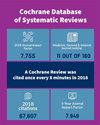
The Cochrane Database of Systematic Reviews (CDSR) stands as the premier database for systematic reviews in healthcare. It comprises Cochrane Reviews, along with protocols for these reviews, editorials, and supplements. Owned and operated by Cochrane, a worldwide independent network of healthcare stakeholders, the CDSR (ISSN 1469-493X) encompasses a broad spectrum of health-related topics, including health services.



 京公网安备 11010802042870号
京ICP备2023020795号-1
京公网安备 11010802042870号
京ICP备2023020795号-1

 分享
分享
 求助内容:
求助内容: 应助结果提醒方式:
 扫码关注我们
