Su Hyun Kim, Kyungeh An, M Danet Lapiz Bluhm, Moonju Lee, Seung Hwa Shin
{"title":"The interplay between personal traits and coping strategies on shift-work tolerance: a cross-sectional study.","authors":"Su Hyun Kim, Kyungeh An, M Danet Lapiz Bluhm, Moonju Lee, Seung Hwa Shin","doi":"10.2486/indhealth.2024-0165","DOIUrl":null,"url":null,"abstract":"<p><p>The ability to adapt to night shift work varies greatly among individuals, but little is known about how personal traits and coping strategies interact to affect shift-work tolerance. This study aimed to identify how certain personal traits (e.g., flexibility, languidness, chronotype, and neuroticism) and behavioral and coping strategies influence shift-work tolerance. Additionally, it explored whether behavioral and coping strategies moderate the association between neuroticism and shift-work tolerance. In this cross-sectional study, nurses (N=297) working rotating shifts consisting of either three 8-h shifts or two 12-h shifts at two university hospitals and one training hospital in South Korea completed a survey on shift work. Data were analyzed using hierarchical multiple linear regression analysis. Nurses with personal traits of lower flexibility, higher languidness, evening-oriented chronotypes, and higher neuroticism had less shift-work tolerance. Engagement-coping decreased fatigue, whereas disengagement-coping increased insomnia. Among those with higher levels of neuroticism, disengagement-coping further reduced alertness, while engagement-coping aggravated insomnia. Addressing the complex interplay between personal traits and coping strategies is essential to enhance adaptations to shift work without adverse consequences.</p>","PeriodicalId":13531,"journal":{"name":"Industrial Health","volume":" ","pages":"365-375"},"PeriodicalIF":1.6000,"publicationDate":"2025-07-20","publicationTypes":"Journal Article","fieldsOfStudy":null,"isOpenAccess":false,"openAccessPdf":"https://www.ncbi.nlm.nih.gov/pmc/articles/PMC12304660/pdf/","citationCount":"0","resultStr":null,"platform":"Semanticscholar","paperid":null,"PeriodicalName":"Industrial Health","FirstCategoryId":"3","ListUrlMain":"https://doi.org/10.2486/indhealth.2024-0165","RegionNum":4,"RegionCategory":"医学","ArticlePicture":[],"TitleCN":null,"AbstractTextCN":null,"PMCID":null,"EPubDate":"2025/1/27 0:00:00","PubModel":"Epub","JCR":"Q3","JCRName":"ENVIRONMENTAL SCIENCES","Score":null,"Total":0}
引用次数: 0
Abstract
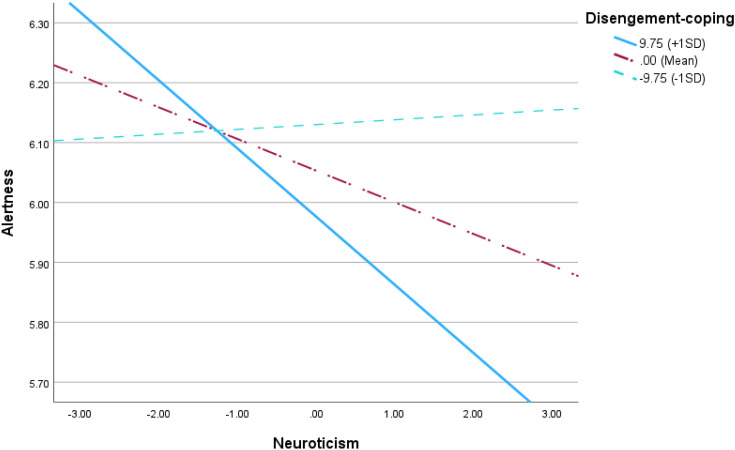
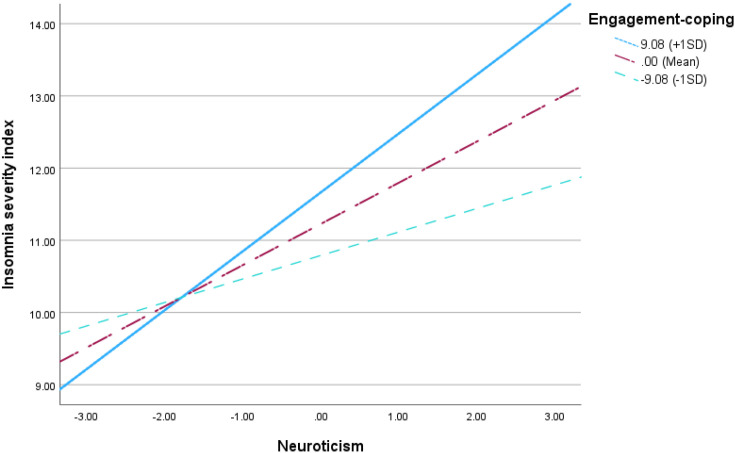
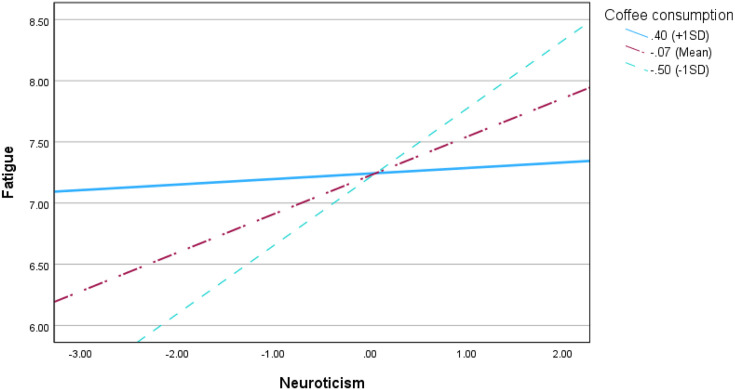
The ability to adapt to night shift work varies greatly among individuals, but little is known about how personal traits and coping strategies interact to affect shift-work tolerance. This study aimed to identify how certain personal traits (e.g., flexibility, languidness, chronotype, and neuroticism) and behavioral and coping strategies influence shift-work tolerance. Additionally, it explored whether behavioral and coping strategies moderate the association between neuroticism and shift-work tolerance. In this cross-sectional study, nurses (N=297) working rotating shifts consisting of either three 8-h shifts or two 12-h shifts at two university hospitals and one training hospital in South Korea completed a survey on shift work. Data were analyzed using hierarchical multiple linear regression analysis. Nurses with personal traits of lower flexibility, higher languidness, evening-oriented chronotypes, and higher neuroticism had less shift-work tolerance. Engagement-coping decreased fatigue, whereas disengagement-coping increased insomnia. Among those with higher levels of neuroticism, disengagement-coping further reduced alertness, while engagement-coping aggravated insomnia. Addressing the complex interplay between personal traits and coping strategies is essential to enhance adaptations to shift work without adverse consequences.
期刊介绍:
INDUSTRIAL HEALTH covers all aspects of occupational medicine, ergonomics, industrial hygiene, engineering, safety and policy sciences. The journal helps promote solutions for the control and improvement of working conditions, and for the application of valuable research findings to the actual working environment.



 京公网安备 11010802042870号
京ICP备2023020795号-1
京公网安备 11010802042870号
京ICP备2023020795号-1

 分享
分享
 求助内容:
求助内容: 应助结果提醒方式:
 扫码关注我们
