{"title":"Molecular and cellular regulators of embryo implantation and their application in improving the implantation potential of IVF-derived blastocysts.","authors":"Chunyan Liu, Emiko Fukui, Hiromichi Matsumoto","doi":"10.1002/rmb2.12633","DOIUrl":null,"url":null,"abstract":"<p><strong>Background: </strong>In vitro fertilization (IVF) and embryo transfer (ET) are widely used in reproductive biology. Despite the transfer of high-quality blastocysts, the implantation rate of IVF-derived blastocysts remains low after ET.</p><p><strong>Methods: </strong>This article provides a comprehensive review of current research on embryo implantation regulators and their application to improve the implantation potential of IVF-derived blastocysts.</p><p><strong>Main findings: </strong>The in vivo mouse model revealed selective proteolysis immediately after expression in activated blastocysts, that is, degradation of ERα expression in activated blastocysts regulated by the ubiquitin-proteasome pathway, followed by completion of blastocyst implantation. Treatment of blastocysts to induce appropriate protein expression during in vitro culture prior to ET is a useful approach for improving implantation rates. This approach showed that combined treatment with PRL, EGF, and 4-OH-E<sub>2</sub> (PEC) improved the blastocyst implantation rates. Furthermore, arginine and leucine drive reactive oxygen species (ROS)-mediated integrin α5β1 expression and promote blastocyst implantation.</p><p><strong>Conclusion: </strong>Findings based on analysis of molecular and cellular regulators are useful for improving the implantation potential of IVF-derived blastocysts. These approaches may help to elucidate the mechanisms underlying the completion of the blastocyst implantation, although further investigation is required to improve the success of implantation and pregnancy.</p>","PeriodicalId":21116,"journal":{"name":"Reproductive Medicine and Biology","volume":"24 1","pages":"e12633"},"PeriodicalIF":3.3000,"publicationDate":"2025-01-24","publicationTypes":"Journal Article","fieldsOfStudy":null,"isOpenAccess":false,"openAccessPdf":"https://www.ncbi.nlm.nih.gov/pmc/articles/PMC11759885/pdf/","citationCount":"0","resultStr":null,"platform":"Semanticscholar","paperid":null,"PeriodicalName":"Reproductive Medicine and Biology","FirstCategoryId":"3","ListUrlMain":"https://doi.org/10.1002/rmb2.12633","RegionNum":3,"RegionCategory":"医学","ArticlePicture":[],"TitleCN":null,"AbstractTextCN":null,"PMCID":null,"EPubDate":"2025/1/1 0:00:00","PubModel":"eCollection","JCR":"Q2","JCRName":"OBSTETRICS & GYNECOLOGY","Score":null,"Total":0}
引用次数: 0
Abstract
Background: In vitro fertilization (IVF) and embryo transfer (ET) are widely used in reproductive biology. Despite the transfer of high-quality blastocysts, the implantation rate of IVF-derived blastocysts remains low after ET.
Methods: This article provides a comprehensive review of current research on embryo implantation regulators and their application to improve the implantation potential of IVF-derived blastocysts.
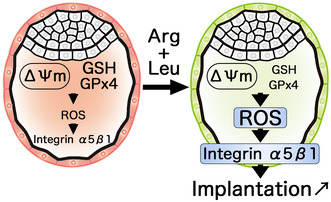
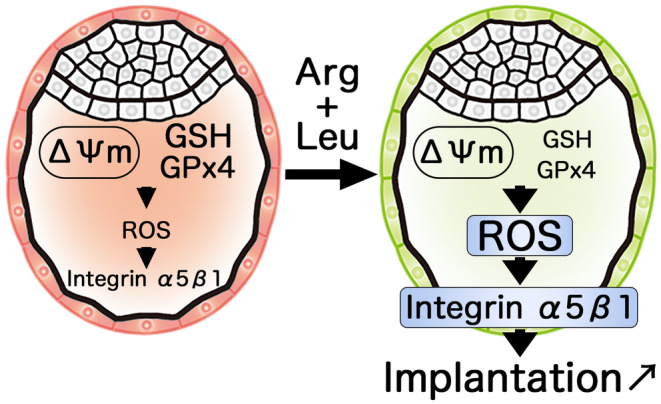
Main findings: The in vivo mouse model revealed selective proteolysis immediately after expression in activated blastocysts, that is, degradation of ERα expression in activated blastocysts regulated by the ubiquitin-proteasome pathway, followed by completion of blastocyst implantation. Treatment of blastocysts to induce appropriate protein expression during in vitro culture prior to ET is a useful approach for improving implantation rates. This approach showed that combined treatment with PRL, EGF, and 4-OH-E2 (PEC) improved the blastocyst implantation rates. Furthermore, arginine and leucine drive reactive oxygen species (ROS)-mediated integrin α5β1 expression and promote blastocyst implantation.
Conclusion: Findings based on analysis of molecular and cellular regulators are useful for improving the implantation potential of IVF-derived blastocysts. These approaches may help to elucidate the mechanisms underlying the completion of the blastocyst implantation, although further investigation is required to improve the success of implantation and pregnancy.
期刊介绍:
Reproductive Medicine and Biology (RMB) is the official English journal of the Japan Society for Reproductive Medicine, the Japan Society of Fertilization and Implantation, the Japan Society of Andrology, and publishes original research articles that report new findings or concepts in all aspects of reproductive phenomena in all kinds of mammals. Papers in any of the following fields will be considered: andrology, endocrinology, oncology, immunology, genetics, function of gonads and genital tracts, erectile dysfunction, gametogenesis, function of accessory sex organs, fertilization, embryogenesis, embryo manipulation, pregnancy, implantation, ontogenesis, infectious disease, contraception, etc.



 京公网安备 11010802042870号
京ICP备2023020795号-1
京公网安备 11010802042870号
京ICP备2023020795号-1

 分享
分享
 求助内容:
求助内容: 应助结果提醒方式:
 扫码关注我们
