{"title":"Nursing professionalism and associated factors in Ethiopia: a systematic review and meta-analysis.","authors":"Moges Tadesse Abebe, Agerie Mengistie Zeleke, Yeshiwas Ayale Ferede, Yosef Aragaw Gonete, Worku Chekol Tassew","doi":"10.1186/s12912-025-02713-w","DOIUrl":null,"url":null,"abstract":"<p><strong>Background: </strong>A higher level of nursing professionalism improves autonomy among nurses, the quality of nursing care, and patient outcomes. However, inconsistent findings on the prevalence of nursing professionalism and associated factors have been reported among studies conducted in Ethiopia, and a meta-analysis of pooled results have not been performed. Therefore, the aim of this systematic review and meta-analysis was to determine the pooled prevalence of higher levels of nursing professionalism and factors associated with it.</p><p><strong>Methods: </strong>PubMed, Science Direct, HINARI, African Journals Online, Google Scholar, and university online institutional repositories in Ethiopia were accessed from 15/10/2024-30/10/2024. The items were assessed in accordance with the Preferred Reporting Items for Systematic Reviews and Meta-Analyses guidelines. The quality of the included studies was assessed via the Newcastle-Ottawa Scale. Cross-sectional studies were included without time period limits. Data extraction was conducted via Microsoft Excel and analyzed with STATA 17. The Galbraith plot, I<sup>2</sup> statistic and meta-regression were used to determine heterogeneity. We used a random effects model in the presence of heterogeneity. Publication bias was assessed via funnel plots and Egger's based regression. We also computed a sensitivity analysis and subgroup analysis by sample size and study period.</p><p><strong>Results: </strong>Twelve primary studies involving 3710 nurses were included in this systematic review and meta-analysis. The pooled prevalence of higher levels of nursing professionalism was 43%. Bachelor's degree and above educational status (POR: 1.80, CI: 1.38, 2.33), learning from government colleges (POR: 2.14, CI: 1.34, 3.42), better payment (POR: 1.85, CI: 1.16, 2.98), long years of work experience (POR: 2.15, CI: 1.73, 2.68), positive self-image (POR: 3.85, CI: 2.17, 6.84), job satisfaction (POR: 2.42, CI: 1.49, 3.95) and training opportunities (POR: 2.88, CI: 1.14, 7.32) were factors that determined higher levels of nursing professionalism in Ethiopia.</p><p><strong>Conclusion: </strong>The pooled prevalence of higher levels of nursing professionalism in Ethiopia was low. Educational status, and attending college, payment, work experience, self-image, job satisfaction, and training were factors that determined the level of professionalism. These factors can be modified to increase the level of nursing professionalism in Ethiopia.</p>","PeriodicalId":48580,"journal":{"name":"BMC Nursing","volume":"24 1","pages":"95"},"PeriodicalIF":3.9000,"publicationDate":"2025-01-27","publicationTypes":"Journal Article","fieldsOfStudy":null,"isOpenAccess":false,"openAccessPdf":"https://www.ncbi.nlm.nih.gov/pmc/articles/PMC11770932/pdf/","citationCount":"0","resultStr":null,"platform":"Semanticscholar","paperid":null,"PeriodicalName":"BMC Nursing","FirstCategoryId":"3","ListUrlMain":"https://doi.org/10.1186/s12912-025-02713-w","RegionNum":2,"RegionCategory":"医学","ArticlePicture":[],"TitleCN":null,"AbstractTextCN":null,"PMCID":null,"EPubDate":"","PubModel":"","JCR":"Q1","JCRName":"NURSING","Score":null,"Total":0}
引用次数: 0
Abstract
Background: A higher level of nursing professionalism improves autonomy among nurses, the quality of nursing care, and patient outcomes. However, inconsistent findings on the prevalence of nursing professionalism and associated factors have been reported among studies conducted in Ethiopia, and a meta-analysis of pooled results have not been performed. Therefore, the aim of this systematic review and meta-analysis was to determine the pooled prevalence of higher levels of nursing professionalism and factors associated with it.
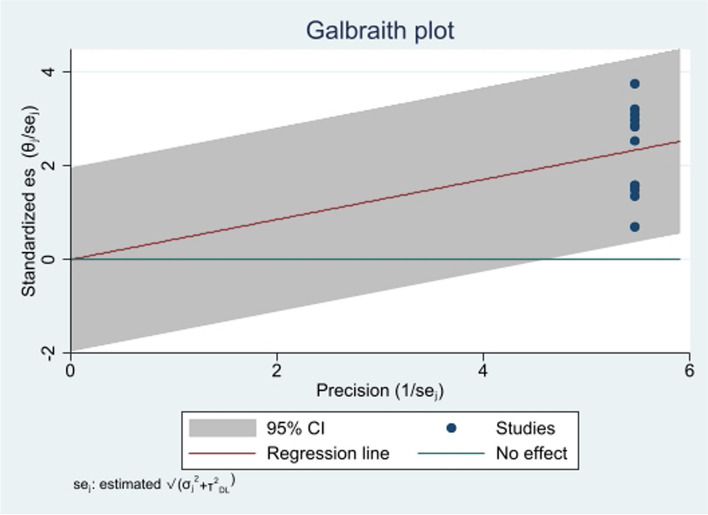
Methods: PubMed, Science Direct, HINARI, African Journals Online, Google Scholar, and university online institutional repositories in Ethiopia were accessed from 15/10/2024-30/10/2024. The items were assessed in accordance with the Preferred Reporting Items for Systematic Reviews and Meta-Analyses guidelines. The quality of the included studies was assessed via the Newcastle-Ottawa Scale. Cross-sectional studies were included without time period limits. Data extraction was conducted via Microsoft Excel and analyzed with STATA 17. The Galbraith plot, I2 statistic and meta-regression were used to determine heterogeneity. We used a random effects model in the presence of heterogeneity. Publication bias was assessed via funnel plots and Egger's based regression. We also computed a sensitivity analysis and subgroup analysis by sample size and study period.
Results: Twelve primary studies involving 3710 nurses were included in this systematic review and meta-analysis. The pooled prevalence of higher levels of nursing professionalism was 43%. Bachelor's degree and above educational status (POR: 1.80, CI: 1.38, 2.33), learning from government colleges (POR: 2.14, CI: 1.34, 3.42), better payment (POR: 1.85, CI: 1.16, 2.98), long years of work experience (POR: 2.15, CI: 1.73, 2.68), positive self-image (POR: 3.85, CI: 2.17, 6.84), job satisfaction (POR: 2.42, CI: 1.49, 3.95) and training opportunities (POR: 2.88, CI: 1.14, 7.32) were factors that determined higher levels of nursing professionalism in Ethiopia.
Conclusion: The pooled prevalence of higher levels of nursing professionalism in Ethiopia was low. Educational status, and attending college, payment, work experience, self-image, job satisfaction, and training were factors that determined the level of professionalism. These factors can be modified to increase the level of nursing professionalism in Ethiopia.
期刊介绍:
BMC Nursing is an open access, peer-reviewed journal that considers articles on all aspects of nursing research, training, education and practice.





 京公网安备 11010802042870号
京ICP备2023020795号-1
京公网安备 11010802042870号
京ICP备2023020795号-1

 分享
分享
 求助内容:
求助内容: 应助结果提醒方式:
 扫码关注我们
