Jeffrey S Berns, Joshua L Goldstein, Diane M Hartmann, Kenneth Simons, Lawrence Opas
{"title":"The Expanding Role of Designated Institutional Officials in Graduate Medical Education.","authors":"Jeffrey S Berns, Joshua L Goldstein, Diane M Hartmann, Kenneth Simons, Lawrence Opas","doi":"10.1097/ACM.0000000000005922","DOIUrl":null,"url":null,"abstract":"<p><strong>Abstract: </strong>The Accreditation Council for Graduate Medical Education (ACGME) plays a pivotal role in ensuring the quality of graduate medical education (GME) training across the United States. Central to the success of this mission are designated institutional officials (DIOs), who usually serve as chief GME officers within the ACGME-accredited sponsoring institutions (SIs). Despite the critical role of DIOs, the qualifications, level of administrative support, and responsibilities of DIOs are not defined and vary significantly among SIs. Although responsibilities mandated by ACGME Institutional Requirements provide a framework, the actual scope of work of DIOs often extends far beyond what is outlined in the ACGME Institutional Requirements, involving collaboration with a wide variety of institutional stakeholders and harnessing the GME enterprise to achieve institutional goals. Nearly all DIOs face a multitude of challenges, including adapting to new ACGME requirements and initiatives, addressing resident and fellow wellness concerns, promoting health equity, nurturing scholarly endeavors, and advocating for their residents and fellows. Additionally, emerging technologies and innovations as well as the changing financial climate for SIs and the health care facilities that host GME learners can present both educational opportunities and new challenges for DIOs in ensuring trainees are prepared for their roles as the next generation of physicians. As the health care landscape evolves, DIOs will continue to play a vital role in shaping the educational experiences of physicians in training while balancing institutional priorities and ensuring high-quality patient care.</p>","PeriodicalId":50929,"journal":{"name":"Academic Medicine","volume":"100 2","pages":"131-136"},"PeriodicalIF":5.2000,"publicationDate":"2025-02-01","publicationTypes":"Journal Article","fieldsOfStudy":null,"isOpenAccess":false,"openAccessPdf":"","citationCount":"0","resultStr":null,"platform":"Semanticscholar","paperid":null,"PeriodicalName":"Academic Medicine","FirstCategoryId":"95","ListUrlMain":"https://doi.org/10.1097/ACM.0000000000005922","RegionNum":2,"RegionCategory":"教育学","ArticlePicture":[],"TitleCN":null,"AbstractTextCN":null,"PMCID":null,"EPubDate":"2024/11/15 0:00:00","PubModel":"Epub","JCR":"Q1","JCRName":"EDUCATION, SCIENTIFIC DISCIPLINES","Score":null,"Total":0}
引用次数: 0
Abstract
Abstract: The Accreditation Council for Graduate Medical Education (ACGME) plays a pivotal role in ensuring the quality of graduate medical education (GME) training across the United States. Central to the success of this mission are designated institutional officials (DIOs), who usually serve as chief GME officers within the ACGME-accredited sponsoring institutions (SIs). Despite the critical role of DIOs, the qualifications, level of administrative support, and responsibilities of DIOs are not defined and vary significantly among SIs. Although responsibilities mandated by ACGME Institutional Requirements provide a framework, the actual scope of work of DIOs often extends far beyond what is outlined in the ACGME Institutional Requirements, involving collaboration with a wide variety of institutional stakeholders and harnessing the GME enterprise to achieve institutional goals. Nearly all DIOs face a multitude of challenges, including adapting to new ACGME requirements and initiatives, addressing resident and fellow wellness concerns, promoting health equity, nurturing scholarly endeavors, and advocating for their residents and fellows. Additionally, emerging technologies and innovations as well as the changing financial climate for SIs and the health care facilities that host GME learners can present both educational opportunities and new challenges for DIOs in ensuring trainees are prepared for their roles as the next generation of physicians. As the health care landscape evolves, DIOs will continue to play a vital role in shaping the educational experiences of physicians in training while balancing institutional priorities and ensuring high-quality patient care.
期刊介绍:
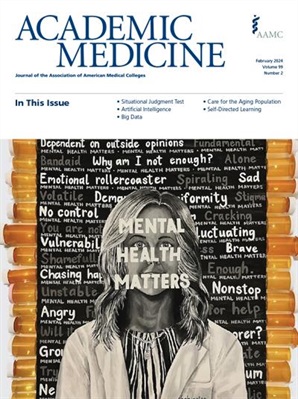
Academic Medicine, the official peer-reviewed journal of the Association of American Medical Colleges, acts as an international forum for exchanging ideas, information, and strategies to address the significant challenges in academic medicine. The journal covers areas such as research, education, clinical care, community collaboration, and leadership, with a commitment to serving the public interest.




 京公网安备 11010802042870号
京ICP备2023020795号-1
京公网安备 11010802042870号
京ICP备2023020795号-1

 分享
分享
 求助内容:
求助内容: 应助结果提醒方式:
 扫码关注我们
