Sara Ibrahim, Mohammed Ismail, Taghrid Abdelrahman, Mona Sharkawy, Ahmed Abdellatif and Nageh K. Allam
{"title":"Pyrroloquinoline quinone-loaded coaxial nanofibers prevent oxidative stress after spinal cord injury","authors":"Sara Ibrahim, Mohammed Ismail, Taghrid Abdelrahman, Mona Sharkawy, Ahmed Abdellatif and Nageh K. Allam","doi":"10.1039/D4NA00885E","DOIUrl":null,"url":null,"abstract":"<p >Oxidative stress plays a major role in the secondary injury of the spinal cord tissue due to the high lipid content of nervous tissue. In the present study, coaxial nanofibers were loaded with the natural antioxidant pyrroloquinoline quinone (PQQ) and used as an implantable drug-delivery system and a scaffold post-SCI. The obtained data show that the concentration of NO and the activity of inducible nitric oxide synthase (iNOS) were significantly (<em>P</em> < 0.05) increased in the spinal cord injury (SCI) group. These levels were significantly decreased following treatment with nanofibers/PQQ. Implantation of nanofibers/PQQ resulted in a significant (<em>P</em> < 0.05) drop in the level of malondialdehyde (MDA) compared to the SCI group. The application of nanofibers loaded with PQQ after SCI caused a significant (<em>P</em> < 0.05) elevation of superoxide dismutase (SOD) and catalase (CAT) activity in the spinal cord tissue. The present work shows the protective role of coaxial nanofibers loaded with PQQ against oxidative stress in spinal cord injury. The reversal of oxidative stress with PQQ can lead to better outcomes following spinal cord injury.</p>","PeriodicalId":18806,"journal":{"name":"Nanoscale Advances","volume":" 6","pages":" 1572-1581"},"PeriodicalIF":4.6000,"publicationDate":"2025-01-09","publicationTypes":"Journal Article","fieldsOfStudy":null,"isOpenAccess":false,"openAccessPdf":"https://www.ncbi.nlm.nih.gov/pmc/articles/PMC11770590/pdf/","citationCount":"0","resultStr":null,"platform":"Semanticscholar","paperid":null,"PeriodicalName":"Nanoscale Advances","FirstCategoryId":"88","ListUrlMain":"https://pubs.rsc.org/en/content/articlelanding/2025/na/d4na00885e","RegionNum":3,"RegionCategory":"材料科学","ArticlePicture":[],"TitleCN":null,"AbstractTextCN":null,"PMCID":null,"EPubDate":"","PubModel":"","JCR":"Q2","JCRName":"CHEMISTRY, MULTIDISCIPLINARY","Score":null,"Total":0}
引用次数: 0
Abstract
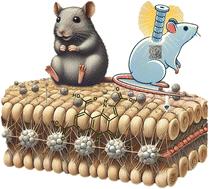
Oxidative stress plays a major role in the secondary injury of the spinal cord tissue due to the high lipid content of nervous tissue. In the present study, coaxial nanofibers were loaded with the natural antioxidant pyrroloquinoline quinone (PQQ) and used as an implantable drug-delivery system and a scaffold post-SCI. The obtained data show that the concentration of NO and the activity of inducible nitric oxide synthase (iNOS) were significantly (P < 0.05) increased in the spinal cord injury (SCI) group. These levels were significantly decreased following treatment with nanofibers/PQQ. Implantation of nanofibers/PQQ resulted in a significant (P < 0.05) drop in the level of malondialdehyde (MDA) compared to the SCI group. The application of nanofibers loaded with PQQ after SCI caused a significant (P < 0.05) elevation of superoxide dismutase (SOD) and catalase (CAT) activity in the spinal cord tissue. The present work shows the protective role of coaxial nanofibers loaded with PQQ against oxidative stress in spinal cord injury. The reversal of oxidative stress with PQQ can lead to better outcomes following spinal cord injury.



 京公网安备 11010802042870号
京ICP备2023020795号-1
京公网安备 11010802042870号
京ICP备2023020795号-1

 分享
分享
 求助内容:
求助内容: 应助结果提醒方式:
 扫码关注我们
