Quantification of training-induced alterations in body composition via automated machine learning analysis of MRI images in the thigh region: A pilot study in young females.
Saied Ramedani, Ebru Kelesoglu, Norman Stutzig, Hendrik Von Tengg-Kobligk, Keivan Daneshvar Ghorbani, Tobias Siebert
{"title":"Quantification of training-induced alterations in body composition via automated machine learning analysis of MRI images in the thigh region: A pilot study in young females.","authors":"Saied Ramedani, Ebru Kelesoglu, Norman Stutzig, Hendrik Von Tengg-Kobligk, Keivan Daneshvar Ghorbani, Tobias Siebert","doi":"10.14814/phy2.70187","DOIUrl":null,"url":null,"abstract":"<p><p>The maintenance of an appropriate ratio of body fat to muscle mass is essential for the preservation of health and performance, as excessive body fat is associated with an increased risk of various diseases. Accurate body composition assessment requires precise segmentation of structures. In this study we developed a novel automatic machine learning approach for volumetric segmentation and quantitative assessment of MRI volumes and investigated the efficacy of using a machine learning algorithm to assess muscle, subcutaneous adipose tissue (SAT), and bone volume of the thigh before and after a strength training. Eighteen healthy, young, female volunteers were randomly allocated to two groups: intervention group (IG) and control group (CG). The IG group followed an 8-week strength endurance training plan that was conducted two times per week. Before and after the training, the subjects of both groups underwent MRI scanning. The evaluation of the image data was performed by a machine learning system which is based on a 3D U-Net-based Convolutional Neural Network. The volumes of muscle, bone, and SAT were each examined using a 2 (GROUP [IG vs. CG]) × 2 (TIME [pre-intervention vs. post-intervention]) analysis of variance (ANOVA) with repeated measures for the factor TIME. The results of the ANOVA demonstrate significant TIME × GROUP interaction effects for the muscle volume (F<sub>1,16</sub> = 12.80, p = 0.003, η<sub>P</sub> <sup>2</sup> = 0.44) with an increase of 2.93% in the IG group and no change in the CG (-0.62%, p = 0.893). There were no significant changes in bone or SAT volume between the groups. This study supports the use of artificial intelligence systems to analyze MRI images as a reliable tool for monitoring training responses on body composition.</p>","PeriodicalId":20083,"journal":{"name":"Physiological Reports","volume":"13 3","pages":"e70187"},"PeriodicalIF":2.1000,"publicationDate":"2025-02-01","publicationTypes":"Journal Article","fieldsOfStudy":null,"isOpenAccess":false,"openAccessPdf":"https://www.ncbi.nlm.nih.gov/pmc/articles/PMC11776390/pdf/","citationCount":"0","resultStr":null,"platform":"Semanticscholar","paperid":null,"PeriodicalName":"Physiological Reports","FirstCategoryId":"1085","ListUrlMain":"https://doi.org/10.14814/phy2.70187","RegionNum":0,"RegionCategory":null,"ArticlePicture":[],"TitleCN":null,"AbstractTextCN":null,"PMCID":null,"EPubDate":"","PubModel":"","JCR":"Q3","JCRName":"PHYSIOLOGY","Score":null,"Total":0}
引用次数: 0
Abstract
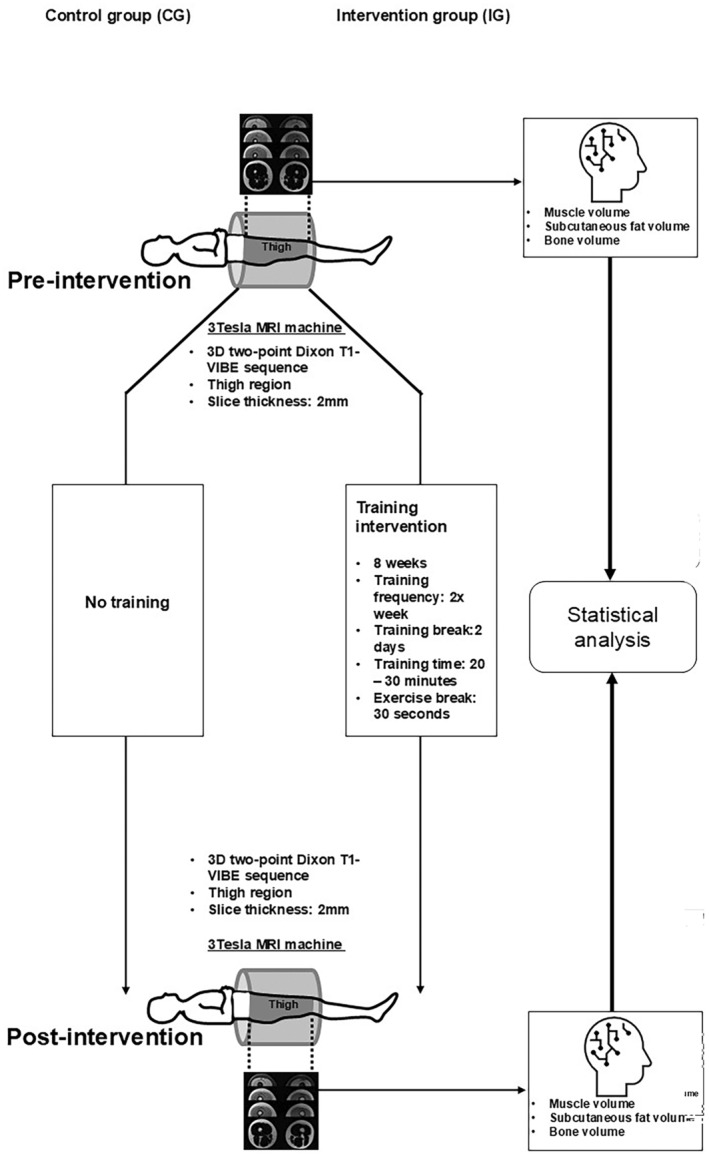
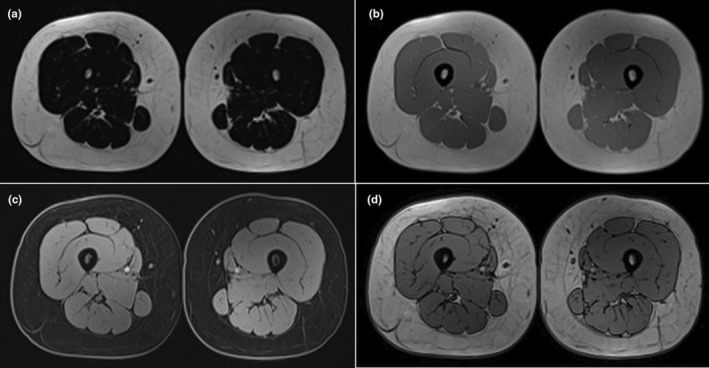
The maintenance of an appropriate ratio of body fat to muscle mass is essential for the preservation of health and performance, as excessive body fat is associated with an increased risk of various diseases. Accurate body composition assessment requires precise segmentation of structures. In this study we developed a novel automatic machine learning approach for volumetric segmentation and quantitative assessment of MRI volumes and investigated the efficacy of using a machine learning algorithm to assess muscle, subcutaneous adipose tissue (SAT), and bone volume of the thigh before and after a strength training. Eighteen healthy, young, female volunteers were randomly allocated to two groups: intervention group (IG) and control group (CG). The IG group followed an 8-week strength endurance training plan that was conducted two times per week. Before and after the training, the subjects of both groups underwent MRI scanning. The evaluation of the image data was performed by a machine learning system which is based on a 3D U-Net-based Convolutional Neural Network. The volumes of muscle, bone, and SAT were each examined using a 2 (GROUP [IG vs. CG]) × 2 (TIME [pre-intervention vs. post-intervention]) analysis of variance (ANOVA) with repeated measures for the factor TIME. The results of the ANOVA demonstrate significant TIME × GROUP interaction effects for the muscle volume (F1,16 = 12.80, p = 0.003, ηP2 = 0.44) with an increase of 2.93% in the IG group and no change in the CG (-0.62%, p = 0.893). There were no significant changes in bone or SAT volume between the groups. This study supports the use of artificial intelligence systems to analyze MRI images as a reliable tool for monitoring training responses on body composition.
期刊介绍:
Physiological Reports is an online only, open access journal that will publish peer reviewed research across all areas of basic, translational, and clinical physiology and allied disciplines. Physiological Reports is a collaboration between The Physiological Society and the American Physiological Society, and is therefore in a unique position to serve the international physiology community through quick time to publication while upholding a quality standard of sound research that constitutes a useful contribution to the field.






 京公网安备 11010802042870号
京ICP备2023020795号-1
京公网安备 11010802042870号
京ICP备2023020795号-1

 分享
分享
 求助内容:
求助内容: 应助结果提醒方式:
 扫码关注我们
