Benefits of the Global Integration Method (Método de Integração Global - MIG) in functional priorities of parents of Brazilian children and adolescents with autism spectrum disorder.
Amanda Aparecida Alves Cunha Nascimento, Deisiane Oliveira Souto, Thalita Karla Flores Cruz, Arthur Felipe Barroso de Lima, Gabriela Silva Oliveira, Vitor Geraldi Haase
{"title":"Benefits of the Global Integration Method (Método de Integração Global - MIG) in functional priorities of parents of Brazilian children and adolescents with autism spectrum disorder.","authors":"Amanda Aparecida Alves Cunha Nascimento, Deisiane Oliveira Souto, Thalita Karla Flores Cruz, Arthur Felipe Barroso de Lima, Gabriela Silva Oliveira, Vitor Geraldi Haase","doi":"10.1186/s12887-025-05422-0","DOIUrl":null,"url":null,"abstract":"<p><strong>Background: </strong>Understanding the priorities of parents of children and adolescents with autism spectrum disorder (ASD) is crucial for implementing evidence-based programs. This study aims to identify the functional priorities of parents of Brazilian children and adolescents with ASD, analyze variations in priorities according to the levels of support and age groups of the participants, and categorize the goals according to the categories of the International Classification of Functioning, Disability, and Health (ICF). Additionally, this study aimed to evaluate changes in parents' performance and satisfaction with functional priorities after intervention with the Global Integration Method (Métodode Integração Global - MIG).</p><p><strong>Methods: </strong>A total of 241 children/adolescents with ASD (mean age, 6.92 ± 3.61 years) were recruited from different regions of Brazil. 76% (76%) were male, and 40.7% were classified as having support level 2. The Canadian Occupational Performance Measure was administered to parents/caregivers to identify their priorities for their children and to assess changes in performance and satisfaction with priorities after intervention with MIG. The MIG protocol consisted of functional task training in a naturalistic environment (City of Tomorrow) combined with the use of a flexible therapeutic suit (MIG Flex) and was conducted for 3 months, five times a week, for 3-4 h per day. Descriptive statistics were used to provide the priority profile. Pre- and post-intervention data were analyzed using paired t-test.</p><p><strong>Results: </strong>Parents established 1,203 functional priorities. Activities of daily living, behavioral difficulties, communication, play, and social interactions were the main functional priorities in the perception of parents/caregivers. The profiles of functional priorities were similar between the different levels of support and age groups. Approximately 64% of the priorities were classified in the activity domain of the ICF. In general, the MIG program resulted in significant improvements in performance and satisfaction for the majority of functional priorities (p < 0.05).</p><p><strong>Conclusion: </strong>Activities of daily living appear to be the main priority of parents of children and adolescents with ASD, regardless of the level of support or age group. The MIG program has been associated with improvements in performance and satisfaction across several of the functional priorities identified by parents.</p>","PeriodicalId":9144,"journal":{"name":"BMC Pediatrics","volume":"25 1","pages":"75"},"PeriodicalIF":2.0000,"publicationDate":"2025-01-30","publicationTypes":"Journal Article","fieldsOfStudy":null,"isOpenAccess":false,"openAccessPdf":"https://www.ncbi.nlm.nih.gov/pmc/articles/PMC11781071/pdf/","citationCount":"0","resultStr":null,"platform":"Semanticscholar","paperid":null,"PeriodicalName":"BMC Pediatrics","FirstCategoryId":"3","ListUrlMain":"https://doi.org/10.1186/s12887-025-05422-0","RegionNum":3,"RegionCategory":"医学","ArticlePicture":[],"TitleCN":null,"AbstractTextCN":null,"PMCID":null,"EPubDate":"","PubModel":"","JCR":"Q2","JCRName":"PEDIATRICS","Score":null,"Total":0}
引用次数: 0
Abstract
Background: Understanding the priorities of parents of children and adolescents with autism spectrum disorder (ASD) is crucial for implementing evidence-based programs. This study aims to identify the functional priorities of parents of Brazilian children and adolescents with ASD, analyze variations in priorities according to the levels of support and age groups of the participants, and categorize the goals according to the categories of the International Classification of Functioning, Disability, and Health (ICF). Additionally, this study aimed to evaluate changes in parents' performance and satisfaction with functional priorities after intervention with the Global Integration Method (Métodode Integração Global - MIG).
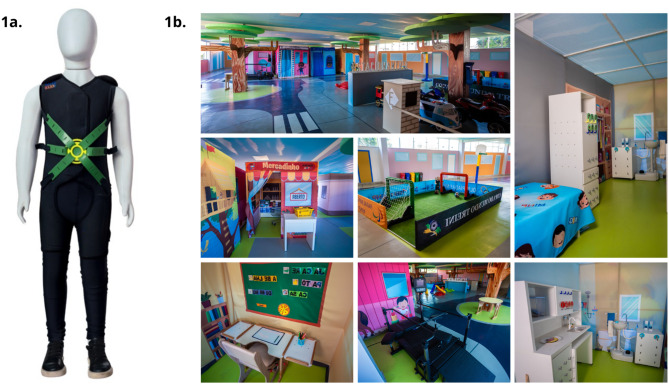
Methods: A total of 241 children/adolescents with ASD (mean age, 6.92 ± 3.61 years) were recruited from different regions of Brazil. 76% (76%) were male, and 40.7% were classified as having support level 2. The Canadian Occupational Performance Measure was administered to parents/caregivers to identify their priorities for their children and to assess changes in performance and satisfaction with priorities after intervention with MIG. The MIG protocol consisted of functional task training in a naturalistic environment (City of Tomorrow) combined with the use of a flexible therapeutic suit (MIG Flex) and was conducted for 3 months, five times a week, for 3-4 h per day. Descriptive statistics were used to provide the priority profile. Pre- and post-intervention data were analyzed using paired t-test.
Results: Parents established 1,203 functional priorities. Activities of daily living, behavioral difficulties, communication, play, and social interactions were the main functional priorities in the perception of parents/caregivers. The profiles of functional priorities were similar between the different levels of support and age groups. Approximately 64% of the priorities were classified in the activity domain of the ICF. In general, the MIG program resulted in significant improvements in performance and satisfaction for the majority of functional priorities (p < 0.05).
Conclusion: Activities of daily living appear to be the main priority of parents of children and adolescents with ASD, regardless of the level of support or age group. The MIG program has been associated with improvements in performance and satisfaction across several of the functional priorities identified by parents.
背景:了解儿童和青少年自闭症谱系障碍(ASD)家长的优先事项对于实施循证项目至关重要。本研究旨在确定巴西自闭症儿童和青少年父母的功能优先级,根据参与者的支持水平和年龄组分析优先级的变化,并根据国际功能、残疾和健康分类(ICF)对目标进行分类。此外,本研究旨在评估采用全球整合方法干预后父母的绩效和功能优先级满意度的变化。方法:从巴西不同地区招募241例ASD儿童/青少年(平均年龄6.92±3.61岁),其中76%(76%)为男性,40.7%为二级支持水平。加拿大职业绩效测量对父母/照顾者进行管理,以确定他们对孩子的优先事项,并评估在MIG干预后表现的变化和对优先事项的满意度。MIG方案包括在自然环境(City of Tomorrow)中进行功能任务训练,并结合使用灵活的治疗服(MIG Flex),持续3个月,每周5次,每天3-4小时。描述性统计用于提供优先级概况。干预前后资料采用配对t检验进行分析。结果:家长确定了1203个功能优先级。日常生活活动、行为困难、沟通、游戏和社会互动是父母/照顾者感知的主要功能优先级。在不同的支持水平和年龄组之间,功能优先级的概况相似。大约64%的优先事项被分类在ICF的活动域。总的来说,MIG项目在大多数功能优先事项的表现和满意度方面取得了显著的改善(p结论:日常生活活动似乎是自闭症儿童和青少年父母的主要优先事项,无论支持水平或年龄组如何。MIG项目与家长确定的几个功能优先级的性能和满意度的改进有关。
期刊介绍:
BMC Pediatrics is an open access journal publishing peer-reviewed research articles in all aspects of health care in neonates, children and adolescents, as well as related molecular genetics, pathophysiology, and epidemiology.





 京公网安备 11010802042870号
京ICP备2023020795号-1
京公网安备 11010802042870号
京ICP备2023020795号-1

 分享
分享
 求助内容:
求助内容: 应助结果提醒方式:
 扫码关注我们
