Samantha L Huey, Neel H Mehta, Ruth S Steinhouse, Yue Jin, Matthew Kibbee, Rebecca Kuriyan, Julia L Finkelstein, Saurabh Mehta
{"title":"Precision nutrition-based interventions for the management of obesity in children and adolescents up to the age of 19 years.","authors":"Samantha L Huey, Neel H Mehta, Ruth S Steinhouse, Yue Jin, Matthew Kibbee, Rebecca Kuriyan, Julia L Finkelstein, Saurabh Mehta","doi":"10.1002/14651858.CD015877","DOIUrl":null,"url":null,"abstract":"<p><strong>Background: </strong>Precision nutrition-based methods develop tailored interventions and/or recommendations accounting for determinants of intra- and inter-individual variation in response to the same diet, compared to current 'one-size-fits-all' population-level approaches. Determinants may include genetics, current dietary habits and eating patterns, circadian rhythms, health status, gut microbiome, socioeconomic and psychosocial characteristics, and physical activity. In this systematic review, we examined the evidence base for the effect of interventions based on precision nutrition approaches on overweight and obesity in children and adolescents to help inform future research and global guidelines.</p><p><strong>Objectives: </strong>To examine the impact of precision nutrition-based interventions for the management of obesity in children and adolescents in all their diversity.</p><p><strong>Search methods: </strong>We searched CENTRAL, MEDLINE, CINAHL, Web of Science Core Collection, BIOSIS Previews, Global Index Medicus (all regions), IBECS, SciELO, PAHO, PAHO IRIS, WHO IRIS, WHOLIS, Bibliomap, and TRoPHI, as well as the WHO ICTRP and ClinicalTrials.gov. We last searched the databases on 23 July 2024. We did not apply any language restrictions.</p><p><strong>Selection criteria: </strong>We included randomised or quasi-randomised controlled trials that evaluated precision nutrition-based interventions (accounting for 'omics' such as phenotyping, genotyping, gut microbiome; clinical data, baseline dietary intake, postprandial glucose response, etc., and/or including artificial intelligence such as machine learning methods) compared to general or one-size-fits-all interventions or no intervention in children and adolescents aged 0 to 9 years or 10 to 19 years with overweight or obesity.</p><p><strong>Data collection and analysis: </strong>Two review authors independently conducted study screening, data extraction, and risk of bias and GRADE assessments. We used fixed-effect analyses. Our outcomes of interest were physical and mental well-being, physical activity, health-related quality of life, obesity-associated disability, and adverse events associated with the interventions as defined or measured by trialists, and weight change (reduction, stabilisation or maintenance).</p><p><strong>Main results: </strong>Two studies (3 references, 105 participants) conducted in Ukraine and Greece met our eligibility criteria. One study reported nonprofit funding sources, whilst the other did not report funding, and the certainty of evidence ranged from very low to low across outcomes (all measured at endpoint). Only one trial (65 participants) contributed data on our primary outcomes of interest. Precision nutrition-based intervention versus one-size-fits-all intervention or standard of care In children 0 to 9 years of age, evidence is very uncertain about the effect of a precision nutrition-based intervention (a computerised Decision Support Tool (DST) that incorporates a variety of participant data and provides personalised diet recommendations based on decision-tree algorithms) on body mass index (BMI) (mean difference (MD) -1.40 kg/m<sup>2</sup>, 95% confidence interval (CI) -3.48 to 0.68; 1 study, 35 participants; very low-certainty evidence) and on weight (MD -2.60 kg, 95% CI -8.42 to 3.22; 1 study, 35 participants; very low-certainty evidence) compared with a one-size-fits-all control intervention. In children and adolescents 10 to 19 years of age, evidence is very uncertain about the effect of a precision nutrition-based intervention (computerised DST) on BMI (MD 3.00 kg/m<sup>2</sup>, 95% CI -0.26 to 6.26; 1 study, 30 participants; very low-certainty evidence) and on weight (MD 11.40 kg, 95% CI -0.47 to 23.27; 1 study, 30 participants; very low-certainty evidence) compared with a one-size-fits-all control intervention.</p><p><strong>Authors' conclusions: </strong>Based on data from two small studies with a total of 105 participants, the evidence is very uncertain about the effect of precision nutrition-based interventions on body weight or BMI. This review was limited by the number of available randomised controlled trials in this relatively nascent field. Given these limitations, the two studies do not provide sufficient evidence to adequately inform practice. Future research should report participant outcome data, including outcomes related to mental, emotional, and functional well-being, in addition to biochemical and physical measures, stratified by World Health Organization-defined age groups (children (0 to 9 years), and children and adolescents (10 to 19 years)). Future studies should also report methods related to randomisation, blinding, and compliance, as well as include prespecified analysis plans.</p>","PeriodicalId":10473,"journal":{"name":"Cochrane Database of Systematic Reviews","volume":"1 ","pages":"CD015877"},"PeriodicalIF":8.8000,"publicationDate":"2025-01-30","publicationTypes":"Journal Article","fieldsOfStudy":null,"isOpenAccess":false,"openAccessPdf":"https://www.ncbi.nlm.nih.gov/pmc/articles/PMC12045580/pdf/","citationCount":"0","resultStr":null,"platform":"Semanticscholar","paperid":null,"PeriodicalName":"Cochrane Database of Systematic Reviews","FirstCategoryId":"3","ListUrlMain":"https://doi.org/10.1002/14651858.CD015877","RegionNum":2,"RegionCategory":"医学","ArticlePicture":[],"TitleCN":null,"AbstractTextCN":null,"PMCID":null,"EPubDate":"","PubModel":"","JCR":"Q1","JCRName":"MEDICINE, GENERAL & INTERNAL","Score":null,"Total":0}
引用次数: 0
Abstract
Background: Precision nutrition-based methods develop tailored interventions and/or recommendations accounting for determinants of intra- and inter-individual variation in response to the same diet, compared to current 'one-size-fits-all' population-level approaches. Determinants may include genetics, current dietary habits and eating patterns, circadian rhythms, health status, gut microbiome, socioeconomic and psychosocial characteristics, and physical activity. In this systematic review, we examined the evidence base for the effect of interventions based on precision nutrition approaches on overweight and obesity in children and adolescents to help inform future research and global guidelines.
Objectives: To examine the impact of precision nutrition-based interventions for the management of obesity in children and adolescents in all their diversity.
Search methods: We searched CENTRAL, MEDLINE, CINAHL, Web of Science Core Collection, BIOSIS Previews, Global Index Medicus (all regions), IBECS, SciELO, PAHO, PAHO IRIS, WHO IRIS, WHOLIS, Bibliomap, and TRoPHI, as well as the WHO ICTRP and ClinicalTrials.gov. We last searched the databases on 23 July 2024. We did not apply any language restrictions.
Selection criteria: We included randomised or quasi-randomised controlled trials that evaluated precision nutrition-based interventions (accounting for 'omics' such as phenotyping, genotyping, gut microbiome; clinical data, baseline dietary intake, postprandial glucose response, etc., and/or including artificial intelligence such as machine learning methods) compared to general or one-size-fits-all interventions or no intervention in children and adolescents aged 0 to 9 years or 10 to 19 years with overweight or obesity.
Data collection and analysis: Two review authors independently conducted study screening, data extraction, and risk of bias and GRADE assessments. We used fixed-effect analyses. Our outcomes of interest were physical and mental well-being, physical activity, health-related quality of life, obesity-associated disability, and adverse events associated with the interventions as defined or measured by trialists, and weight change (reduction, stabilisation or maintenance).
Main results: Two studies (3 references, 105 participants) conducted in Ukraine and Greece met our eligibility criteria. One study reported nonprofit funding sources, whilst the other did not report funding, and the certainty of evidence ranged from very low to low across outcomes (all measured at endpoint). Only one trial (65 participants) contributed data on our primary outcomes of interest. Precision nutrition-based intervention versus one-size-fits-all intervention or standard of care In children 0 to 9 years of age, evidence is very uncertain about the effect of a precision nutrition-based intervention (a computerised Decision Support Tool (DST) that incorporates a variety of participant data and provides personalised diet recommendations based on decision-tree algorithms) on body mass index (BMI) (mean difference (MD) -1.40 kg/m2, 95% confidence interval (CI) -3.48 to 0.68; 1 study, 35 participants; very low-certainty evidence) and on weight (MD -2.60 kg, 95% CI -8.42 to 3.22; 1 study, 35 participants; very low-certainty evidence) compared with a one-size-fits-all control intervention. In children and adolescents 10 to 19 years of age, evidence is very uncertain about the effect of a precision nutrition-based intervention (computerised DST) on BMI (MD 3.00 kg/m2, 95% CI -0.26 to 6.26; 1 study, 30 participants; very low-certainty evidence) and on weight (MD 11.40 kg, 95% CI -0.47 to 23.27; 1 study, 30 participants; very low-certainty evidence) compared with a one-size-fits-all control intervention.
Authors' conclusions: Based on data from two small studies with a total of 105 participants, the evidence is very uncertain about the effect of precision nutrition-based interventions on body weight or BMI. This review was limited by the number of available randomised controlled trials in this relatively nascent field. Given these limitations, the two studies do not provide sufficient evidence to adequately inform practice. Future research should report participant outcome data, including outcomes related to mental, emotional, and functional well-being, in addition to biochemical and physical measures, stratified by World Health Organization-defined age groups (children (0 to 9 years), and children and adolescents (10 to 19 years)). Future studies should also report methods related to randomisation, blinding, and compliance, as well as include prespecified analysis plans.
期刊介绍:
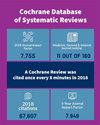
The Cochrane Database of Systematic Reviews (CDSR) stands as the premier database for systematic reviews in healthcare. It comprises Cochrane Reviews, along with protocols for these reviews, editorials, and supplements. Owned and operated by Cochrane, a worldwide independent network of healthcare stakeholders, the CDSR (ISSN 1469-493X) encompasses a broad spectrum of health-related topics, including health services.



 京公网安备 11010802042870号
京ICP备2023020795号-1
京公网安备 11010802042870号
京ICP备2023020795号-1

 分享
分享
 求助内容:
求助内容: 应助结果提醒方式:
 扫码关注我们
