{"title":"Beyond checkpoint inhibitors: the three generations of immunotherapy.","authors":"John Schaub, Shou-Ching Tang","doi":"10.1007/s10238-024-01546-2","DOIUrl":null,"url":null,"abstract":"<p><p>Anti-tumor immunotherapy was rediscovered and rejuvenated in the last two decades with the discovery of CTLA-4, PD-1 and PD-L1 and the roles in inhibiting immune function and tumor evasion of anti-tumor immune response. Following the approval of the first checkpoint inhibitor ipilimumab against CTLA-4 in melanoma in 2011, there has been a rapid development of tumor immunotherapy. Furthermore, additional positive and negative molecules among the T-cell regulatory systems have been identified that that function to fine tune the stimulatory or inhibitory immune cells and modulate their functions (checkpoint modulators). Many strategies are being explored to target macrophages, NK-cells, cytotoxic T-cells, fibroblasts, endothelial cells, cytokines and molecules involved in tumor tolerance and microbiome. Similar to agents that target checkpoint modulators, these newer targets have the potential to synergize with other classes of immunotherapeutic agents and importantly may overcome the resistance to other immunotherapies. In order to better understand the mechanism of action of all major classes of immunotherapy, design clinical trials taking advantage of different types of immunotherapeutic agents and use them rationally in clinical practice either in combination or in sequence, we propose the group all immunotherapies into three generations: with CTLA-4, PD-1 and PD-L1 inhibitors as the first generation, agents that target the checkpoint modulators as the second generation, while those that target TME as the third generation. This review discusses all three generations of immunotherapy in oncology, their mechanism of actions, major clinical trial results and indication, strategies for future clinical trial designs and rational clinical applications.</p>","PeriodicalId":10337,"journal":{"name":"Clinical and Experimental Medicine","volume":"25 1","pages":"43"},"PeriodicalIF":3.5000,"publicationDate":"2025-01-21","publicationTypes":"Journal Article","fieldsOfStudy":null,"isOpenAccess":false,"openAccessPdf":"https://www.ncbi.nlm.nih.gov/pmc/articles/PMC11785663/pdf/","citationCount":"0","resultStr":null,"platform":"Semanticscholar","paperid":null,"PeriodicalName":"Clinical and Experimental Medicine","FirstCategoryId":"3","ListUrlMain":"https://doi.org/10.1007/s10238-024-01546-2","RegionNum":4,"RegionCategory":"医学","ArticlePicture":[],"TitleCN":null,"AbstractTextCN":null,"PMCID":null,"EPubDate":"","PubModel":"","JCR":"Q2","JCRName":"MEDICINE, RESEARCH & EXPERIMENTAL","Score":null,"Total":0}
引用次数: 0
Abstract
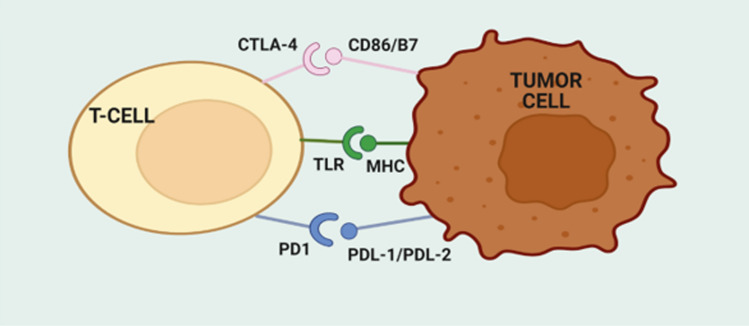
Anti-tumor immunotherapy was rediscovered and rejuvenated in the last two decades with the discovery of CTLA-4, PD-1 and PD-L1 and the roles in inhibiting immune function and tumor evasion of anti-tumor immune response. Following the approval of the first checkpoint inhibitor ipilimumab against CTLA-4 in melanoma in 2011, there has been a rapid development of tumor immunotherapy. Furthermore, additional positive and negative molecules among the T-cell regulatory systems have been identified that that function to fine tune the stimulatory or inhibitory immune cells and modulate their functions (checkpoint modulators). Many strategies are being explored to target macrophages, NK-cells, cytotoxic T-cells, fibroblasts, endothelial cells, cytokines and molecules involved in tumor tolerance and microbiome. Similar to agents that target checkpoint modulators, these newer targets have the potential to synergize with other classes of immunotherapeutic agents and importantly may overcome the resistance to other immunotherapies. In order to better understand the mechanism of action of all major classes of immunotherapy, design clinical trials taking advantage of different types of immunotherapeutic agents and use them rationally in clinical practice either in combination or in sequence, we propose the group all immunotherapies into three generations: with CTLA-4, PD-1 and PD-L1 inhibitors as the first generation, agents that target the checkpoint modulators as the second generation, while those that target TME as the third generation. This review discusses all three generations of immunotherapy in oncology, their mechanism of actions, major clinical trial results and indication, strategies for future clinical trial designs and rational clinical applications.
期刊介绍:
Clinical and Experimental Medicine (CEM) is a multidisciplinary journal that aims to be a forum of scientific excellence and information exchange in relation to the basic and clinical features of the following fields: hematology, onco-hematology, oncology, virology, immunology, and rheumatology. The journal publishes reviews and editorials, experimental and preclinical studies, translational research, prospectively designed clinical trials, and epidemiological studies. Papers containing new clinical or experimental data that are likely to contribute to changes in clinical practice or the way in which a disease is thought about will be given priority due to their immediate importance. Case reports will be accepted on an exceptional basis only, and their submission is discouraged. The major criteria for publication are clarity, scientific soundness, and advances in knowledge. In compliance with the overwhelmingly prevailing request by the international scientific community, and with respect for eco-compatibility issues, CEM is now published exclusively online.






 京公网安备 11010802042870号
京ICP备2023020795号-1
京公网安备 11010802042870号
京ICP备2023020795号-1

 分享
分享
 求助内容:
求助内容: 应助结果提醒方式:
 扫码关注我们
