Abdul Kadir, Riza Yosia Sunindijo, Baiduri Widanarko, Dadan Erwandi, Sjahrul M Nasri, Bangga Agung Satrya, Stevan Deby Anbiya Muhamad Sunarno, Hardy Atmajaya, Popy Yuniar, Tubagus Dwika Yuantoko, Lailatul Qomariyah, Cynthia Febrina Maharani
{"title":"Impact of Physical and Psychological Strain on Work-Related Musculoskeletal Disorders: A Cross-Sectional Study in the Construction Industry.","authors":"Abdul Kadir, Riza Yosia Sunindijo, Baiduri Widanarko, Dadan Erwandi, Sjahrul M Nasri, Bangga Agung Satrya, Stevan Deby Anbiya Muhamad Sunarno, Hardy Atmajaya, Popy Yuniar, Tubagus Dwika Yuantoko, Lailatul Qomariyah, Cynthia Febrina Maharani","doi":"10.1177/00469580251315348","DOIUrl":null,"url":null,"abstract":"<p><p>This study examined the interplay between physical workload, psychological stress, and the prevalence of work-related musculoskeletal disorders (WMSDs) among construction workers in Indonesia. This cross-sectional study used a purposive sampling technique to gather quantitative data from 409 respondents working in four construction companies through structured questionnaires. Data collection tools included the Copenhagen Psychosocial Questionnaire III (COPSOQ III), the K10 scale for psychosocial distress, and the Nordic Body Map for musculoskeletal symptoms. Independent variables encompassed demographic factors, physical work environment, and psychosocial aspects, while the dependent variable was the presence of work-related musculoskeletal disorders (WMSDs) symptoms over the past 7 days and 12 months. Descriptive statistics and logistic regression analyses were performed using IBM SPSS Statistics Grad Pack 29.0 PREMIUM. The study revealed a high prevalence of WMSDs among workers, with 36.2% reporting symptoms in the past 7 days and 31.5% in the past 12 months. These symptoms primarily affected the neck, shoulders, back, and waist. Both physical and psychosocial factors were found to the risk, with high levels of somatic stress and sleep disorders significantly increasing the likelihood of WMSDs. Psychological distress emerged as a particularly strong predictor to these disorders. The findings underscore the importance of implementing targeted interventions and safety policies to mitigate WMSDs risks and improve occupational health within the construction industry.</p>","PeriodicalId":54976,"journal":{"name":"Inquiry-The Journal of Health Care Organization Provision and Financing","volume":"62 ","pages":"469580251315348"},"PeriodicalIF":2.3000,"publicationDate":"2025-01-01","publicationTypes":"Journal Article","fieldsOfStudy":null,"isOpenAccess":false,"openAccessPdf":"https://www.ncbi.nlm.nih.gov/pmc/articles/PMC11783478/pdf/","citationCount":"0","resultStr":null,"platform":"Semanticscholar","paperid":null,"PeriodicalName":"Inquiry-The Journal of Health Care Organization Provision and Financing","FirstCategoryId":"3","ListUrlMain":"https://doi.org/10.1177/00469580251315348","RegionNum":4,"RegionCategory":"医学","ArticlePicture":[],"TitleCN":null,"AbstractTextCN":null,"PMCID":null,"EPubDate":"","PubModel":"","JCR":"Q3","JCRName":"HEALTH CARE SCIENCES & SERVICES","Score":null,"Total":0}
引用次数: 0
Abstract
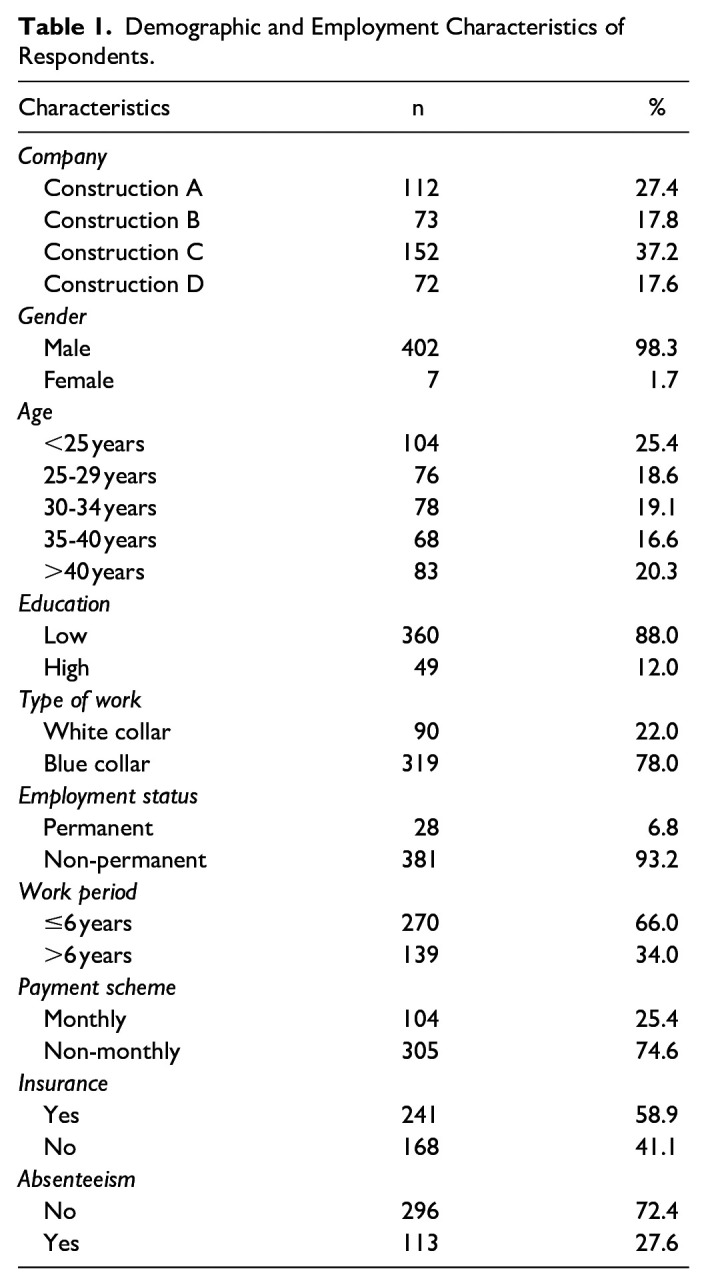
This study examined the interplay between physical workload, psychological stress, and the prevalence of work-related musculoskeletal disorders (WMSDs) among construction workers in Indonesia. This cross-sectional study used a purposive sampling technique to gather quantitative data from 409 respondents working in four construction companies through structured questionnaires. Data collection tools included the Copenhagen Psychosocial Questionnaire III (COPSOQ III), the K10 scale for psychosocial distress, and the Nordic Body Map for musculoskeletal symptoms. Independent variables encompassed demographic factors, physical work environment, and psychosocial aspects, while the dependent variable was the presence of work-related musculoskeletal disorders (WMSDs) symptoms over the past 7 days and 12 months. Descriptive statistics and logistic regression analyses were performed using IBM SPSS Statistics Grad Pack 29.0 PREMIUM. The study revealed a high prevalence of WMSDs among workers, with 36.2% reporting symptoms in the past 7 days and 31.5% in the past 12 months. These symptoms primarily affected the neck, shoulders, back, and waist. Both physical and psychosocial factors were found to the risk, with high levels of somatic stress and sleep disorders significantly increasing the likelihood of WMSDs. Psychological distress emerged as a particularly strong predictor to these disorders. The findings underscore the importance of implementing targeted interventions and safety policies to mitigate WMSDs risks and improve occupational health within the construction industry.
期刊介绍:
INQUIRY is a peer-reviewed open access journal whose msision is to to improve health by sharing research spanning health care, including public health, health services, and health policy.





 京公网安备 11010802042870号
京ICP备2023020795号-1
京公网安备 11010802042870号
京ICP备2023020795号-1

 分享
分享
 求助内容:
求助内容: 应助结果提醒方式:
 扫码关注我们
