Shajy Isac, Bidyadhar Dehury, Ravi Prakash, Nihal Hasan, John Anthony, Banadakoppa Manjappa Ramesh, Prakash P Javalkar, Vasanthakumar Namasivayam, Marissa L Becker, James Blanchard, Ties Boerma
{"title":"Essential newborn care practices in selected public health facilities using observation of 2603 normal deliveries in Uttar Pradesh, India.","authors":"Shajy Isac, Bidyadhar Dehury, Ravi Prakash, Nihal Hasan, John Anthony, Banadakoppa Manjappa Ramesh, Prakash P Javalkar, Vasanthakumar Namasivayam, Marissa L Becker, James Blanchard, Ties Boerma","doi":"10.1136/bmjgh-2024-017117","DOIUrl":null,"url":null,"abstract":"<p><strong>Introduction: </strong>Essential newborn care (ENBC) practices are recommended for all births to improve neonatal survival. This paper aims to understand the facility-level variations and factors associated with the essential newborn care practices by providers in higher-level public health facilities in 25 high priority districts (HPDs) of Uttar Pradesh (UP).</p><p><strong>Methods: </strong>We used observational cross-sectional quantitative data from 48 selected public health facilities (23 district hospitals (DH) and 25 community health centres (CHC)-first referral units (FRU)) implemented in 25 HPDs of UP from February 2020 to May 2021. We defined ENBC practice as both cord care and initiation of breastfeeding within 1 hour of birth were practiced in normal deliveries by the staff nurse. Descriptive analysis was done based on data from 2603 newborns attended by 318 providers. A stratified analysis was done by DH and CHC-FRU.</p><p><strong>Results: </strong>Overall, essential newborn care was practiced among 26.1% of the newborns (26.2% in DH and 35.0% in CHC-FRU). The ENBC practice varied across facilities from 3.0% to 64.1% in DH and from 0% to 91.0% in CHC-FRU. The ENBC practice was about 2.3 times higher in facilities with a high level of skill and knowledge of the providers (39.0%) compared with the facilities with a low level of skill and knowledge (16.9%). Similar patterns of association between providers' skills and knowledge of ENBC practices were observed in DH and CHC-FRU.</p><p><strong>Conclusion: </strong>Skill and knowledge on ENBC components are significantly associated with the clinical practices of providers, with a high level of variability across facilities. This suggests a focused facility-based assessment and enhancement of the clinical competencies of the providers to improve the quality of care in public health facilities in UP.</p>","PeriodicalId":9137,"journal":{"name":"BMJ Global Health","volume":"10 1","pages":""},"PeriodicalIF":6.1000,"publicationDate":"2025-01-31","publicationTypes":"Journal Article","fieldsOfStudy":null,"isOpenAccess":false,"openAccessPdf":"https://www.ncbi.nlm.nih.gov/pmc/articles/PMC11792291/pdf/","citationCount":"0","resultStr":null,"platform":"Semanticscholar","paperid":null,"PeriodicalName":"BMJ Global Health","FirstCategoryId":"3","ListUrlMain":"https://doi.org/10.1136/bmjgh-2024-017117","RegionNum":2,"RegionCategory":"医学","ArticlePicture":[],"TitleCN":null,"AbstractTextCN":null,"PMCID":null,"EPubDate":"","PubModel":"","JCR":"Q1","JCRName":"PUBLIC, ENVIRONMENTAL & OCCUPATIONAL HEALTH","Score":null,"Total":0}
引用次数: 0
Abstract
Introduction: Essential newborn care (ENBC) practices are recommended for all births to improve neonatal survival. This paper aims to understand the facility-level variations and factors associated with the essential newborn care practices by providers in higher-level public health facilities in 25 high priority districts (HPDs) of Uttar Pradesh (UP).
Methods: We used observational cross-sectional quantitative data from 48 selected public health facilities (23 district hospitals (DH) and 25 community health centres (CHC)-first referral units (FRU)) implemented in 25 HPDs of UP from February 2020 to May 2021. We defined ENBC practice as both cord care and initiation of breastfeeding within 1 hour of birth were practiced in normal deliveries by the staff nurse. Descriptive analysis was done based on data from 2603 newborns attended by 318 providers. A stratified analysis was done by DH and CHC-FRU.
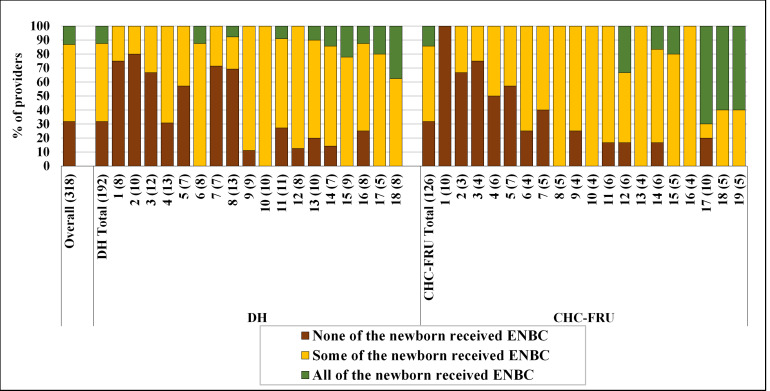
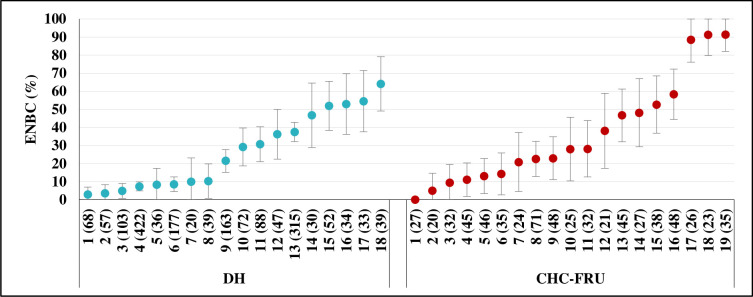
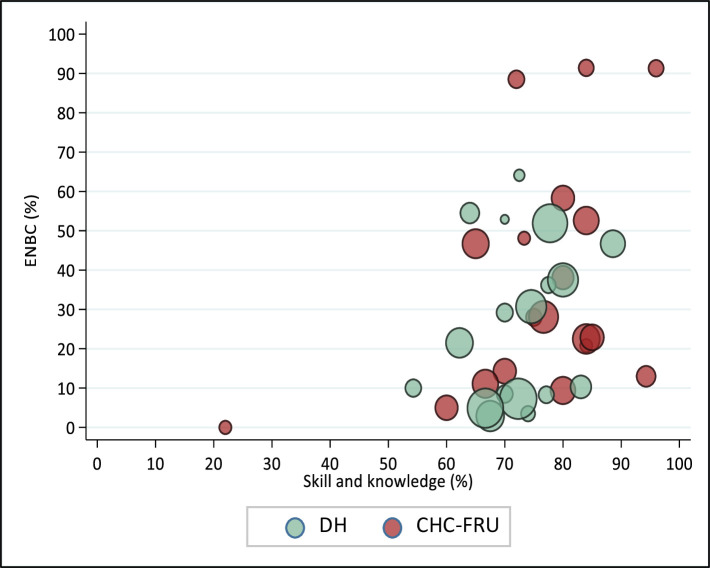
Results: Overall, essential newborn care was practiced among 26.1% of the newborns (26.2% in DH and 35.0% in CHC-FRU). The ENBC practice varied across facilities from 3.0% to 64.1% in DH and from 0% to 91.0% in CHC-FRU. The ENBC practice was about 2.3 times higher in facilities with a high level of skill and knowledge of the providers (39.0%) compared with the facilities with a low level of skill and knowledge (16.9%). Similar patterns of association between providers' skills and knowledge of ENBC practices were observed in DH and CHC-FRU.
Conclusion: Skill and knowledge on ENBC components are significantly associated with the clinical practices of providers, with a high level of variability across facilities. This suggests a focused facility-based assessment and enhancement of the clinical competencies of the providers to improve the quality of care in public health facilities in UP.
期刊介绍:
BMJ Global Health is an online Open Access journal from BMJ that focuses on publishing high-quality peer-reviewed content pertinent to individuals engaged in global health, including policy makers, funders, researchers, clinicians, and frontline healthcare workers. The journal encompasses all facets of global health, with a special emphasis on submissions addressing underfunded areas such as non-communicable diseases (NCDs). It welcomes research across all study phases and designs, from study protocols to phase I trials to meta-analyses, including small or specialized studies. The journal also encourages opinionated discussions on controversial topics.



 京公网安备 11010802042870号
京ICP备2023020795号-1
京公网安备 11010802042870号
京ICP备2023020795号-1

 分享
分享
 求助内容:
求助内容: 应助结果提醒方式:
 扫码关注我们
