{"title":"Selective JAK2 pathway inhibition enhances anti-leukemic functionality in CD19 CAR-T cells.","authors":"Kohei Mitsuno, Masaya Suematsu, Yuki Naito, Azusa Mayumi, Hideki Yoshida, Shinya Osone, Toshihiko Imamura, Yozo Nakazawa, Shigeki Yagyu, Tomoko Iehara","doi":"10.1007/s00262-024-03927-8","DOIUrl":null,"url":null,"abstract":"<p><p>The integration of molecular targeted therapeutics with chimeric antigen receptor T (CAR-T) cell therapy represents a novel strategy to amplify the anti-tumor efficacy of immunotherapy. While CD19-targeted CAR-T cells and Janus kinase (JAK) inhibitors have independently shown efficacy against certain B-cell leukemias, such as Philadelphia chromosome-like acute lymphoblastic leukemia, the concurrent use of JAK1/2 inhibitors, such as ruxolitinib, has been implicated in reducing CAR-T cell potency by inhibiting the JAK1-dependent T cell activation pathway. This study explores the combinatorial use of a selective type II JAK2 inhibitor, CHZ868, with CD19 CAR-T cells, revealing a synergistic enhancement of anti-leukemic activity across B-cell tumor models irrespective of JAK2 mutational status. CHZ868-mediated JAK2 inhibition did not induce the exhaustion of CAR-T cells, maintaining efficacy over repeated tumor challenges and significantly extending survival in mouse models engrafted with JAK2 inhibitor-resistant leukemia cells (median survival, CD19 CAR-T + CHZ868 vs. CD19 CAR-T + DMSO: 32 days vs. 26 days, p = 0.0303). Transcriptomic analyses suggest that CHZ868 impedes CAR-T cell differentiation while preserving their proliferative capacity, a crucial factor in maintaining CAR-T cell functionality. Therefore, the selective inhibition of the JAK2 pathway may potentiate CAR-T cell therapy and offer a viable treatment strategy for patients with resistant B-cell leukemias.</p>","PeriodicalId":9595,"journal":{"name":"Cancer Immunology, Immunotherapy","volume":"74 3","pages":"79"},"PeriodicalIF":5.1000,"publicationDate":"2025-02-01","publicationTypes":"Journal Article","fieldsOfStudy":null,"isOpenAccess":false,"openAccessPdf":"https://www.ncbi.nlm.nih.gov/pmc/articles/PMC11787079/pdf/","citationCount":"0","resultStr":null,"platform":"Semanticscholar","paperid":null,"PeriodicalName":"Cancer Immunology, Immunotherapy","FirstCategoryId":"3","ListUrlMain":"https://doi.org/10.1007/s00262-024-03927-8","RegionNum":2,"RegionCategory":"医学","ArticlePicture":[],"TitleCN":null,"AbstractTextCN":null,"PMCID":null,"EPubDate":"","PubModel":"","JCR":"Q2","JCRName":"IMMUNOLOGY","Score":null,"Total":0}
引用次数: 0
Abstract
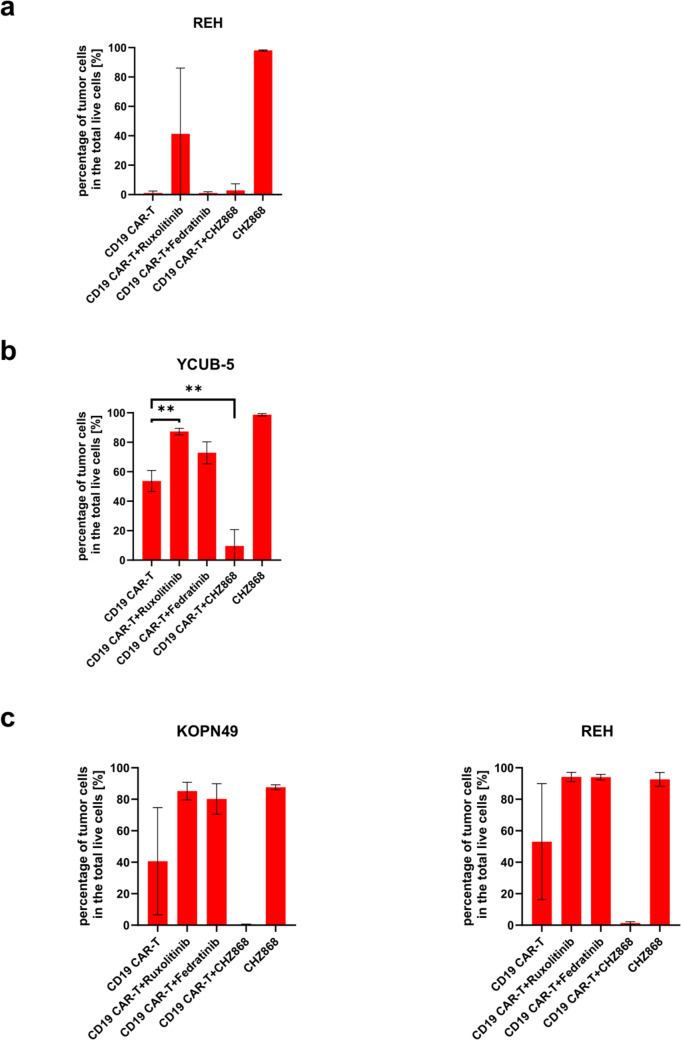
The integration of molecular targeted therapeutics with chimeric antigen receptor T (CAR-T) cell therapy represents a novel strategy to amplify the anti-tumor efficacy of immunotherapy. While CD19-targeted CAR-T cells and Janus kinase (JAK) inhibitors have independently shown efficacy against certain B-cell leukemias, such as Philadelphia chromosome-like acute lymphoblastic leukemia, the concurrent use of JAK1/2 inhibitors, such as ruxolitinib, has been implicated in reducing CAR-T cell potency by inhibiting the JAK1-dependent T cell activation pathway. This study explores the combinatorial use of a selective type II JAK2 inhibitor, CHZ868, with CD19 CAR-T cells, revealing a synergistic enhancement of anti-leukemic activity across B-cell tumor models irrespective of JAK2 mutational status. CHZ868-mediated JAK2 inhibition did not induce the exhaustion of CAR-T cells, maintaining efficacy over repeated tumor challenges and significantly extending survival in mouse models engrafted with JAK2 inhibitor-resistant leukemia cells (median survival, CD19 CAR-T + CHZ868 vs. CD19 CAR-T + DMSO: 32 days vs. 26 days, p = 0.0303). Transcriptomic analyses suggest that CHZ868 impedes CAR-T cell differentiation while preserving their proliferative capacity, a crucial factor in maintaining CAR-T cell functionality. Therefore, the selective inhibition of the JAK2 pathway may potentiate CAR-T cell therapy and offer a viable treatment strategy for patients with resistant B-cell leukemias.
期刊介绍:
Cancer Immunology, Immunotherapy has the basic aim of keeping readers informed of the latest research results in the fields of oncology and immunology. As knowledge expands, the scope of the journal has broadened to include more of the progress being made in the areas of biology concerned with biological response modifiers. This helps keep readers up to date on the latest advances in our understanding of tumor-host interactions.
The journal publishes short editorials including "position papers," general reviews, original articles, and short communications, providing a forum for the most current experimental and clinical advances in tumor immunology.





 京公网安备 11010802042870号
京ICP备2023020795号-1
京公网安备 11010802042870号
京ICP备2023020795号-1

 分享
分享
 求助内容:
求助内容: 应助结果提醒方式:
 扫码关注我们
