Aaron Dudley, Lamin S Kassama, Armitra Jackson-Davis, Ernst Cebert, Xianyan Kuang
{"title":"In vitro characterization the antioxidant and antibacterial properties of hemp (Cannabis sativa spp.) varieties cultivated in Northern Alabama.","authors":"Aaron Dudley, Lamin S Kassama, Armitra Jackson-Davis, Ernst Cebert, Xianyan Kuang","doi":"10.1186/s42238-025-00258-y","DOIUrl":null,"url":null,"abstract":"<p><p>Plants, especially those recognized for their medicinal properties, are an excellent source of bioactive components and are attracting considerable interest in the food industry due to their natural bioactivity. In this context, hemp species (Cannabis sativa spp.) were investigated for such applications because of their well-documented antibacterial and antioxidant activities. However, the bioactive efficacy of varieties being introduced in Northern Alabama and their implications for food safety have not been studied. The purpose of this study was to evaluate the antibacterial and antioxidative potential of four hemp varieties grown at the Alabama A&M University, Winfred Thomas Agricultural Research Station in Northern Alabama using three different extraction solvents (deionized water, acetone, and ethanol). Antioxidant potential was evaluated by DPPH free radical scavenging activity (2, 2-diphenyl-1- picrylhydrazyl), Total phenolic and flavonoid contents. Antibacterial activity against cocktails of enteric pathogens, including Listeria monocytogenese, E. coli O157:H7, and Salmonella enterica was evaluated for optical density using a BioScreen-C microtiter. Also, the disc diffusion extraction yield was evaluated to determine the best extraction solvent. Data were expressed as mean ± standard error (n = 3) and ANOVA (P ≤ 0.05). The ethanolic extracts exhibited the the highest extraction yield at 25.29 ± 0.70% (RE), while the antioxidant result demonstrated that the ethanolic extracts had the highest DPPH free radical scavenging activity at 64.03 ± 0.26% (RE). The results of the antibacterial studies showed that ethanolic hemp extracts exhibited significantly higher growth inhibition against all foodborne pathogens > 70% (p ≤ 0.05). The results show that the ethanolic extracts has significant extraction yield and bioactivity, highlighting ethanolic extract utilization in future antimicrobial nanofiber application.</p>","PeriodicalId":101310,"journal":{"name":"Journal of cannabis research","volume":"7 1","pages":"9"},"PeriodicalIF":4.3000,"publicationDate":"2025-01-31","publicationTypes":"Journal Article","fieldsOfStudy":null,"isOpenAccess":false,"openAccessPdf":"https://www.ncbi.nlm.nih.gov/pmc/articles/PMC11783707/pdf/","citationCount":"0","resultStr":null,"platform":"Semanticscholar","paperid":null,"PeriodicalName":"Journal of cannabis research","FirstCategoryId":"1085","ListUrlMain":"https://doi.org/10.1186/s42238-025-00258-y","RegionNum":0,"RegionCategory":null,"ArticlePicture":[],"TitleCN":null,"AbstractTextCN":null,"PMCID":null,"EPubDate":"","PubModel":"","JCR":"Q1","JCRName":"PHARMACOLOGY & PHARMACY","Score":null,"Total":0}
引用次数: 0
Abstract
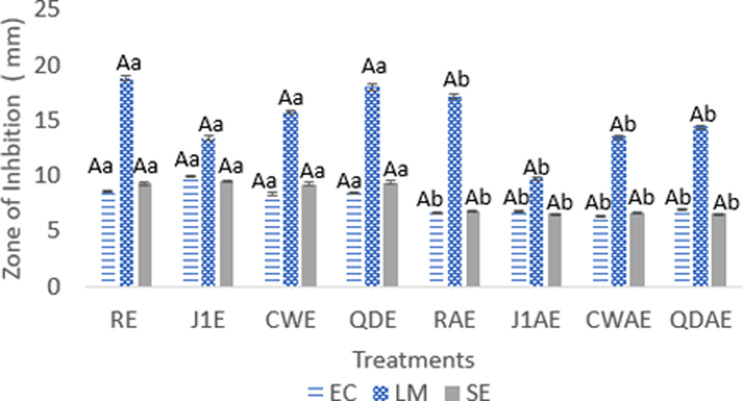
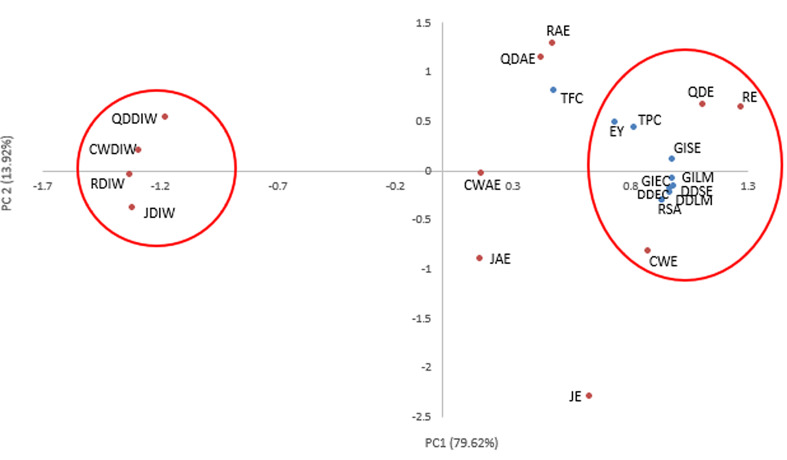
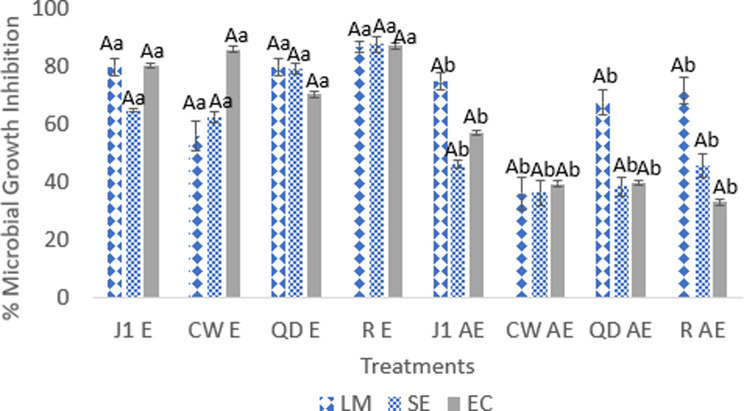
Plants, especially those recognized for their medicinal properties, are an excellent source of bioactive components and are attracting considerable interest in the food industry due to their natural bioactivity. In this context, hemp species (Cannabis sativa spp.) were investigated for such applications because of their well-documented antibacterial and antioxidant activities. However, the bioactive efficacy of varieties being introduced in Northern Alabama and their implications for food safety have not been studied. The purpose of this study was to evaluate the antibacterial and antioxidative potential of four hemp varieties grown at the Alabama A&M University, Winfred Thomas Agricultural Research Station in Northern Alabama using three different extraction solvents (deionized water, acetone, and ethanol). Antioxidant potential was evaluated by DPPH free radical scavenging activity (2, 2-diphenyl-1- picrylhydrazyl), Total phenolic and flavonoid contents. Antibacterial activity against cocktails of enteric pathogens, including Listeria monocytogenese, E. coli O157:H7, and Salmonella enterica was evaluated for optical density using a BioScreen-C microtiter. Also, the disc diffusion extraction yield was evaluated to determine the best extraction solvent. Data were expressed as mean ± standard error (n = 3) and ANOVA (P ≤ 0.05). The ethanolic extracts exhibited the the highest extraction yield at 25.29 ± 0.70% (RE), while the antioxidant result demonstrated that the ethanolic extracts had the highest DPPH free radical scavenging activity at 64.03 ± 0.26% (RE). The results of the antibacterial studies showed that ethanolic hemp extracts exhibited significantly higher growth inhibition against all foodborne pathogens > 70% (p ≤ 0.05). The results show that the ethanolic extracts has significant extraction yield and bioactivity, highlighting ethanolic extract utilization in future antimicrobial nanofiber application.



 京公网安备 11010802042870号
京ICP备2023020795号-1
京公网安备 11010802042870号
京ICP备2023020795号-1

 分享
分享

 求助内容:
求助内容: 应助结果提醒方式:
 扫码关注我们
