{"title":"Microwave attenuation of two-way radio according to building material and smoke in disaster environments.","authors":"InSu Yeom, Tae Dong Kim","doi":"10.1177/00368504251318835","DOIUrl":null,"url":null,"abstract":"<p><p>Disaster environments, such as fires, distort of two-way radio communication within buildings. This article presents an experimental study on microwave attenuation based on the smoke and wall type in a disaster environment using a two-way radio with digital mobile radio communication, widely used by firefighting crews in Korea. Furthermore, we compared the microwave attenuation of the two-way radio depending on the building materials and smoke. We then present the experimental result of the microwave characteristic corresponding to the four types of walls in a specially designed anechoic chamber (3 m × 1 m × 1 m) to analyze the microwave attenuation by the building materials, with results indicating up to 82% in 200 mm thick concrete. Moreover, we evaluated the propagation attenuation based on the four types of smoke with the same density in a container space (5.8 m × 2.8 m × 2.2 m). The results showed that the microwaves were not transmitted and significantly decreased based on the building materials at 400 MHz, which is the main cause of attenuation. It shows a property of up to 36% reduction in urethane. Although the attenuation of microwaves is not significantly large according to the fuels in smoke, fuels such as urethane, plastic, and rubber have relatively small attenuation of microwaves compared to wood, and the received power corresponding to urethane in smoke decreased the most.</p>","PeriodicalId":56061,"journal":{"name":"Science Progress","volume":"108 1","pages":"368504251318835"},"PeriodicalIF":2.9000,"publicationDate":"2025-01-01","publicationTypes":"Journal Article","fieldsOfStudy":null,"isOpenAccess":false,"openAccessPdf":"https://www.ncbi.nlm.nih.gov/pmc/articles/PMC11789110/pdf/","citationCount":"0","resultStr":null,"platform":"Semanticscholar","paperid":null,"PeriodicalName":"Science Progress","FirstCategoryId":"103","ListUrlMain":"https://doi.org/10.1177/00368504251318835","RegionNum":4,"RegionCategory":"综合性期刊","ArticlePicture":[],"TitleCN":null,"AbstractTextCN":null,"PMCID":null,"EPubDate":"","PubModel":"","JCR":"Q2","JCRName":"MULTIDISCIPLINARY SCIENCES","Score":null,"Total":0}
引用次数: 0
Abstract
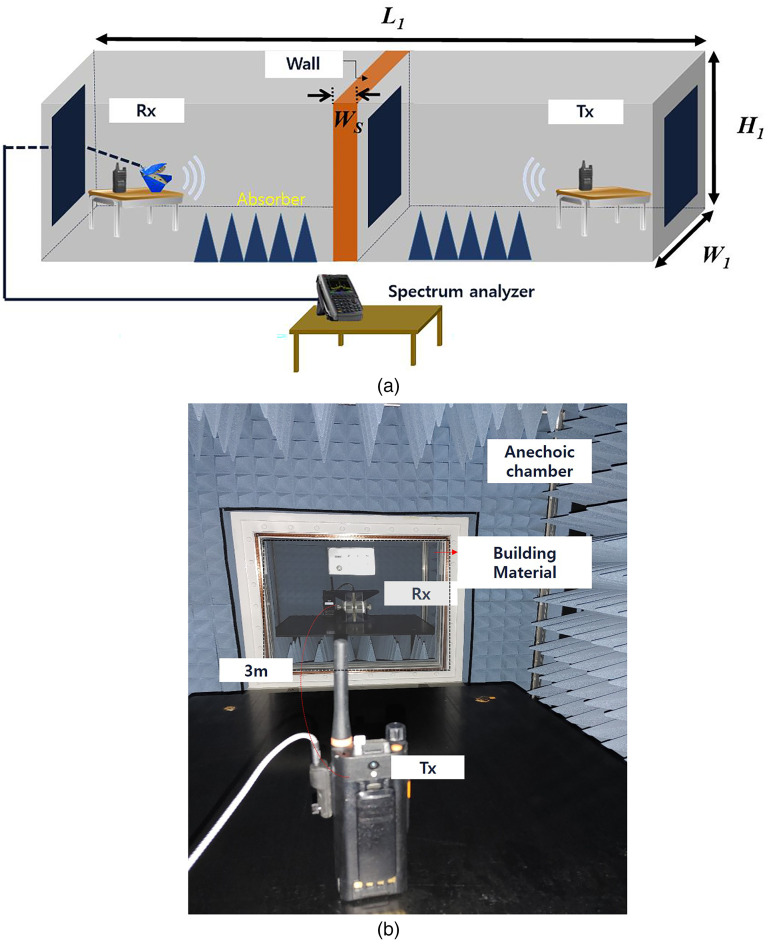
Disaster environments, such as fires, distort of two-way radio communication within buildings. This article presents an experimental study on microwave attenuation based on the smoke and wall type in a disaster environment using a two-way radio with digital mobile radio communication, widely used by firefighting crews in Korea. Furthermore, we compared the microwave attenuation of the two-way radio depending on the building materials and smoke. We then present the experimental result of the microwave characteristic corresponding to the four types of walls in a specially designed anechoic chamber (3 m × 1 m × 1 m) to analyze the microwave attenuation by the building materials, with results indicating up to 82% in 200 mm thick concrete. Moreover, we evaluated the propagation attenuation based on the four types of smoke with the same density in a container space (5.8 m × 2.8 m × 2.2 m). The results showed that the microwaves were not transmitted and significantly decreased based on the building materials at 400 MHz, which is the main cause of attenuation. It shows a property of up to 36% reduction in urethane. Although the attenuation of microwaves is not significantly large according to the fuels in smoke, fuels such as urethane, plastic, and rubber have relatively small attenuation of microwaves compared to wood, and the received power corresponding to urethane in smoke decreased the most.
火灾等灾害环境会使建筑物内的双向无线电通信失真。本文利用韩国消防人员广泛使用的具有数字移动无线电通信的双向无线电,对灾害环境中基于烟雾和墙壁类型的微波衰减进行了实验研究。此外,我们还比较了双向无线电的微波衰减对建筑材料和烟雾的影响。然后,我们在一个专门设计的消声室(3 m × 1 m × 1 m)中给出了四种类型墙壁对应的微波特性的实验结果,以分析建筑材料的微波衰减,结果表明在200 mm厚的混凝土中高达82%。在集装箱空间(5.8 m × 2.8 m × 2.2 m)内,以相同密度的4种烟雾为研究对象,对其传播衰减进行了评价。结果表明,在400 MHz处,由于建筑材料的影响,微波没有被传播,并且明显减少,这是微波衰减的主要原因。它显示了高达36%的聚氨酯减少性能。虽然微波的衰减根据烟雾中的燃料不是很大,但与木材相比,聚氨酯、塑料和橡胶等燃料的微波衰减相对较小,并且烟雾中聚氨酯对应的接收功率下降最多。
期刊介绍:
Science Progress has for over 100 years been a highly regarded review publication in science, technology and medicine. Its objective is to excite the readers'' interest in areas with which they may not be fully familiar but which could facilitate their interest, or even activity, in a cognate field.





 京公网安备 11010802042870号
京ICP备2023020795号-1
京公网安备 11010802042870号
京ICP备2023020795号-1

 分享
分享
 求助内容:
求助内容: 应助结果提醒方式:
 扫码关注我们
