{"title":"Engineered Heterostructure Photocatalyst: Chitosan-Coated Chromium Ferrite/Graphite Oxide Synthesized Hydrothermally for Environmental Remediation","authors":"Shabnam Sheshmani, Nazila Mohammad Hosseini","doi":"10.1007/s10924-024-03433-z","DOIUrl":null,"url":null,"abstract":"<div><p>This study reports the hydrothermal synthesis and characterization of a chitosan-coated chromium ferrite/graphite oxide (CrFe<sub>2</sub>O<sub>4</sub>/GO/CS) nanocomposite with enhanced photocatalytic performance. The unique combination of the semiconductor properties of chromium ferrite, the light-harvesting capabilities of graphite oxide, and the stabilizing and adsorptive properties of chitosan resulted in a synergistic enhancement of the photocatalytic activity. The nanocomposite was characterized using FT-IR, Raman, XRD, zeta potential, DRS, BET, SEM, and EDS techniques. BET analysis revealed a specific surface area of 418.56 m²/g and a pore diameter of 2 nm for the CrFe<sub>2</sub>O<sub>4</sub>/GO/CS nanocomposite. The band gap of the nanocomposite was determined to be 3.5 eV, compared to 2.9 eV for CrFe<sub>2</sub>O<sub>4</sub> and 2.95 eV for CrFe<sub>2</sub>O<sub>4</sub>/GO. The photocatalytic performance was evaluated through the degradation of Reactive Red 198 (R198) and Brilliant Blue FCF 133 (B133) dyes under UV and sunlight irradiation. The CrFe<sub>2</sub>O<sub>4</sub>/GO/CS nanocomposite demonstrated superior dye removal efficiency compared to CrFe<sub>2</sub>O<sub>4</sub> and CrFe<sub>2</sub>O<sub>4</sub>/GO, achieving up to 98.2% removal for R198 at pH 8 and 98.5% for B133. The nanocomposite also showed excellent reusability, maintaining 81% removal efficiency for R198 and 77.6% for B133 after three cycles. Kinetic studies revealed that the dye removal process followed a pseudo-second-order model with R² values of 0.99 for both dyes. The nanocomposite demonstrated effective performance in real textile wastewater treatment, achieving 91.5% dye removal efficiency. The enhanced photocatalytic performance, coupled with the nanocomposite’s reusability, highlights its potential for practical applications in water purification and environmental remediation.</p></div>","PeriodicalId":659,"journal":{"name":"Journal of Polymers and the Environment","volume":"33 2","pages":"794 - 813"},"PeriodicalIF":5.0000,"publicationDate":"2024-11-02","publicationTypes":"Journal Article","fieldsOfStudy":null,"isOpenAccess":false,"openAccessPdf":"","citationCount":"0","resultStr":null,"platform":"Semanticscholar","paperid":null,"PeriodicalName":"Journal of Polymers and the Environment","FirstCategoryId":"5","ListUrlMain":"https://link.springer.com/article/10.1007/s10924-024-03433-z","RegionNum":3,"RegionCategory":"工程技术","ArticlePicture":[],"TitleCN":null,"AbstractTextCN":null,"PMCID":null,"EPubDate":"","PubModel":"","JCR":"Q2","JCRName":"ENGINEERING, ENVIRONMENTAL","Score":null,"Total":0}
引用次数: 0
Abstract
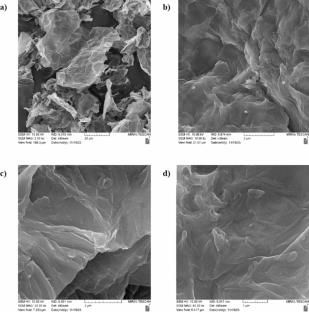
This study reports the hydrothermal synthesis and characterization of a chitosan-coated chromium ferrite/graphite oxide (CrFe2O4/GO/CS) nanocomposite with enhanced photocatalytic performance. The unique combination of the semiconductor properties of chromium ferrite, the light-harvesting capabilities of graphite oxide, and the stabilizing and adsorptive properties of chitosan resulted in a synergistic enhancement of the photocatalytic activity. The nanocomposite was characterized using FT-IR, Raman, XRD, zeta potential, DRS, BET, SEM, and EDS techniques. BET analysis revealed a specific surface area of 418.56 m²/g and a pore diameter of 2 nm for the CrFe2O4/GO/CS nanocomposite. The band gap of the nanocomposite was determined to be 3.5 eV, compared to 2.9 eV for CrFe2O4 and 2.95 eV for CrFe2O4/GO. The photocatalytic performance was evaluated through the degradation of Reactive Red 198 (R198) and Brilliant Blue FCF 133 (B133) dyes under UV and sunlight irradiation. The CrFe2O4/GO/CS nanocomposite demonstrated superior dye removal efficiency compared to CrFe2O4 and CrFe2O4/GO, achieving up to 98.2% removal for R198 at pH 8 and 98.5% for B133. The nanocomposite also showed excellent reusability, maintaining 81% removal efficiency for R198 and 77.6% for B133 after three cycles. Kinetic studies revealed that the dye removal process followed a pseudo-second-order model with R² values of 0.99 for both dyes. The nanocomposite demonstrated effective performance in real textile wastewater treatment, achieving 91.5% dye removal efficiency. The enhanced photocatalytic performance, coupled with the nanocomposite’s reusability, highlights its potential for practical applications in water purification and environmental remediation.
期刊介绍:
The Journal of Polymers and the Environment fills the need for an international forum in this diverse and rapidly expanding field. The journal serves a crucial role for the publication of information from a wide range of disciplines and is a central outlet for the publication of high-quality peer-reviewed original papers, review articles and short communications. The journal is intentionally interdisciplinary in regard to contributions and covers the following subjects - polymers, environmentally degradable polymers, and degradation pathways: biological, photochemical, oxidative and hydrolytic; new environmental materials: derived by chemical and biosynthetic routes; environmental blends and composites; developments in processing and reactive processing of environmental polymers; characterization of environmental materials: mechanical, physical, thermal, rheological, morphological, and others; recyclable polymers and plastics recycling environmental testing: in-laboratory simulations, outdoor exposures, and standardization of methodologies; environmental fate: end products and intermediates of biodegradation; microbiology and enzymology of polymer biodegradation; solid-waste management and public legislation specific to environmental polymers; and other related topics.



 京公网安备 11010802042870号
京ICP备2023020795号-1
京公网安备 11010802042870号
京ICP备2023020795号-1

 分享
分享
 求助内容:
求助内容: 应助结果提醒方式:
 扫码关注我们
