PSMA antibody, humanized PSMA.CAR10.3, or Cetuximab increases prostate cancer localization of NF-κB p50-deficient immature myeloid cells (p50-IMC) and phagocytosis by their macrophage progeny.
Mohammad A Alzubi, Theresa Barberi, Alan D Friedman
{"title":"PSMA antibody, humanized PSMA.CAR10.3, or Cetuximab increases prostate cancer localization of NF-κB p50-deficient immature myeloid cells (p50-IMC) and phagocytosis by their macrophage progeny.","authors":"Mohammad A Alzubi, Theresa Barberi, Alan D Friedman","doi":"10.1007/s00262-024-03939-4","DOIUrl":null,"url":null,"abstract":"<p><p>Adoptive transfer of immature myeloid cells lacking the repressive NF-κB p50 subunit (p50-IMC) slows the growth of syngeneic murine prostate cancer and other tumors. Directing p50-IMC to tumors using Fc receptor-bound antibodies (Abs) or surface chimeric antigen receptors (CARs) may increase tumor localization and subsequent phagocytosis of cancer cells by their mature myeloid progeny, potentiating anti-tumor T cell activation. PSMA and EGFR are found on aggressive human prostate cancers, and p50-IMC express receptors that bind the antibody Fc domain. p50-IMC combined with PSMA Ab, EGFR Ab (Cetuximab), or fully humanized PSMA.CAR10.3 manifest increased localization to Myc-CaP murine prostate cancer tumors expressing PSMA or EGFR. Tumor localization is further increased when myelo-depleting 5-fluorouracil precedes p50-IMC administration. Additionally, we find that PSMA Ab, EGFR Ab, or PSMA.CAR10.3 increase in vitro phagocytosis of Myc-CaP cells expressing PSMA or EGFR by p50-IMC-derived macrophages, including in M2-promoting IL-4, which is a component of the immune-suppressive tumor microenvironment. Lack of tolerance of human PSMA or EGFR by immune-competent mice and lack of expression of human PSMA protein in the prostate of AR<sub>2</sub>-Probasin-hPSMA transgenic mice precluded our ability to determine whether human-specific PSMA or EGFR antibody or PSMA.CAR10.3 increases anti-tumor efficacy of murine p50-IMC. Nevertheless, this study indicates the potential clinical utility of adding a tumor-directing antibody or CAR, including the novel, fully humanized PSMA.CAR10.3, to proinflammatory p50-IMC to optimize the activation of anti-tumor immunity in prostate cancer and other malignancies, and understanding PSMA toxicity in normal but not malignant prostate epithelium may reveal a novel therapeutic opportunity.</p>","PeriodicalId":9595,"journal":{"name":"Cancer Immunology, Immunotherapy","volume":"74 3","pages":"95"},"PeriodicalIF":5.1000,"publicationDate":"2025-02-04","publicationTypes":"Journal Article","fieldsOfStudy":null,"isOpenAccess":false,"openAccessPdf":"https://www.ncbi.nlm.nih.gov/pmc/articles/PMC11794921/pdf/","citationCount":"0","resultStr":null,"platform":"Semanticscholar","paperid":null,"PeriodicalName":"Cancer Immunology, Immunotherapy","FirstCategoryId":"3","ListUrlMain":"https://doi.org/10.1007/s00262-024-03939-4","RegionNum":2,"RegionCategory":"医学","ArticlePicture":[],"TitleCN":null,"AbstractTextCN":null,"PMCID":null,"EPubDate":"","PubModel":"","JCR":"Q2","JCRName":"IMMUNOLOGY","Score":null,"Total":0}
引用次数: 0
Abstract
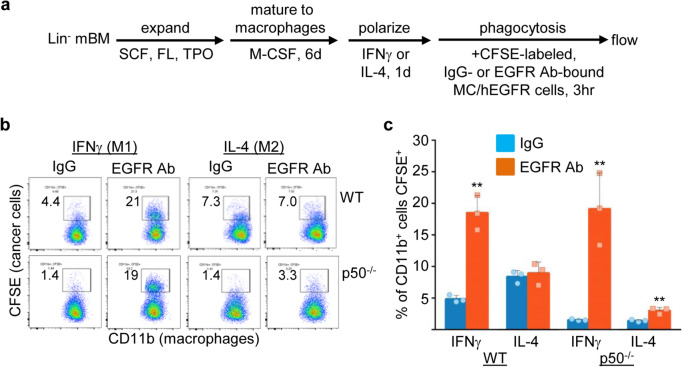
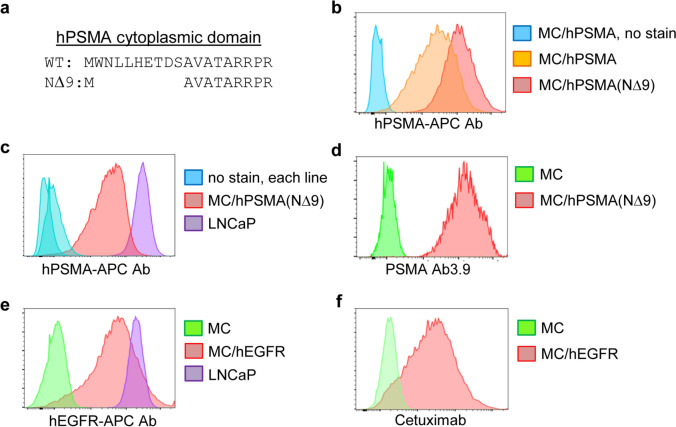
Adoptive transfer of immature myeloid cells lacking the repressive NF-κB p50 subunit (p50-IMC) slows the growth of syngeneic murine prostate cancer and other tumors. Directing p50-IMC to tumors using Fc receptor-bound antibodies (Abs) or surface chimeric antigen receptors (CARs) may increase tumor localization and subsequent phagocytosis of cancer cells by their mature myeloid progeny, potentiating anti-tumor T cell activation. PSMA and EGFR are found on aggressive human prostate cancers, and p50-IMC express receptors that bind the antibody Fc domain. p50-IMC combined with PSMA Ab, EGFR Ab (Cetuximab), or fully humanized PSMA.CAR10.3 manifest increased localization to Myc-CaP murine prostate cancer tumors expressing PSMA or EGFR. Tumor localization is further increased when myelo-depleting 5-fluorouracil precedes p50-IMC administration. Additionally, we find that PSMA Ab, EGFR Ab, or PSMA.CAR10.3 increase in vitro phagocytosis of Myc-CaP cells expressing PSMA or EGFR by p50-IMC-derived macrophages, including in M2-promoting IL-4, which is a component of the immune-suppressive tumor microenvironment. Lack of tolerance of human PSMA or EGFR by immune-competent mice and lack of expression of human PSMA protein in the prostate of AR2-Probasin-hPSMA transgenic mice precluded our ability to determine whether human-specific PSMA or EGFR antibody or PSMA.CAR10.3 increases anti-tumor efficacy of murine p50-IMC. Nevertheless, this study indicates the potential clinical utility of adding a tumor-directing antibody or CAR, including the novel, fully humanized PSMA.CAR10.3, to proinflammatory p50-IMC to optimize the activation of anti-tumor immunity in prostate cancer and other malignancies, and understanding PSMA toxicity in normal but not malignant prostate epithelium may reveal a novel therapeutic opportunity.
期刊介绍:
Cancer Immunology, Immunotherapy has the basic aim of keeping readers informed of the latest research results in the fields of oncology and immunology. As knowledge expands, the scope of the journal has broadened to include more of the progress being made in the areas of biology concerned with biological response modifiers. This helps keep readers up to date on the latest advances in our understanding of tumor-host interactions.
The journal publishes short editorials including "position papers," general reviews, original articles, and short communications, providing a forum for the most current experimental and clinical advances in tumor immunology.





 京公网安备 11010802042870号
京ICP备2023020795号-1
京公网安备 11010802042870号
京ICP备2023020795号-1

 分享
分享
 求助内容:
求助内容: 应助结果提醒方式:
 扫码关注我们
